Why Pharmaceutical Companies Need a More Connected View of KOL Intelligence
In an increasingly competitive pharmaceutical landscape, understanding the healthcare professional (HCP) ecosystem is becoming as important as understanding the therapeutic market itself.
Pharmaceutical companies need more than lists of Key Opinion Leaders (KOLs). They need to understand who is shaping scientific discussions, where therapeutic expertise resides, which researchers are contributing to clinical development, and how scientific influence connects across institutions and research networks.
This creates an opportunity to move beyond conventional KOL databases towards a more connected approach to HCP and KOL intelligence.
Introducing KOL Atlas by SPER Market Research
KOL Atlas is designed to bring together multiple dimensions of HCP intelligence into a connected view of the therapeutic ecosystem.
By mapping professional expertise, scientific publications, clinical trial involvement, institutional affiliations and collaboration networks, KOL Atlas aims to provide a structured understanding of healthcare expertise and scientific influence.
Five Dimensions of KOL Intelligence
A connected view of the therapeutic ecosystem can be built by examining five complementary dimensions of HCP and KOL intelligence.
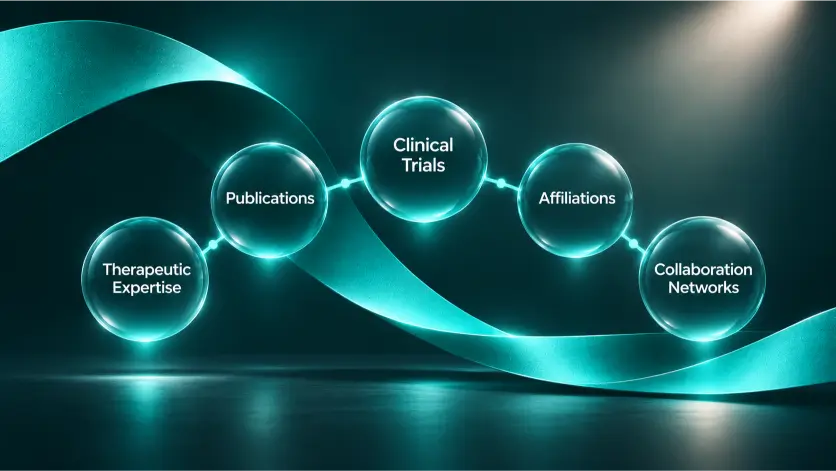
Therapeutic Expertise Mapping
Identify healthcare professionals based on their therapeutic specializations, research interests and areas of clinical expertise. This helps organizations understand where relevant scientific knowledge resides across therapeutic areas.
Publication and Research Intelligence
Scientific publications provide important insights into an HCP's research contributions and academic activity. Mapping publication history and research output helps identify individuals contributing to the advancement of therapeutic knowledge.
Clinical Trial Involvement
Clinical trial participation provides another dimension of expertise. Understanding investigator involvement across clinical studies can help identify experienced researchers and assess the clinical research landscape.
Institutional and Professional Affiliations
An HCP's institutional affiliations provide context about their professional environment and connections. Mapping these relationships helps pharmaceutical organizations understand the institutional distribution of therapeutic expertise.
Scientific Collaboration Networks
Scientific influence does not operate in isolation. Researchers, investigators and clinicians collaborate through publications, clinical studies and institutional relationships. Visualizing these connections can help reveal broader scientific networks and potential areas of collaboration.
Why KOL Intelligence Matters for Pharmaceutical Companies
The value of structured HCP intelligence extends across several strategic functions.
| Business function | Potential application |
|---|---|
| Medical Affairs | Scientific stakeholder identification and engagement planning |
| Clinical Strategy | Investigator landscape assessment and research network identification |
| Clinical Development | Understanding investigator experience and institutional connections |
| Commercial Strategy | Mapping therapeutic expertise and scientific influence |
| Competitive Intelligence | Understanding research participation and evolving scientific networks |
The objective is not simply to identify the most visible experts. It is to understand the broader distribution of expertise and scientific contributions across a therapeutic area.
From Individual Profiles to Connected Intelligence
Traditional KOL identification often focuses on individual profiles, publications or institutional affiliations in isolation.
A more comprehensive intelligence approach connects these dimensions.
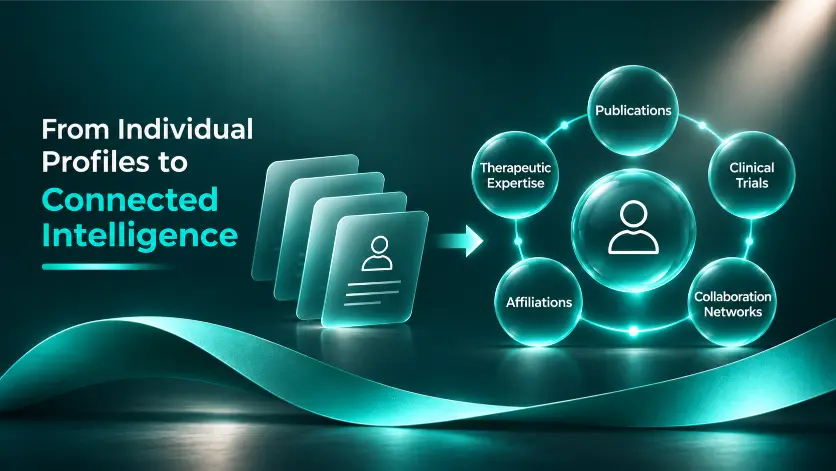
For example, understanding an investigator's therapeutic expertise alongside their publication history, clinical trial participation and institutional affiliations can provide a more meaningful picture of their contribution to a specific therapeutic ecosystem.
This connected perspective can help pharmaceutical organizations move towards more informed stakeholder identification, scientific engagement and clinical strategy.
The Future of HCP and KOL Intelligence
As pharmaceutical innovation expands across increasingly specialized therapeutic areas, the need for structured, evidence-linked HCP intelligence will continue to grow.
The next evolution of KOL intelligence will not be defined simply by the number of HCP profiles available in a database.
It will be defined by the ability to connect expertise, scientific evidence, clinical participation and professional relationships into a coherent intelligence framework.
KOL Atlas by SPER Market Research
Moving beyond KOL lists to understanding the ecosystem of therapeutic influence.
Connect expertise. Map scientific influence. Enable better strategic decisions.