Global Nutricosmetic Ingredients Market Size- By Source, By Form, By Application, By End Use – Regional Outlook, Competitive Strategies and Segment Forecast to 2034
According to SPER Market Research, the Global Nutricosmetic Ingredients Market is estimated to reach USD 8 Billion by 2034 with a CAGR of 7.45%.
Introduction and Overview
In 2024, the market for nutricosmetic ingredients was projected to be worth USD 3.9 billion worldwide. The market is anticipated to expand at a CAGR of 7.45% between 2025 and 2034. The growth of the nutraceutical business and its connections to personal health care have led to an increase in the market for nutricosmetic components. Growing health consciousness around the world encourages people to utilize wellness items that support both internal and external health. Industry projections predict that the nutraceutical market will increase at a rate of billion annually. A robust market for functional ingredients in dietary supplements and wellness products is shown by this rise.
By Source Insights
The market for plant-based components in nutricosmetics was dominated the market. The nutricosmetic sector is being driven by plant-based ingredients as a result of consumers' growing preference for clean-label, vegan, and sustainable products. Because they are great providers of antioxidants and skin soothers, botanicals like aloe vera, turmeric, and green tea extract are frequently utilized in cosmetics. According to industry surveys, the majority of customers globally favor wellness goods with plant-based formulations, which helps expand competitive marketplaces and compel manufacturers to enhance eco-friendly sourcing and supply chain transparency in order to satisfy the expanding market.
By Form Insights
The market for nutricosmetic ingredients from the solid forms sector led the market. In the market for nutricosmetic ingredients, capsules, tablets, and powders continue to be the most often used dosage forms because of their stability, durability, and ease of use. These formats provide flexible unit dosage and cost-effective manufacture, which helps with mass production and global distribution.
By Application Insights
The skin health and anti-aging application segment was dominated the market. Due to increased interest in "internal" skincare and preventative medicine, the market for nutricosmetic substances is still focused on skin health and anti-aging. The market demand is highlighted by behavioral analytics, which show that nearly all users of beauty supplements prioritize skin health. As more individuals become concerned about hair thinning, breakage, and scalp health, the use of hair care products is rapidly increasing. Men and women are equally worried.
Regional Insights
The strongest and most developed market for nutricosmetic ingredients is found in the Asia Pacific area, which is fueled by a strong emphasis on skin health, anti-aging, and general wellbeing as well as deeply ingrained cultural acceptance of beauty-from-within ideals. Leading nations in the region include China, which has sophisticated functional food businesses, robust innovation ecosystems, and consumers who actively seek out functional beverages and beauty supplements supported by science. The need for high-end, clinically proven components like collagen peptides, hyaluronic acid, probiotics, and botanical extracts is still being driven by the popularity of K-beauty and J-beauty trends.
Market Competitive Landscape
Strong competition between multinational ingredient giants and specialty suppliers that concentrate on clinically supported beauty-from-within solutions characterizes the global market for nutricosmetic ingredients. Major companies in the market include BASF, DSM, Lonza, Givaudan, Glanbia, Croda, Evonik, ADM, Sabinsa, Lycored, and a number of niche innovators that sell probiotics, carotenoids, vitamins, collagen peptides, botanical extracts, and functional bioactives. The increasing desire for natural, scientifically proven, and clean-label products that promote skin health, anti-aging, hair growth, and general beauty benefits is what fuels competition. Businesses set themselves apart with patented formulas, clinical studies, sustainability statements, cutting-edge extraction techniques, and solid alliances with supplement and nutricosmetic companies.
Recent Developments:
• In March 2023, Currently, Triiije Architects and TOSLA Nutricosmetics, a B2B leader in the nutricosmetics industry, have a strategic partnership. Their new headquarters, TOSLA 3, is being built into a masterpiece of architecture. The expansion of the business and new customers will undoubtedly be accommodated by the new facilities.
• In October 2022, The new beauty ingredients Skinax2 and Belight nutricosmatic were introduced by French Activ'Inside providers. They target the first Skinax2 improve skin glow elasticity commercialized under the monikers, making their debut on Supply Side West in Las Vegas.
Scope of the report:
Report Metric Details
Market size available for the years 2021-2034
Base year considered 2024
Forecast Period 2025-2034
Segments Covered By Source, By Form, By Application, By End Use
Regions Covered North America, Latin America, Asia-Pacific, Europe, and Middle East & Africa
Companies Covered ADM (Archer Daniels Midland), Ashland Global Holdings Inc., BASF SE, BioCell Technology LLC, Croda International Plc, Evonik Industries AG, Frutarom (IFF), Givaudan, Glanbia plc, Ingredion Incorporated.
Key Topics Covered in the Report
• Global Nutricosmetic Ingredients Market Size (FY’2021-FY’2034)
• Overview of Global Nutricosmetic Ingredients Market
• Segmentation of Global Nutricosmetic Ingredients Market by Source (Plant-based ingredients, Animal-based ingredients, Synthetic and semi-synthetic ingredients, Biotechnology-derived ingredients)
• Segmentation of Global Nutricosmetic Ingredients Market by Form (Solid forms, Liquid forms, Semi-solid forms, Novel delivery systems)
• Segmentation of Global Nutricosmetic Ingredients Market by Application (Skin health and anti-aging, Hair care, Nail health, Weight management and body sculpting)
• Segmentation of Global Nutricosmetic Ingredients Market by End Use (Dietary supplements, Functional foods, Functional beverages beauty drinks and shots, Topical product combinations)
• Statistical Snap of Global Nutricosmetic Ingredients Market
• Expansion Analysis of Global Nutricosmetic Ingredients Market
• Problems and Obstacles in Global Nutricosmetic Ingredients Market
• Competitive Landscape in the Global Nutricosmetic Ingredients Market
• Details on Current Investment in Global Nutricosmetic Ingredients Market
• Competitive Analysis of Global Nutricosmetic Ingredients Market
• Prominent Players in the Global Nutricosmetic Ingredients Market
• SWOT Analysis of Global Nutricosmetic Ingredients Market
• Global Nutricosmetic Ingredients Market Future Outlook and Projections (FY’2025-FY’2034)
• Recommendations from Analyst
Global Nutricosmetic Ingredients Market Size- By Source, By Form, By Application, By End Use – Regional Outlook, Competitive Strategies and Segment Forecast to 2034
1. Introduction
1.1. Scope of the report
1.2. Market segment analysis
2. Research Methodology
2.1. Research data source
2.1.1. Secondary Data
2.1.2. Primary Data
2.1.3. SPER’s internal database
2.1.4. Premium insight from KOL’s
2.2. Market size estimation
2.2.1. Top-down and Bottom-up approach
2.3. Data triangulation
3. Executive Summary
4. Market Dynamics
4.1. Driver, Restraint, Opportunity and Challenges analysis
4.1.1. Drivers
4.1.2. Restraints
4.1.3. Opportunities
4.1.4. Challenges
5. Market variable and outlook
5.1. SWOT Analysis
5.1.1. Strengths
5.1.2. Weaknesses
5.1.3. Opportunities
5.1.4. Threats
5.2. PESTEL Analysis
5.2.1. Political Landscape
5.2.2. Economic Landscape
5.2.3. Social Landscape
5.2.4. Technological Landscape
5.2.5. Environmental Landscape
5.2.6. Legal Landscape
5.3. PORTER’s Five Forces
5.3.1. Bargaining power of suppliers
5.3.2. Bargaining power of buyers
5.3.3. Threat of Substitute
5.3.4. Threat of new entrant
5.3.5. Competitive rivalry
5.4. Heat Map Analysis
6. Competitive Landscape
6.1. Global Nutricosmetic Ingredients Market Manufacturing Base Distribution, Sales Area, Product Type
6.2. Mergers & Acquisitions, Partnerships, Product Launch, and Collaboration in Global Nutricosmetic Ingredients Market
7. Global Nutricosmetic Ingredients Market, By Source (USD Million) 2021-2034
7.1. Plant-based ingredients
7.2. Animal-based ingredients
7.3. Synthetic and semi-synthetic ingredients
7.4. Biotechnology-derived ingredients
8. Global Nutricosmetic Ingredients Market, By Form (USD Million) 2021-2034
8.1. Solid forms
8.2. Liquid forms
8.3. Semi-solid forms
8.4. Novel delivery systems
9. Global Nutricosmetic Ingredients Market, By Application (USD Million) 2021-2034
9.1. Skin health and anti-aging
9.2. Hair care
9.3. Nail health
9.4. Weight management and body sculpting
9.5. Other applications
10. Global Nutricosmetic Ingredients Market, By End Use (USD Million) 2021-2034
10.1. Dietary supplements
10.2. Functional foods
10.3. Functional beverages beauty drinks and shots
10.4. Topical product combinations
11. Global Nutricosmetic Ingredients Market, By Region, (USD Million) 2021-2034
11.1. Asia-Pacific
11.1.1. Australia
11.1.2. China
11.1.3. India
11.1.4. Japan
11.1.5. South Korea
11.1.6. Rest of Asia-Pacific
11.2. Europe
11.2.1. France
11.2.2. Germany
11.2.3. Italy
11.2.4. Spain
11.2.5. United Kingdom
11.2.6. Rest of Europe
11.3. Middle East and Africa
11.3.1. Kingdom of Saudi Arabia
11.3.2. United Arab Emirates
11.3.3. Qatar
11.3.4. South Africa
11.3.5. Egypt
11.3.6. Morocco
11.3.7. Nigeria
11.3.8. Rest of Middle-East and Africa
11.4. North America
11.4.1. Canada
11.4.2. Mexico
11.4.3. United States
11.5. Latin America
11.5.1. Argentina
11.5.2. Brazil
11.5.3. Rest of Latin America
12. Company Profile
12.1. ADM (Archer Daniels Midland)
12.1.1. Company details
12.1.2. Financial outlook
12.1.3. Product summary
12.1.4. Recent developments
12.2. Ashland Global Holdings Inc.
12.2.1. Company details
12.2.2. Financial outlook
12.2.3. Product summary
12.2.4. Recent developments
12.3. BASF SE
12.3.1. Company details
12.3.2. Financial outlook
12.3.3. Product summary
12.3.4. Recent developments
12.4. BioCell Technology LLC,
12.4.1. Company details
12.4.2. Financial outlook
12.4.3. Product summary
12.4.4. Recent developments
12.5. Croda International Plc
12.5.1. Company details
12.5.2. Financial outlook
12.5.3. Product summary
12.5.4. Recent developments
12.6. Evonik Industries AG
12.6.1. Company details
12.6.2. Financial outlook
12.6.3. Product summary
12.6.4. Recent developments
12.7. Frutarom (IFF)
12.7.1. Company details
12.7.2. Financial outlook
12.7.3. Product summary
12.7.4. Recent developments
12.8. Givaudan
12.8.1. Company details
12.8.2. Financial outlook
12.8.3. Product summary
12.8.4. Recent developments
12.9. Glanbia plc
12.9.1. Company details
12.9.2. Financial outlook
12.9.3. Product summary
12.9.4. Recent developments
12.10. Ingredion Incorporated
12.10.1. Company details
12.10.2. Financial outlook
12.10.3. Product summary
12.10.4. Recent developments
12.11. Others
13. Conclusion
14. List of Abbreviations
15. Reference Links
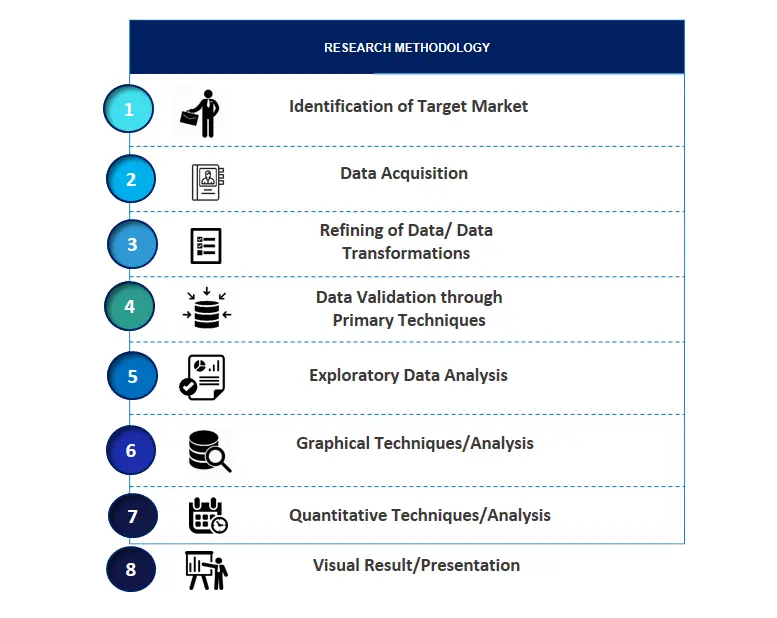
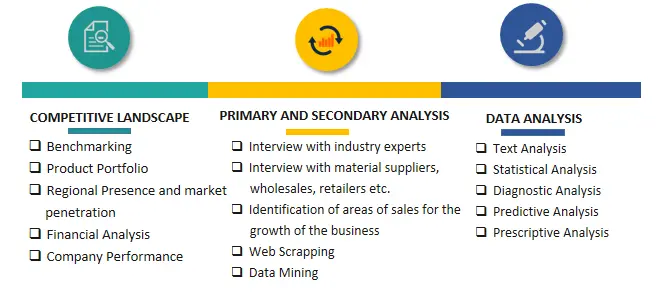
SPER Market Research’s methodology uses great emphasis on primary research to ensure that the market intelligence insights are up to date, reliable and accurate. Primary interviews are done with players involved in each phase of a supply chain to analyze the market forecasting. The secondary research method is used to help you fully understand how the future markets and the spending patterns look likes.
The report is based on in-depth qualitative and quantitative analysis of the Product Market. The quantitative analysis involves the application of various projection and sampling techniques. The qualitative analysis involves primary interviews, surveys, and vendor briefings. The data gathered as a result of these processes are validated through experts opinion. Our research methodology entails an ideal mixture of primary and secondary initiatives.