According to SPER Market Research, the Global Slag Cement (GGBFS) Market is estimated to reach USD 43.8 billion by 2034 with a CAGR 18.24%.
Introduction and Overview
The report includes an in-depth analysis of the Global Slag Cement (GGBFS) Market, including market size and trends, product mix, Applications, and supplier analysis.
The global Slag Cement (GGBFS) Market was valued at USD 8.2 billion in 2024 and is expected to grow at a CAGR of over 18.24% from 2025 to 2034. The slag cement market is expanding rapidly, driven by rising infrastructure investments, demand for sustainable construction materials, and supportive low-carbon regulations. GGBFS significantly lowers carbon emissions compared to traditional Portland cement, aligning with global climate goals such as the European Green Deal and the U.S. Infrastructure Investment and Jobs Act. Its ability to cut concrete’s carbon footprint by nearly 60% makes it a preferred eco-friendly option. Growing infrastructure projects in Asia-Pacific and the Middle East, including China’s Belt and Road and India’s Smart Cities Mission, further boost demand, alongside upgrades in developed economies.
By Type:
The slag cement industry is divided into several types, including ground granulated blast furnace slag, portland slag cement, supersulfated cement, and other slag-based blends. Ground granulated blast furnace slag holds the dominant position due to its high strength, low permeability, and long-term durability, making it ideal for critical infrastructure such as bridges, tunnels, and marine works. Its role in lowering concrete’s carbon footprint also drives its adoption. Portland slag cement is growing quickly for its versatility and cost benefits, while supersulfated and other specialty slag cements are gaining interest for niche applications.
By Application:
The slag cement market spans applications such as ready-mix concrete, precast components, high-performance mixes, mass concrete, shotcrete, blocks and pavers, mortars and grouts, and soil stabilization. Ready-mix concrete leads due to its extensive use in residential, commercial, and infrastructure projects, where consistency and convenience drive high consumption of slag-based materials. Precast and high-performance concrete are also expanding, valued for strength, durability, and rapid construction. Mass concrete projects like dams and large foundations rely on slag cement for controlled heat of hydration. Additional applications—including shotcrete and masonry products—benefit from its durability, low permeability, and chemical resistance.
By Application:
The slag cement market spans residential, commercial, infrastructure, industrial, and other end uses. Residential construction remains a key segment, driven by rising housing needs and the demand for durable, sustainable materials. Slag cement is increasingly favored for its strength, lower shrinkage, and fire resistance. Commercial projects, including offices, retail spaces, and hospitality buildings, also rely on it for better temperature control and long-term performance. Infrastructure development—such as roads, bridges, tunnels, and airports—benefits from its durability and reduced maintenance needs. Industrial facilities further adopt slag cement for its strong chemical resistance and reliability in harsh environments.
Regional Insights:
The United States holds a commanding position in the slag cement market, supported by strong infrastructure spending and growing emphasis on sustainable construction. Policies like the Infrastructure Investment and Jobs Act have boosted demand for high-performance, low-carbon materials, making slag cement increasingly attractive for reducing the environmental impact of concrete. The broader North American market maintains a significant global share, with the U.S. driving much of the growth. A mature construction sector, stringent environmental standards, advanced manufacturing technologies, and well-developed infrastructure networks all contribute to the steady expansion of slag cement use across the region.
Market Competitive Landscape:
The Slag Cement (GGBFS) Market is highly consolidated. Some of the market key players are JSW Cement, Holcim Group, Heidelberg Materials, CEMEX S.A.B. de C.V., and Ecocem Materials.
Recent Developments:
• In April 2025, Ecocem partnered with TITAN Group to co-develop and roll out a customized version of its scalable low-carbon cement technology (ACT), with the initial launch focused on the Greek market.
• In December 2024, Ambuja Cements, owned by the Adani Group, announced its merger with Sanghi Industries and Penna Cement Industries, significantly strengthening its position in the Indian cement market.
Scope of the report:
Report Metric Details
Market size available for the years 2021-2034
Base year considered 2024
Forecast Period 2025-2034
Segments Covered By Type, By Application, By End Use
Regions Covered North America, Latin America, Asia-Pacific, Europe, and Middle East & Africa
Companies Covered JSW Cement, Holcim Group, Heidelberg Materials, CEMEX S.A.B. de C.V., and Ecocem Materials.
Key Topics Covered in the Report
• Global Slag Cement (GGBFS) Market Size (FY’2021-FY’2034)
• Overview of Global Slag Cement (GGBFS) Market
• Segmentation of Global Slag Cement (GGBFS) Market By Type (Ground Granulated Blast Furnace Slag, Portland Slag Cement, Supersulfated Cement, Other Slag-Based Cements)
• Segmentation of Global Slag Cement (GGBFS) Market By Application (Ready-Mix Concrete, Precast Concrete, High-Performance Concrete, Mass Concrete Applications, Shotcrete, Concrete Blocks and Pavers, Mortars and Grouts, Soil Stabilization, Others)
• Segmentation of Global Slag Cement (GGBFS) Market By End use (Residential Construction, Commercial Construction, Infrastructure Development, Industrial Construction, Others)
• Statistical Snap of Global Slag Cement (GGBFS) Market
• Expansion Analysis of Global Slag Cement (GGBFS) Market
• Problems and Obstacles in Global Slag Cement (GGBFS) Market
• Competitive Landscape in the Global Slag Cement (GGBFS) Market
• Details on Current Investment in Global Slag Cement (GGBFS) Market
• Competitive Analysis of Global Slag Cement (GGBFS) Market
• Prominent Players in the Global Slag Cement (GGBFS) Market
• SWOT Analysis of Global Slag Cement (GGBFS) Market
• Global Slag Cement (GGBFS) Market Future Outlook and Projections (FY’2025-FY’2034)
• Recommendations from Analyst
1. Introduction
1.1. Scope of the report
1.2. Market segment analysis
2. Research Methodology
2.1. Research data source
2.1.1. Secondary Data
2.1.2. Primary Data
2.1.3. SPER’s internal database
2.1.4. Premium insight from KOL’s
2.2. Market size estimation
2.2.1. Top-down and Bottom-up approach
2.3. Data triangulation
3. Executive Summary
4. Market Dynamics
4.1. Driver, Restraint, Opportunity and Challenges analysis
4.1.1. Drivers
4.1.2. Restraints
4.1.3. Opportunities
4.1.4. Challenges
5. Market variable and outlook
5.1. SWOT Analysis
5.1.1. Strengths
5.1.2. Weaknesses
5.1.3. Opportunities
5.1.4. Threats
5.2. PESTEL Analysis
5.2.1. Political Landscape
5.2.2. Economic Landscape
5.2.3. Social Landscape
5.2.4. Technological Landscape
5.2.5. Environmental Landscape
5.2.6. Legal Landscape
5.3. PORTER’s Five Forces
5.3.1. Bargaining power of suppliers
5.3.2. Bargaining power of buyers
5.3.3. Threat of Substitute
5.3.4. Threat of new entrant
5.3.5. Competitive rivalry
5.4. Heat Map Analysis
6. Competitive Landscape
6.1. Global Slag Cement (GGBFS) Market Manufacturing Base Distribution, Sales Area, Product Type
6.2. Mergers & Acquisitions, Partnerships, Product Launch, and Collaboration in Global Slag Cement (GGBFS) Market
7. Global Slag Cement (GGBFS) Market, By Type, (USD Million) 2021-2034
7.1. Ground Granulated Blast Furnace Slag (GGBFS)
7.1.1. Grade 80
7.1.2. Grade 100
7.1.3. Grade 120
7.2. Portland Slag Cement (PSC)
7.2.1. Low Slag Content (25-35%)
7.2.2. Medium Slag Content (36-50%)
7.2.3. High Slag Content (51-65%)
7.3. Supersulfated Cement
7.4. Other Slag-Based Cements
8. Global Slag Cement (GGBFS) Market, By Application, (USD Million) 2021-2034
8.1. Ready-Mix Concrete
8.2. Precast Concrete
8.3. High-Performance Concrete
8.4. Mass Concrete Applications
8.5. Shotcrete
8.6. Concrete Blocks and Pavers
8.7. Mortars and Grouts
8.8. Soil Stabilization
8.9. Others
9. Global Slag Cement (GGBFS) Market, By End use, (USD Million) 2021-2034
9.1. Residential Construction
9.1.1. Single-Family Housing
9.1.2. Multi-Family Housing
9.2. Commercial Construction
9.2.1. Office Buildings
9.2.2. Retail and Hospitality
9.2.3. Educational Institutions
9.2.4. Healthcare Facilities
9.3. Infrastructure Development
9.3.1. Roads and Highways
9.3.2. Bridges and Tunnels
9.3.3. Dams and Hydroelectric Projects
9.3.4. Railways and Transit Systems
9.3.5. Airports
9.3.6. Ports and Marine Structures
9.4. Industrial Construction
9.4.1. Manufacturing Facilities
9.4.2. Power Plants
9.4.3. Oil and Gas Facilities
9.4.4. Water and Wastewater Treatment Plants
9.5. Others
10. Global Slag Cement (GGBFS) Market, (USD Million) 2021-2034
10.1. Global Slag Cement (GGBFS) Market Size and Market Share
11. Global Slag Cement (GGBFS) Market, By Region, 2021-2034 (USD Million)
11.1. Asia-Pacific
11.1.1. Australia
11.1.2. China
11.1.3. India
11.1.4. Japan
11.1.5. South Korea
11.1.6. Rest of Asia-Pacific
11.2. Europe
11.2.1. France
11.2.2. Germany
11.2.3. Italy
11.2.4. Spain
11.2.5. United Kingdom
11.2.6. Rest of Europe
11.3. Middle East and Africa
11.3.1. Kingdom of Saudi Arabia
11.3.2. United Arab Emirates
11.3.3. Qatar
11.3.4. South Africa
11.3.5. Egypt
11.3.6. Morocco
11.3.7. Nigeria
11.3.8. Rest of Middle-East and Africa
11.4. North America
11.4.1. Canada
11.4.2. Mexico
11.4.3. United States
11.5. Latin America
11.5.1. Argentina
11.5.2. Brazil
11.5.3. Rest of Latin America
12. Company Profile
12.1. JSW Cement
12.1.1. Company details
12.1.2. Financial outlook
12.1.3. Product summary
12.1.4. Recent developments
12.2. Holcim Group
12.2.1. Company details
12.2.2. Financial outlook
12.2.3. Product summary
12.2.4. Recent developments
12.3. Heidelberg Materials
12.3.1. Company details
12.3.2. Financial outlook
12.3.3. Product summary
12.3.4. Recent developments
12.4. CEMEX, S.A.B. de C.V.
12.4.1. Company details
12.4.2. Financial outlook
12.4.3. Product summary
12.4.4. Recent developments
12.5. Ecocem Materials
12.5.1. Company details
12.5.2. Financial outlook
12.5.3. Product summary
12.5.4. Recent developments
12.6. Others
13. Conclusion
14. List of Abbreviations
15. Reference Links
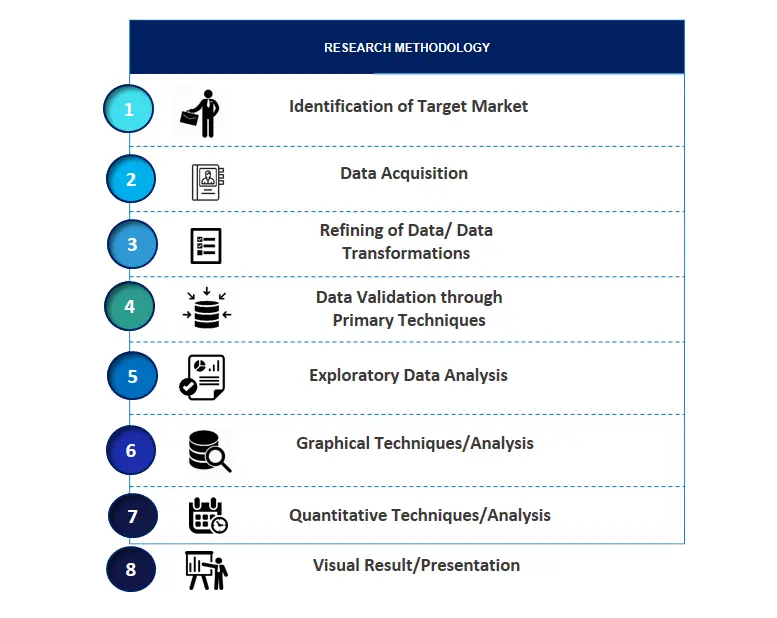
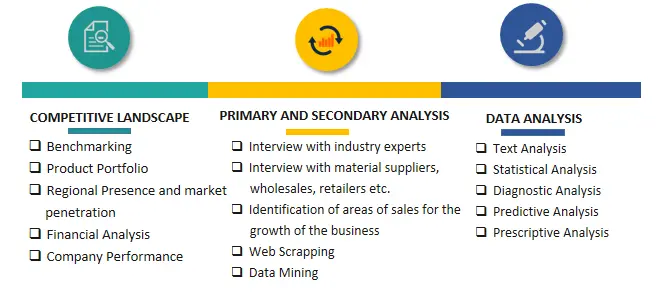
SPER Market Research’s methodology uses great emphasis on primary research to ensure that the market intelligence insights are up to date, reliable and accurate. Primary interviews are done with players involved in each phase of a supply chain to analyze the market forecasting. The secondary research method is used to help you fully understand how the future markets and the spending patterns look likes.
The report is based on in-depth qualitative and quantitative analysis of the Product Market. The quantitative analysis involves the application of various projection and sampling techniques. The qualitative analysis involves primary interviews, surveys, and vendor briefings. The data gathered as a result of these processes are validated through experts opinion. Our research methodology entails an ideal mixture of primary and secondary initiatives.