Asia-Pacific Mobility-as-a-Service Market Trends and Forecast.

Asia-Pacific Mobility-as-a-Service Market Growth, Size, Trends Analysis- By Service, By Business Model, By Transportation, By Solution, By Application, By Payment, By Requirement – Regional Outlook, Competitive Strategies and Segment Forecast to 2034

Published: Jan-2026 Report ID: IACT2608 Pages: 1 - 120 Formats*:     
Category : Information & Communications Technology
According to SPER Market Research, the Asia-Pacific Mobility-as-a-Service Market is estimated to reach USD 571.71 billion by 2034 with a CAGR 10.45%.

Introduction and Overview
The report includes an in-depth analysis of the Asia-Pacific Mobility as a Service Market, covering market size and trends, business models, applications, transportation modes, and competitive landscape.

The Asia-Pacific Mobility as a Service Market was valued at USD 211.6 billion in 2024 and is expected to grow at a CAGR of around 10.45% from 2025 to 2034, reaching approximately USD XX billion by 2034. The market is experiencing strong growth due to rapid urbanization, rising population density, and increasing smartphone penetration. Government support for smart cities, sustainable transportation, and digital infrastructure further accelerates adoption. Continuous technological advancements are also enhancing platform integration and user experience, supporting robust market expansion across the region.

By Business Model:
In the Asia-Pacific Mobility as a Service Market, the B2C segment dominated in 2024, capturing the largest share due to its direct engagement with individual consumers seeking on-demand, flexible mobility solutions like ride-hailing, car-sharing, and micro-mobility via mobile apps. This business model benefits from high smartphone penetration, widespread digital payment adoption, and real-time service booking preferences among urban commuters. B2C platforms provide convenient, personalized travel options without long-term commitments, appealing to daily users across densely populated cities in China, India, and Southeast Asia. Continuous app innovation and loyalty offerings from major Maa’s providers further reinforce B2C’s leadership position in the region.

By Application:
The Android segment leads the Asia-Pacific Mobility as a Service Market, driven by the region’s preference for Android devices due to affordability and extensive availability. Android’s dominant user base, particularly in emerging economies such as India, Indonesia, and Vietnam, enables Maa’s platform providers to reach a broader audience with multi-modal travel apps. Developers optimize Maas applications for Android to maximize compatibility and market reach, supporting real-time booking, digital payments, and integrated transport services. This widespread Android penetration sustains higher adoption rates of Maas solutions compared to iOS and other platforms, especially in markets where Android holds significant share among commuters.

By Transportation:
In the Asia-Pacific Mobility as a Service market, the private transportation segment dominates, holding around 60% share in 2024. This leadership is driven by strong demand for ride-hailing, car-sharing, and micro-mobility services, which offer on-demand convenience, personalized travel experiences, and flexibility that public transport often cannot match in busy urban centers. Private Maas services such as those offered by Grab, Ola, and Gojek have rapidly scaled across countries like India, Indonesia, and Southeast Asia, supported by digital payment integration and real-time service tracking. These features cater to tech-savvy commuters seeking efficient, customizable travel options.

By Payment:
The pay-per-use payment model dominates the Asia-Pacific Mobility as a Service market because it offers affordability, flexibility, and wide adoption among urban commuters. Users only pay for the services they consume, such as individual rides or short trips, without committing to long-term plans, making this model particularly attractive in price-sensitive and highly mobile populations across China, India, and Southeast Asia. Integration with digital wallets and contactless payments enhances user convenience and supports seamless, frictionless transactions. This flexibility appeals to both occasional users and frequent commuters, driving pay-per-use adoption above monthly subscriptions or corporate packages in the broader Maas ecosystem.

By Solution:
In the Asia-Pacific Mobility as a Service Market, technology platforms dominate the solution segment, forming the backbone of Maas offerings by integrating multiple transport modes such as ride-hailing, micro-mobility, and public transit into a unified digital interface. These platforms enable seamless trip planning, real-time tracking, multi-operator coordination, and digital payments. Advanced technologies including AI, IoT, and cloud computing are embedded within these platforms to support dynamic routing, predictive analytics, and user personalization. Their central role in orchestrating multimodal transport services across cities like Singapore, Kuala Lumpur, and Shanghai reinforces technology platforms as the leading solution category in the region’s Maas landscape.

By Services:
The ride-hailing segment dominates the Asia-Pacific Mobility as a Service Market, driven by high demand for on-demand, convenient urban travel options across major regional economies. Platforms like Grab, Ola, and DiDi Chuxing lead in ride-hailing adoption by offering real-time booking, dynamic pricing, and integrated payment systems. Rapid urbanization, increasing smartphone use, and the preference for app-based travel solutions fuel ride-hailing’s leadership position. These services cater to diverse commuting needs, from daily travel to inter-city trips, and are often the first mode users adopt within Maa’s ecosystems, making ride-hailing the largest contributor to total market revenue.

By Requirement:
The daily commuter segment dominates the Asia-Pacific Mobility as a Service market due to the high volume of routine travel needs in densely populated cities. Regular commuting for work, education, and errands makes Maas platforms invaluable for daily users, with services tailored to frequent use through subscription packs, commuter passes, and multimodal integration. Urban centers such as Seoul, Mumbai, and Singapore heavily rely on Maas for predictable morning and evening traffic flows. Post-pandemic hybrid work trends also reinforce routine mobility demands. Providers continue enhancing services focused on peak travel times, solidifying the daily commuter segment’s dominant position across the region.

Regional Insights:
Regionally, China leads the Asia-Pacific Mobility as a Service Market, accounting for the largest revenue share in 2024, driven by rapid urbanization, high smartphone penetration, and strong support for integrated mobility solutions across metropolitan areas. Extensive adoption of digital Maas platforms, expansive ride-hailing networks, and government initiatives promoting smart city infrastructure fuel growth in Chinese cities. Other major countries such as India and Southeast Asian markets like Singapore and Indonesia exhibit strong growth potential due to expanding middle classes, increasing digital payment adoption, and investments in sustainable public transport. Australia and Japan also contribute steadily, supported by mature transport systems and technology uptake.

Market Competitive Landscape:
The Asia-Pacific Mobility-as-a-Service Market is highly consolidated. Some of the market key players are BlueSG, DiDi Chuxing, GoTo, Grab, Meituan, Ola, Oyika, Pony.ai, SkedGo, and Uber.

Recent Developments:
  • In May 2024, grab effects blazoned a strategic cooperation with several Southeast Asian megacity governments to emplace smart mobility capitals integrating lift- hailing, micro mobility, and public conveyance services for enhanced last- afar connectivity.
  • In April 2024, Ola launched a new AI- powered demand soothsaying tool for its Maas platform, enabling dynamic line allocation and reducing passenger stay times across metropolitan regions in India.
  • In March 2024, DiDi Chuxing expanded its Maas immolations to include integrated payment results with original conveyance authorities in China, easing flawless marking across multiple transport modes.
  • In February 2024, GoTo (Gojek Tokopedia) rolled out aneco-friendly micro mobility line powered by renewable energy sources, aiming to reduce carbon emigrations in Indonesia’s civic centers.
  • In January 2024, Meituan partnered with telecom providers to enhance telecom connectivity within its Maas ecosystem, perfecting real- time navigation and data participating capabilities for millions of druggies.
  • In December 2023, Uber Technologies Inc. incorporated AI- driven individualized trip recommendations into its Maas app in New Zealand, enhancing commuter experience through acclimatized route and mode suggestions.
  • In November 2023, BlueSG banded with indigenous insurance companies to offer on- demand insurance services integrated within its Maas platform, furnishing flexible content for electric vehicle druggies in Singapore.

Scope of the report:
Report MetricDetails
Market size available for years2021-2034
Base year considered2024
Forecast period2025-2034
Segments coveredBy Service, By Business Model, By Transportation, By Solution, By Application, By Payment, By Requirement
Regions coveredAustralia, China, India, Japan, South Korea, Rest of Asia-Pacific
Companies CoveredBlueSG, DiDi Chuxing, GoTo, Grab, Meituan, Ola, Oyika, Pony.ai, SkedGo, and Uber.


Key Topics Covered in the Report
  • Asia-Pacific Mobility-as-a-Service Market Size (FY’2021–FY’2034)
  • Overview of Asia-Pacific Mobility-as-a-Service Market
  • Segmentation of Asia-Pacific Mobility-as-a-Service Market by Business Model (B2C, B2B, P2P)
  • Segmentation of Asia-Pacific Mobility-as-a-Service Market by Application (Android, iOS, Others)
  • Segmentation of Asia-Pacific Mobility-as-a-Service Market by Transportation (Private, Public)
  • Segmentation of Asia-Pacific Mobility-as-a-Service Market by Payment Model (Pay-per-Use, Monthly Subscription, Corporate Packages, Freemium Models)
  • Segmentation of Asia-Pacific Mobility-as-a-Service Market by Solution (Technology platforms, Payment engines, Navigation solutions, Telecom connectivity providers, Insurance services)
  • Segmentation of Asia-Pacific Mobility-as-a-Service Market by Services (Ride hailing, Car sharing, Micro mobility, Bus sharing, Train services)
  • Segmentation of Asia-Pacific Mobility-as-a-Service Market by Requirement (Daily commuter, First & last mile connectivity, Airport or mass transit stations trips, Off-peak & shift work commute, Inter-city trips, Others)
  • Statistical Snap of Asia-Pacific Mobility-as-a-Service Market
  • Expansion Analysis of Asia-Pacific Mobility-as-a-Service Market
  • Problems and Obstacles in Asia-Pacific Mobility-as-a-Service Market
  • Competitive Landscape in the Asia-Pacific Mobility-as-a-Service Market
  • Details on Current Investment in Asia-Pacific Mobility-as-a-Service Market
  • Competitive Analysis of Asia-Pacific Mobility-as-a-Service Market
  • Prominent Players in the Asia-Pacific Mobility-as-a-Service Market
  • SWOT Analysis of Asia-Pacific Mobility-as-a-Service Market
  • Asia-Pacific Mobility-as-a-Service Market Future Outlook and Projections (FY’2025–FY’2034)
  • Recommendations from Analyst

1. Introduction
1.1. Scope of the report
1.2. Market segment analysis 

2. Research Methodology
2.1. Research data source
2.1.1. Secondary Data
2.1.2. Primary Data
2.1.3. SPER’s internal database
2.1.4. Premium insight from KOL’s
2.2. Market size estimation
2.2.1. Top-down and Bottom-up approach
2.3. Data triangulation

3. Executive Summary

4. Market Dynamics
4.1. Driver, Restraint, Opportunity and Challenges analysis
4.1.1. Drivers
4.1.2. Restraints
4.1.3. Opportunities
4.1.4. Challenges

5. Market variable and outlook
5.1. SWOT Analysis
5.1.1. Strengths
5.1.2. Weaknesses
5.1.3. Opportunities
5.1.4. Threats
5.2. PESTEL Analysis
5.2.1. Political Landscape
5.2.2. Economic Landscape
5.2.3. Social Landscape
5.2.4. Technological Landscape
5.2.5. Environmental Landscape
5.2.6. Legal Landscape
5.3. PORTER’s Five Forces 
5.3.1. Bargaining power of suppliers
5.3.2. Bargaining power of buyers
5.3.3. Threat of Substitute
5.3.4. Threat of new entrant
5.3.5. Competitive rivalry
5.4. Heat Map Analysis

6. Competitive Landscape
6.1.  Asia-Pacific Mobility-as-a-Service Market Manufacturing Base Distribution, Sales Area, Product Type 
6.2. Mergers & Acquisitions, Partnerships, Product Launch, and Collaboration in Asia-Pacific Mobility-as-a-Service Market

7. Asia-Pacific Mobility-as-a-Service Market, By Business Model, (USD Million) 2021-2034 
7.1. B2C
7.2. B2B
7.3. P2P

8. Asia-Pacific Mobility-as-a-Service Market, By Application, (USD Million) 2021-2034 
8.1. Android
8.2. IOS
8.3. Others

9. Asia-Pacific Mobility-as-a-Service Market, By Transportation, (USD Million) 2021-2034 
9.1. Private
9.2. Public

10. Asia-Pacific Mobility-as-a-Service Market, By Payment, (USD Million) 2021-2034 
10.1. Pay-per-Use
10.2. Monthly Subscription
10.3. Corporate Packages
10.4. Freemium Models

11. Asia-Pacific Mobility-as-a-Service Market, By Solution, (USD Million) 2021-2034 
11.1. Technology platforms
11.2. Payment engines
11.3. Navigation solutions
11.4. Telecom connectivity providers
11.5. Insurance services

12. Asia-Pacific Mobility-as-a-Service Market, By Services, (USD Million) 2021-2034 
12.1. Ride hailing
12.2. Car sharing
12.3. Micro mobility
12.4. Bus sharing
12.5. Train services

13. Asia-Pacific Mobility-as-a-Service Market, By Requirement, (USD Million) 2021-2034
13.1. Daily commuter
13.2. First & last mile connectivity
13.3. Airport or mass transit stations trips
13.4. Off-peak & shift work commute
13.5. Inter-city trips
13.6. Others

14. Asia-Pacific Mobility-as-a-Service Market, (USD Million) 2021-2034 
14.1. Asia-Pacific Mobility-as-a-Service Market Size and Market Share

15. Global Asia-Pacific Mobility-as-a-Service Market, By Region, 2021-2034 (USD Million)
15.1. Australia
15.2. China
15.3. India
15.4. Japan
15.5. South Korea
15.6. Rest of Asia-Pacific

16. Company Profile
16.1. BlueSG
16.1.1. Company details
16.1.2. Financial outlook
16.1.3. Product summary 
16.1.4. Recent developments
16.2. DiDi Chuxing
16.2.1. Company details
16.2.2. Financial outlook
16.2.3. Product summary 
16.2.4. Recent developments
16.3. GoTo
16.3.1. Company details
16.3.2. Financial outlook
16.3.3. Product summary 
16.3.4. Recent developments
16.4. Grab
16.4.1. Company details
16.4.2. Financial outlook
16.4.3. Product summary 
16.4.4. Recent developments
16.5. Meituan
16.5.1. Company details
16.5.2. Financial outlook
16.5.3. Product summary 
16.5.4. Recent developments
16.6. Ola
16.6.1. Company details
16.6.2. Financial outlook
16.6.3. Product summary 
16.6.4. Recent developments
16.7. Oyika
16.7.1. Company details
16.7.2. Financial outlook
16.7.3. Product summary 
16.7.4. Recent developments
16.8. Pony.ai
16.8.1. Company details
16.8.2. Financial outlook
16.8.3. Product summary 
16.8.4. Recent developments
16.9. SkedGo
16.9.1. Company details
16.9.2. Financial outlook
16.9.3. Product summary 
16.9.4. Recent developments
16.10. Uber  
16.10.1. Company details
16.10.2. Financial outlook
16.10.3. Product summary 
16.10.4. Recent developments
16.11. Others

17. Conclusion

18. List of Abbreviations

19. Reference Links

SPER Market Research’s methodology uses great emphasis on primary research to ensure that the market intelligence insights are up to date, reliable and accurate. Primary interviews are done with players involved in each phase of a supply chain to analyze the market forecasting. The secondary research method is used to help you fully understand how the future markets and the spending patterns look likes.

The report is based on in-depth qualitative and quantitative analysis of the Product Market. The quantitative analysis involves the application of various projection and sampling techniques. The qualitative analysis involves primary interviews, surveys, and vendor briefings.  The data gathered as a result of these processes are validated through experts opinion. Our research methodology entails an ideal mixture of primary and secondary initiatives.
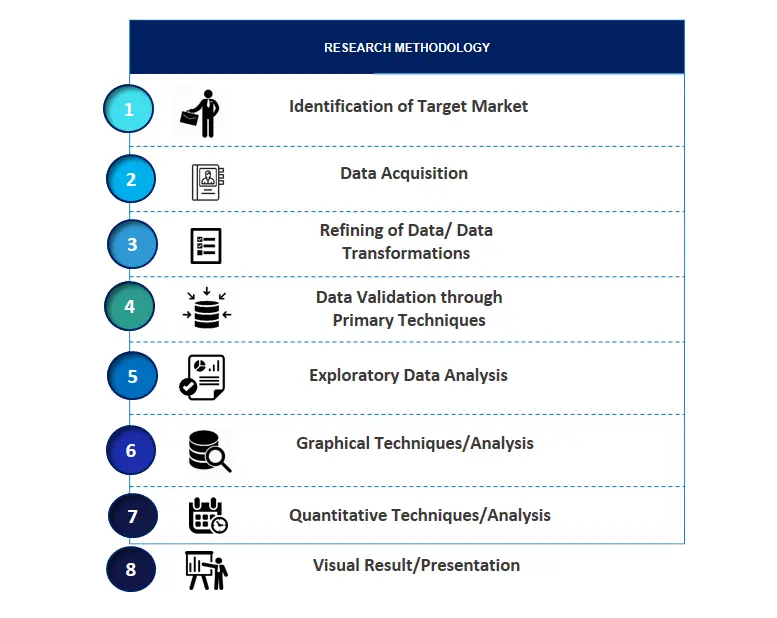
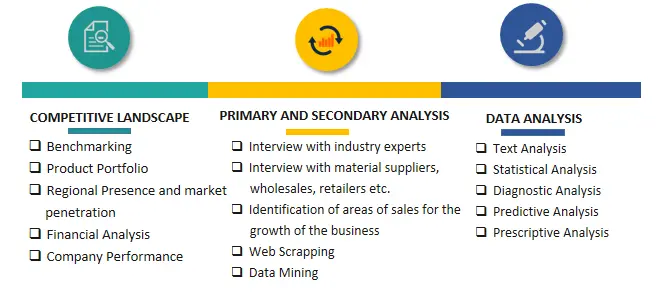
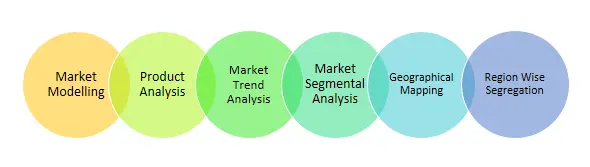
SPER-Methodology-1

SPER-Methodology-2

SPER-Methodology-3


Frequently Asked Questions About This Report
PLACE AN ORDER
  • 15 % off
     
    $ 4250
  • 20 % off
             
    $ 5650
  • 25 % off
         
    $ 7450
Pre-Purchase Inquiry
SEND AN INQUIRY
NEED CUSTOMIZATION?
Request Customization
CALL OR EMAIL US
US:
India:
Email:
100% Secure Payment

SPER American Express
SPER VISA
SPER Master Card
SPER Mestro
SPER Paypal
SPER CCAvenues

Have a glance of the Report

  Download Free Sample

Looking for Customization?

 Customization Request

Have a Question?

 Reach Our Analysis Team

COVID-19 impact analysis?

 Request Analysis
Thought Leadership

Trusted by Industry Leaders

Our data-driven insights have influenced the strategy of 200+ reputed companies across the globe.

SPER-Astellas Pharma
SPER-Microsoft
SPER-EY
SPER-McKinsey
SPER-Bain
SPER-Max-Healthcare
SPER-DHL
SPER-IQVIA
SPER-Mitsubishi Logistics
SPER-PACCOR
SPER-Macmillan Education
SPER-Kankar IMRB
SPER-ITA
SPER-PWC
SPER-SAPTCA
SPER-Straumann
SPER-Danaher
SPER-AandM
SPER-MENARINI Silicon Biosystems
SPER-IPSOS
SPER-Heineken
HIPPA Compliant
GDPR Certified
ISO 27001
Peer Reviewed
Get Started Today

Your Competitive Advantage in
Pharmaceutical & Medical Technology
Markets

Join industry leaders leveraging AI-powered intelligence to make confident, data-driven decisions that accelerate breakthrough treatments and technologies to market.

No Credit Card Required
15-Minute Demo
Expert Guidance