Global Cargo Drones Market - By Drone Type, By Payload Capacity, By Range, By Technology and By End Use Application - Regional Outlook, Competitive Strategies and Segment Forecast to 2035

Published: May-2026 Report ID: SEMI2608 Pages: 1 - 250 Formats*:     
Category : Semiconductor and Electronics
According to SPER Market Research, the Global Cargo Drones Market is estimated to reach USD 66.01 billion by 2034 with a CAGR 41.95%.

Introduction and Overview
The report includes an in-depth analysis of the Global Cargo Drones Market, including market size and trends, product mix, Applications, and supplier analysis.

The global cargo drone market, valued at USD 1.99 billion in 2025. Projections indicate it will reach USD 66.01 billion by 2034. With a CAGR of 41.95%, from 2026-2035, fuelled by rising logistics demands. Unmanned aerial vehicles designed for freight transport are revolutionizing supply chains, enabling faster and more cost-effective delivery of goods across diverse applications. Key innovations in drone designs, payload capabilities, operational ranges, and advanced technologies are propelling adoption among commercial and industrial users. This dynamic sector promises transformative growth, addressing traditional transportation challenges with sustainable, automated alternatives.

By Drone Type:
The global cargo drones sector divides into fixed-wing, multirotor, and hybrid types, with multirotor drones dominating due to their vertical take-off and landing prowess plus agile navigation in urban settings. They lead in last-mile deliveries, medical logistics, and small-package handling requiring precision. Manufacturers can boost their urban penetration by enhancing payload, flight endurance through battery improvements, and structural lightness. Hybrid drones, meanwhile, promise strong growth by merging fixed-wing stamina with multirotor flexibility, suiting extended operations in suburban and rural areas lacking infrastructure. Focus on lightweight, efficient hybrids will unlock these markets.

By Payload Capacity:
The cargo drones sector categories such as under 5 kg, 5-20 kg, 20-50 kg, and over 50 kg, with the under 5 kg category commanding the largest market share. This expansion stems from rising demand for lightweight parcel distribution in healthcare and e-commerce, though it encounters rigorous regulatory oversight and demands advanced propulsion technologies. Manufacturers should prioritize compact, reliable designs to boost last-mile delivery efficiency. Meanwhile, the over 50 kg segment is poised for the strongest growth, fuelled by needs in industrial, defence, and large-scale commercial operations for transporting goods across challenging terrains, necessitating robust materials, sophisticated systems, and regulatory compliance

By Range:
The cargo drone market, segmented by range into close-range (under 50 km), short-range, mid-range, and long-range, sees the mid-range category dominating the sector. Close-range drones primarily support last-mile urban deliveries, prioritizing rapid execution and precise navigation amid battery and infrastructure constraints. Mid-range variants bridge urban hubs and remote areas, enabling substantial payload transport to bolster supply chain robustness. Manufacturers must prioritize battery optimization, advanced navigation, and modular designs for enhanced safety and versatility.

By End Use Application:
Cargo drones revolutionize logistics worldwide, powering swift and reliable transport solutions tailored to varied sectors. Retail and e-commerce lead the market, propelled by surging demand for rapid last-mile deliveries amid booming online shopping. Healthcare and emergency services gain momentum through urgent medical supply drops to remote areas, while defence and security leverage secure payloads for tactical operations. Agriculture employs them for crop monitoring and inputs, infrastructure and construction for material transport to hard-to-reach sites, and other fields explore niche efficiencies. Overall, these applications underscore drones' versatility in bridging logistical gaps.  

Regional Insights:
North America commanded the largest regional share in the 2024 global cargo drone market, led by the U.S. with its robust government funding, supportive regulations, and strong uptake in commercial and defence applications—like the U.S. military's 2021 adoption of Silent Arrow drones for tactical missions. Canada advances through initiatives tackling remote logistics in harsh terrains, emphasizing rugged designs. Europe follows with rapid expansion in sustainable logistics and medical deliveries; Germany excels via energy sector trials like Vattenfall's 2025 AI drone tests at wind farms. Asia-Pacific surges fastest, propelled by China's heavy-payload innovations and India's high-capacity launches under Drone Shakti.

Market Competitive Landscape:
The Global Cargo Drones Market is highly consolidated Some of the market key players are Natilus, DRONAMICS, Sabrewing Aircraft Company, Elroy Air, Silent Arrow, Chengdu JOUAV Automation Tech, DroneUp, FlyingBasket, Flirtey, H3 Dynamics Holdings, Manna Aero

Recent Developments:
  • In June 2025, Moya Aero unveiled a fresh lineup of electric cargo drones to transform air logistics, optimizing processes, cutting costs, and boosting efficiency in low-altitude delivery.
  • In August 2024, Orsted launched cargo drone operations at the Borssele 1&2 Offshore Wind Farm, deploying drones with a 100-kg payload to enable secure and streamlined delivery of gear to wind turbines.

Scope of the report:
Report MetricDetails
Market size available for years2022-2035
Base year considered 2025
Forecast period2026-2035
Segments coveredBy Drone Type, By Payload Capacity, By Range, By Technology, By End Use Application
Regions coveredNorth America, Latin America, Asia-Pacific, Europe, and Middle East & Africa
Companies CoveredNatilus, DRONAMICS, Sabrewing Aircraft Company, Elroy Air, Silent Arrow, Chengdu JOUAV Automation Tech, DroneUp, FlyingBasket, Flirtey, H3 Dynamics Holdings, Manna Aero

Key Topics Covered in the Report
  • Global Cargo Drones Market Size (FY’2022-FY’2035)
  • Overview of Global Cargo Drones Market
  • Segmentation of Global Cargo Drones Market by Drone Type (Fixed-wing drones, Multirotor drones, Hybrid drones)
  • Segmentation of Global Cargo Drones Market by Payload Capacity (Less than 5 kg, 5 kg to 20 kg, 20 kg to 50 kg, above 50 kg)
  • Segmentation of Global Cargo Drones Market by Range (Close-range, Short-range, Mid-range, Long-range)
  • Segmentation of Global Cargo Drones Market by Technology (Autonomous drones, Remote-controlled drones)
  • Segmentation of Global Cargo Drones Market by End Use Application (Healthcare and emergency services, Retail and e-commerce, Defence and security, Agriculture, Infrastructure and construction, Others)
  • Statistical Snap of Global Cargo Drones Market
  • Expansion Analysis of Global Cargo Drones Market 
  • Problems and Obstacles in Global Cargo Drones Market
  • Competitive Landscape in the Global Cargo Drones Market
  • Details on Current Investment in Global Cargo Drones Market
  • Competitive Analysis of Global Cargo Drones Market 
  • Prominent Players in the Global Cargo Drones Market
  • SWOT Analysis of Global Cargo Drones Market
  • Global Cargo Drones Market Future Outlook and Projections (FY’2026-FY’2035)
  • Recommendations from Analyst

1. Introduction
1.1 Scope of the report
1.2  Market segment analysis

2. Research Methodology 
2.1 Research data source
2.1.1 Secondary Data
2.1.2 Primary Data
2.1.3 SPER’s internal Database
2.1.4 Primary insight from KOL’s
2.2 Market size estimation
    2.2.1 Top-down and Bottom-up approach
2.3 Data triangulation

3. Executive Summary

4. Market Dynamics
4.1 Driver, Restraint, Opportunity and Challenges analysis
4.1.1 Drivers
4.1.2 Restraints
4.1.3 Opportunities
4.1.4 Challenges

5. Market variable and outlook
5.1 SWOT Analysis
5.1.1 Strengths
5.1.2 Weaknesses
5.1.3 Opportunities
5.1.4 Threats
5.2 PESTEL Analysis
5.2.1 Political Landscape
5.2.2 Economic Landscape
5.2.3 Social Landscape
5.2.4 Technological Landscape
5.2.5 Environmental Landscape
5.2.6 Legal Landscape
5.3 PORTER’s Five Forces
5.4 Heat Map Analysis

6. Competitive Landscape
6.1 Global Cargo Drones Market Manufacturing Base Distribution, Sales Area, Product Type
6.2  Mergers & Acquisitions, Partnerships, Product Launch, and Collaboration in Global Cargo Drones Market

7. Global Cargo Drones Market, By Drone Type, (USD Million) 2022-2035
7.1 Fixed-wing drones
7.2 Multirotor drones
7.3 Hybrid drones

8. Global Cargo Drones Market, By Payload Capacity, (USD Million) 2022-2035
8.1 Less than 5 kg
8.2 5 kg to 20 kg
8.3 20 to 50 kg
8.4 Above 50kg
 
9. Global Cargo Drones Market, By Range, (USD Million) 2022-2035
9.1 Close-range (under 50 km)
9.2 Short-range (50-149 km)
9.3 Mid-range (150-650 km)
9.4 Long-range (more than 650 km)

10. Global Cargo Drones Market, By Technology, (USD Million) 2022-2035
10.1 Autonomous drones
10.2 Remote-controlled drones

11. Global Cargo Drones Market, By End Use Application, (USD Million) 2022-2035
11.1 Healthcare and emergency services
11.1.1 Medical supply delivery
11.1.2 Blood and organ transport 
11.1.3 Emergency response and disaster relief
11.1.4 Others
11.2 Retail and e-commerce
11.2.1 Last-mile delivery
11.2.2 Inter-hub cargo transport 
11.2.3 Warehouse transfer Operations
11.2.4 Others
11.3 Defense and security 
11.3.1 Field supply 
11.3.2 Border patrol logistics
11.3.3 Disaster evacuation support 
11.3.4 Others 
11.4 Agriculture
11.5 Infrastructure and construction
11.6 Others  

12. Global Cargo Drones Market, (USD Million) 2022-2035
         12.1 Global Cargo Drones Market Size and Market Share

13.  Global Cargo Drones Market, By Region, (USD Million) 2022-2035 
13.1 Asia-Pacific
13.1.1 Australia
13.1.2 China
13.1.3 India
13.1.4 Japan
13.1.5 South Korea
13.1.6 Rest of Asia-Pacific
13.2 Europe
13.2.1 France
13.2.2 Germany 
13.2.3 Italy
13.2.4 Spain
13.2.5 United Kingdom
13.2.6 Rest of Europe
13.3 Middle East and Africa
13.3.1 Kingdom of Saudi Arabia
13.3.2 United Arab Emirates
13.3.3 Qatar
13.3.4 South Africa
13.3.5 Egypt
13.3.6 Morocco
13.3.7 Nigeria
13.3.8 Rest of Middle-East and Africa
13.4 North America
13.4.1 Canada 
13.4.2 Mexico
13.4.3 United States
13.5 Latin America
13.5.1 Argentina
13.5.2 Brazil
13.5.3 Rest of America

14. Company Profile  
14.1 Natilus  
14.1.1 Company details
14.1.2 Financial outlook
14.1.3 Product summary
14.1.4 Recent developments
14.2 DRONAMICS
14.2.1 Company details
14.2.2 Financial outlook
14.2.3 Product summary
14.2.4 Recent developments
14.3 Sabrewing Aircraft Company 
14.3.1 Company details
14.3.2 Financial outlook
14.3.3 Product summary
14.3.4 Recent developments
14.4 Elroy Air
14.4.1 Company details
14.4.2 Financial outlook
14.4.3 Product summary
14.4.4 Recent developments
14.5 Silent Arrow
14.5.1 Company details
14.5.2 Financial outlook
14.5.3 Product summary
14.5.4 Recent developments
14.6 Chengdu JOUAV Automation Tech
14.6.1 Company details
14.6.2 Financial outlook
14.6.3 Product summary
14.6.4 Recent developments
14.7 DroneUp
14.7.1 Company details
14.7.2 Financial outlook
14.7.3 Product summary
14.7.4 Recent developments
14.8 FlyingBasket
14.8.1 Company details
14.8.2 Financial outlook
14.8.3 Product summary
14.8.4 Recent developments
14.9 Flirtey
14.9.1 Company details
14.9.2 Financial outlook
14.9.3 Product summary
14.9.4 Recent developments
14.10 H3 Dynamics Holdings
14.10.1  Company details
14.10.2  Financial outlook
14.10.3  Product summary
14.10.4  Recent developments
14.11 Manna Aero
14.11.1  Company details
14.11.2  Financial outlook
14.11.3  Product summary
14.11.4  Recent developments
14.12 Others

15. Conclusion

16. List Of Abbreviations

17. Reference Links


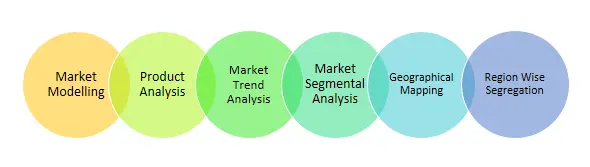
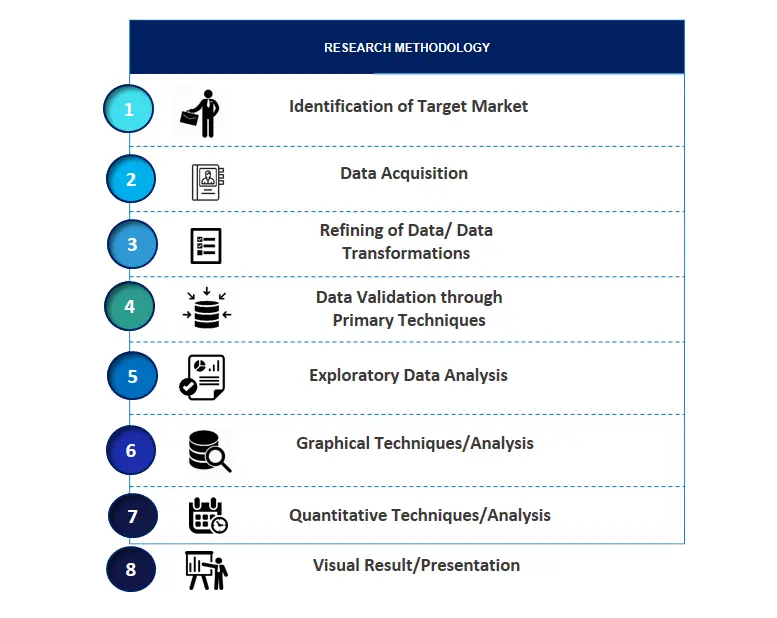
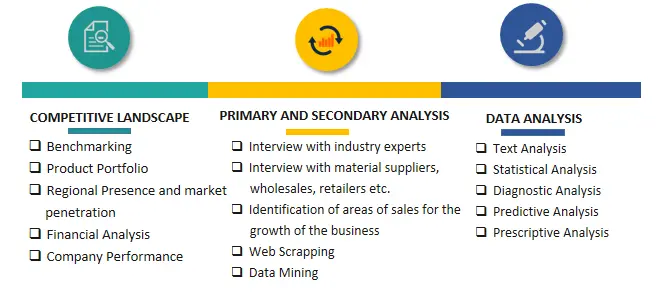
SPER Market Research’s methodology uses great emphasis on primary research to ensure that the market intelligence insights are up to date, reliable and accurate. Primary interviews are done with players involved in each phase of a supply chain to analyze the market forecasting. The secondary research method is used to help you fully understand how the future markets and the spending patterns look likes.

The report is based on in-depth qualitative and quantitative analysis of the Product Market. The quantitative analysis involves the application of various projection and sampling techniques. The qualitative analysis involves primary interviews, surveys, and vendor briefings.  The data gathered as a result of these processes are validated through experts opinion. Our research methodology entails an ideal mixture of primary and secondary initiatives.
SPER-Methodology-1

SPER-Methodology-2

SPER-Methodology-3


Frequently Asked Questions About This Report
PLACE AN ORDER
  • 15 % off
     
    $ 3250
  • 20 % off
             
    $ 4250
  • 25 % off
         
    $ 6250
Pre-Purchase Inquiry
SEND AN INQUIRY
NEED CUSTOMIZATION?
Request Customization
CALL OR EMAIL US
US:
India:
Email:
100% Secure Payment

SPER American Express
SPER VISA
SPER Master Card
SPER Mestro
SPER Paypal
SPER CCAvenues

Have a glance of the Report

  Download Free Sample

Looking for Customization?

 Customization Request

Have a Question?

 Reach Our Analysis Team

COVID-19 impact analysis?

 Request Analysis
Thought Leadership

Trusted by Industry Leaders

Our data-driven insights have influenced the strategy of 200+ reputed companies across the globe.

SPER-Astellas Pharma
SPER-Microsoft
SPER-EY
SPER-McKinsey
SPER-Bain
SPER-Max-Healthcare
SPER-DHL
SPER-IQVIA
SPER-Mitsubishi Logistics
SPER-PACCOR
SPER-Macmillan Education
SPER-Kankar IMRB
SPER-ITA
SPER-PWC
SPER-SAPTCA
SPER-Straumann
SPER-Danaher
SPER-AandM
SPER-MENARINI Silicon Biosystems
SPER-IPSOS
SPER-Heineken
HIPPA Compliant
GDPR Certified
ISO 27001
Peer Reviewed
Get Started Today

Your Competitive Advantage in
Pharmaceutical & Medical Technology
Markets

Join industry leaders leveraging AI-powered intelligence to make confident, data-driven decisions that accelerate breakthrough treatments and technologies to market.

No Credit Card Required
15-Minute Demo
Expert Guidance