According to SPER Market Research, the global lung cancer market is estimated to reach USD XX billion by 2034 with a CAGR 10.85%.
Introduction and Overview
The report includes an in-depth analysis of the global lung cancer market, including market size and trends, product mix, applications, and supplier analysis.
The global lung cancer market was valued at USD 98.33 billion in 2024 and is expected to grow at a CAGR of around 35.1% from 2025 to 2034, reaching approximately USD XX billion by 2034. The market is experiencing strong growth due to the increasing prevalence of lung cancer worldwide and rising healthcare expenditure on cancer treatment. These markets benefit from comprehensive diagnostics and therapeutic solutions, including targeted therapy, immunotherapy, chemotherapy, surgery, and advanced screening technologies. Government awareness initiatives, patient assistance programs, and ongoing R&D for novel treatments are further accelerating demand, supporting robust market expansion.
By Diagnostics and Therapeutics: In 2024, the therapeutics segment emerged as the leading segment in the market.
The lung cancer market encompasses a wide range of diagnostic and therapeutic solutions. Key diagnostic methods include bronchoscopy, molecular testing, imaging, and other advanced techniques, enabling accurate detection and monitoring. On the therapeutic side, non-invasive treatments such as chemotherapy, targeted therapy, immunotherapy, and additional non-invasive options play a vital role in patient care. Treatments are administered through various routes, including oral and parenteral methods. Minimally invasive therapies, including radiofrequency ablation, microwave ablation, thermal or cryoablation, and other similar procedures, are increasingly utilized to improve outcomes while reducing recovery times.
By indication, the non-small cell lung cancer segment held the largest share of the market.
Lung cancer is primarily classified into two main types: non-small cell lung cancer (NSCLC) and small cell lung cancer (SCLC). NSCLC represents the majority of cases and generally grows and spreads at a slower pace, making early detection and targeted therapies more effective. In contrast, SCLC is less common but more aggressive, often progressing rapidly and requiring intensive treatment approaches. Identifying the specific type of lung cancer is critical for selecting suitable therapies, determining prognosis, and designing personalized treatment plans. Accurate classification enables healthcare providers to optimize patient outcomes and deliver more effective, tailored care.
By End Use: Hospital segment dominated the lung cancer market
The lung cancer market caters to a wide range of end users, including hospitals, diagnostic laboratories, and specialty clinics, each playing a critical role in patient care. Hospitals provide comprehensive treatment services, including surgery, chemotherapy, immunotherapy, and radiation therapy, while diagnostic laboratories focus on advanced testing and molecular profiling to ensure accurate diagnosis. Specialty clinics offer targeted and minimally invasive therapies, personalized treatment plans, and follow-up care.
Regional Insights:
The lung cancer market shows notable regional variations influenced by prevalence, healthcare infrastructure, and government initiatives. North America leads due to advanced healthcare systems, high awareness, and strong investments in R&D and early detection programs. Europe maintains significant market share, supported by established healthcare networks and early screening initiatives. The Asia Pacific region is experiencing rapid growth driven by rising smoking rates, air pollution, and expanding healthcare access, particularly in China and India. Emerging markets in Latin America and the Middle East & Africa are also witnessing growth as healthcare infrastructure improves and awareness of lung cancer diagnosis and treatment increases.
Market Competitive Landscape:
The lung cancer market is highly consolidated. Some of the players are AdvaCare Pharma, Biodesix, Bristol-Myers Squibb Company, CHEPLAPHARM Group, Cleveland Clinic, F. Hoffmann La Roche, Memorial Sloan Kettering Cancer Center, Merck, Pfizer, Rutgers Health, Sun Pharmaceutical, Sun Pharmaceuticals, Teva Pharmaceuticals, UPMC, Weill Cornell Medicine.
Recent Developments:
- In September 2024, the Food and Drug Administration approved Osimertinib (Tagrisso, AstraZeneca Pharmaceuticals) for adult cases with locally advanced, unresectable (stage III) non-small cell lung cancer (NSCLC). This blessing aimed to broaden the treatment vacuity, completing being a cure for lung cancer.
- In August 2024, AstraZeneca’s Imfinzi (durvalumab) in combination with chemotherapy has been approved in the U.S. for the treatment of adult cases with resectable early-stage (IIA-IIIB) non-small cell lung cancer (NSCLC).
- In May 2024, Amgen blazoned that the U.S. Food and Drug Administration (FDA) has approved IMDELLTRA for the treatment of adult cases with extensive-stage small cell lung cancer (ES-SCLC) with complete progression on or after platinum-grounded chemotherapy. This helped the company expand its product range for lung cancer.
- In May 2021, the FDA approved LUMAKRAS (sotorasib) for treating adult cases with KRAS G12C-shifted locally advanced or metastatic NSCLC, pressing non-supervisory support for innovative treatments. This helped the company expand its product range in the oncology sector.
Scope of the report:
| Report Metric | Details |
|---|
| Market size available for years | 2021-2034 |
| Base year considered | 2024 |
| Forecast period | 2025-2034 |
| Segments covered | By Diagnostics and Therapeutics, By Indication, By End Use |
| Regions covered | North America, Latin America, Asia-Pacific,Europe, and Middle East &, Africa |
| Companies Covered | AdvaCare Pharma, Biodesix, Bristol-Myers Squibb Company, CHEPLAPHARM Group, Cleveland Clinic, F. Hoffmann La Roche, Memorial Sloan Kettering Cancer Center, Merck, Pfizer, Rutgers Health, Sun Pharmaceutical, Sun Pharmaceuticals, Teva Pharmaceuticals, UPMC, Weill Cornell Medicine |
Key Topics Covered in the Report:
- Global lung Cancer Market Size (FY’2021-FY’2034)
- Overview of Global lung Cancer Market
- Segmentation of Global lung Cancer Market by Diagnostics and Therapeutics (Diagnostics, Therapeutics, minimally invasive therapy)
- Segmentation of Global lung Cancer Market by Indication (Non-small cell lung cancer, Small cell lung cancer)
- Segmentation of Global lung Cancer Market by End Use (hospitals Diagnostic laboratories
- Specialty clinics, other end use)
- Statistical Snap of Global lung Cancer Market
- Expansion Analysis of Global lung Cancer Market
- Problems and Obstacles in Global lung Cancer Market
- Competitive Landscape in the Global lung Cancer Market
- Details on Current Investment in Global lung Cancer Market
- Competitive Analysis of Global lung Cancer Market
- Prominent Players in the Global lung Cancer Market
- SWOT Analysis of Global lung Cancer Market
- Global lung Cancer Market Future Outlook and Projections (FY '2025-
- FY’2034)
- Recommendations from the analyst
1. Introduction
1.1. Scope of the report
1.2. Market segment analysis
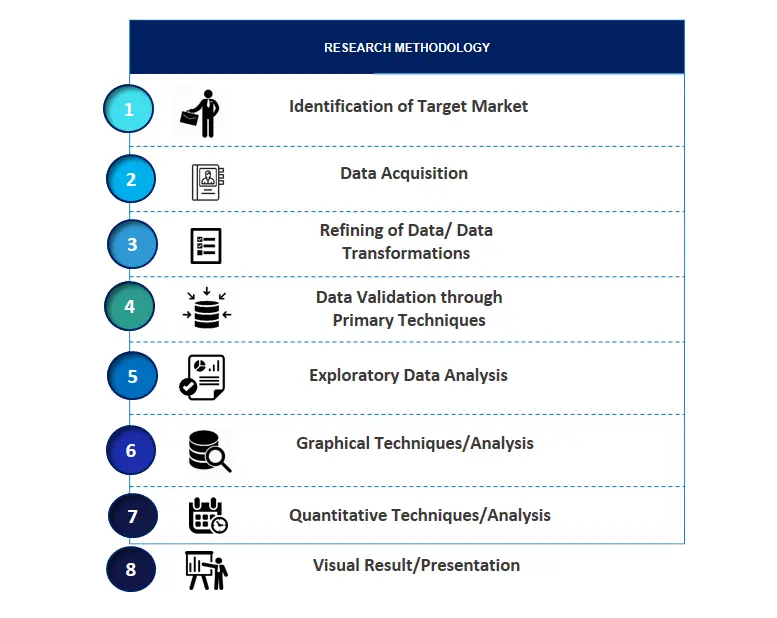
2. Research Methodology
2.1. Research data source
2.1.1. Secondary Data
2.1.2. Primary Data
2.1.3. SPER’s internal database
2.1.4. Premium insight from KOL’s
2.2. Market size estimation
2.2.1. Top-down and Bottom-up approach
2.3. Data triangulation
3. Executive Summary
4. Market Dynamics
4.1. Driver, Restraint, Opportunity and Challenges analysis
4.1.1. Drivers
4.1.2. Restraints
4.1.3. Opportunities
4.1.4. Challenges
5. Market variable and outlook
5.1. SWOT Analysis
5.1.1. Strengths
5.1.2. Weaknesses
5.1.3. Opportunities
5.1.4. Threats
5.2. PESTEL Analysis
5.2.1. Political Landscape
5.2.2. Economic Landscape
5.2.3. Social Landscape
5.2.4. Technological Landscape
5.2.5. Environmental Landscape
5.2.6. Legal Landscape
5.3. PORTER’s Five Forces
5.3.1. Bargaining power of suppliers
5.3.2. Bargaining power of buyers
5.3.3. Threat of Substitute
5.3.4. Threat of new entrant
5.3.5. Competitive rivalry
5.4. Heat Map Analysis
6. Competitive Landscape
6.1. Global Lung Cancer Market Manufacturing Base Distribution, Sales Area, Product Type
6.2. Mergers & Acquisitions, Partnerships, Product Launch, and Collaboration in Global Lung Cancer Market
7. Global Lung Cancer Market, By Diagnostics and Therapeutics, (USD Million) 2021-2034
7.1. Diagnostics
7.1.1. Bronchoscopy
7.1.2. Molecular testing
7.1.3. Imaging
7.1.4. Other diagnostics
7.2. Therapeutics
7.2.1. Non-invasive therapy
7.2.1. By type
7.2.1. Chemotherapy
7.2.1. Targeted therapy
7.2.1. Immunotherapy
7.2.1. Other non-invasive therapies
7.2.1. By route of administration
7.2.1. Oral
7.2.1. Parenteral
7.2.2. Minimally invasive therapy
7.2.2. Radiofrequency ablation
7.2.2. Microwave ablation
7.2.2. Thermal/cryoablation
7.2.2. Other minimally invasive therapies
8. Global Lung Cancer Market, By Indication, (USD Million) 2021-2034
8.1. Non-small cell lung cancer
8.2. Small cell lung cancer
9. Global lung Cancer Market, By End Use, (USD Million) 2021-2034
9.1. Hospitals
9.2. Diagnostic laboratories
9.3. Specialty clinics
9.4. Other end use
10. Global lung Cancer Market, (USD Million) 2021-2034
10.1. Global lung Cancer Market Size and Market Share
11. Global lung Cancer Market, By Region, 2021-2034 (USD Million)
11.1. Asia-Pacific
11.1.1. Australia
11.1.2. China
11.1.3. India
11.1.4. Japan
11.1.5. South Korea
11.1.6. Rest of Asia-Pacific
11.2. Europe
11.2.1. France
11.2.2. Germany
11.2.3. Italy
11.2.4. Spain
11.2.5. United Kingdom
11.2.6. Rest of Europe
11.3. Middle East and Africa
11.3.1. Kingdom of Saudi Arabia
11.3.2. United Arab Emirates
11.3.3. Qatar
11.3.4. South Africa
11.3.5. Egypt
11.3.6. Morocco
11.3.7. Nigeria
11.3.8. Rest of Middle-East and Africa
11.4. North America
11.4.1. Canada
11.4.2. Mexico
11.4.3. United States
11.5. Latin America
11.5.1. Argentina
11.5.2. Brazil
11.5.3. Rest of Latin America
12. Company Profile
12.1. AdvaCare Pharma
12.1.1. Company details
12.1.2. Financial outlook
12.1.3. Product summary
12.1.4. Recent developments
12.2. Biodesix
12.2.1. Company details
12.2.2. Financial outlook
12.2.3. Product summary
12.2.4. Recent developments
12.3. Bristol-Myers Squibb Company
12.3.1. Company details
12.3.2. Financial outlook
12.3.3. Product summary
12.3.4. Recent developments
12.4. CHEPLAPHARM Group
12.4.1. Company details
12.4.2. Financial outlook
12.4.3. Product summary
12.4.4. Recent developments
12.5. Cleveland Clinic
12.5.1. Company details
12.5.2. Financial outlook
12.5.3. Product summary
12.5.4. Recent developments
12.6. F. Hoffmann La Roche
12.6.1. Company details
12.6.2. Financial outlook
12.6.3. Product summary
12.6.4. Recent developments
12.7. Memorial Sloan Kettering Cancer Center
12.7.1. Company details
12.7.2. Financial outlook
12.7.3. Product summary
12.7.4. Recent developments
12.8. Merck
12.8.1. Company details
12.8.2. Financial outlook
12.8.3. Product summary
12.8.4. Recent developments
12.9. Pfizer
12.9.1. Company details
12.9.2. Financial outlook
12.9.3. Product summary
12.9.4. Recent developments
12.10. Rutgers Health Sun Pharmaceutical
12.10.1. Company details
12.10.2. Financial outlook
12.10.3. Product summary
12.10.4. Recent developments
12.11. Rutgers Health Sun Pharmaceutical
12.11.1. Company details
12.11.2. Financial outlook
12.11.3. Product summary
12.11.4. Recent developments
12.12. Sun Pharmaceuticals
12.12.1. Company details
12.12.2. Financial outlook
12.12.3. Product summary
12.12.4. Recent developments
12.13. Teva Pharmaceuticals
12.13.1. Company details
12.13.2. Financial outlook
12.13.3. Product summary
12.13.4. Recent developments
12.14. UPMC
12.14.1. Company details
12.14.2. Financial outlook
12.14.3. Product summary
12.14.4. Recent developments
12.15. Weill Cornell Medicine
12.15.1. Company details
12.15.2. Financial outlook
12.15.3. Product summary
12.15.4. Recent developments
12.16. Others
13. Conclusion
14. List of Abbreviations
15. Reference Links