Global Metal Packaging Market Analysis and Forecast
Global Metal Packaging Market Growth, Size, Trends Analysis- By Material Type, By Product Type, By Application – Regional Outlook, Competitive Strategies and Segment Forecast to 2034
| Published: Feb-2026 | Report ID: PACK2615 | Pages: 1 - 181 | Formats*: |
| Category : Packaging | |||
According to SPER Market Research, the Global Metal Packaging Market is estimated to reach USD 217.08 billion by 2034 with a CAGR 3.54%.
Introduction and Overview
The report includes an in-depth analysis of the Global Metal Packaging Market, covering market size and trends, product mix, applications, and supplier analysis.
The global Metal Packaging Market was valued at USD 153.3 billion in 2024 and is expected to grow at a CAGR of around 3.54% from 2025 to 2034. The market is witnessing strong growth driven by rising demand for sustainable and durable packaging solutions across food, beverage, healthcare, and industrial sectors. Metal packaging provides benefits such as product protection, extended shelf life, recyclability, and premium appeal. Increasing consumer preference for eco-friendly packaging, regulatory emphasis on circular economy practices, and innovations in aluminum and steel packaging technologies are further accelerating market adoption and expansion globally.
By Material Type:
In the global metal packaging market, aluminum holds a strong position due to its lightweight nature, excellent corrosion resistance, and high recyclability, making it the preferred choice for beverage cans, food containers, and personal care packaging. Aluminum’s ability to preserve product quality while reducing transportation costs enhances its adoption globally. Steel is widely used for heavy-duty applications, such as barrels, drums, and industrial packaging, due to its strength and durability. While steel remains important, aluminum’s versatility and sustainability benefits have accelerated its use across multiple sectors. The trend toward eco-friendly packaging further supports aluminum’s adoption over steel.
By Product Type:
Among product types, containers and cans account for a significant portion of the metal packaging market, driven by their widespread use in food, beverages, and consumer goods. Beverage cans, particularly aluminum, are highly preferred for their portability, recyclability, and brand visibility. Bottles and jars are also increasingly used for beverages and personal care products. Caps and closures play an essential role in sealing and maintaining product integrity, while barrels and drums cater to industrial and bulk storage needs. Other specialized metal packaging products are gaining traction, but containers and cans remain the primary contributor to market growth due to high demand and versatility.
By Application:
In terms of application, beverages and processed food represent major segments in the metal packaging market. Beverages, including soft drinks, juices, and alcoholic drinks, rely heavily on aluminum cans for freshness, lightweight handling, and recyclability. Processed food also benefits from metal packaging that extends shelf life and ensures safety. Dairy products and personal care items contribute moderately, using tins and bottles for quality preservation. Industrial applications such as paints, varnishes, and healthcare products utilize steel and aluminum for durability. Overall, food and beverage applications drive the majority of market adoption, while other segments grow steadily alongside sustainability trends.
Regional Insights:
Asia Pacific leads the metal packaging market, propelled by rapid urbanization, increasing packaged food and beverage consumption, and growing industrial demand in China, India, Japan, South Korea, and Australia. Rising middle-class income and modernization of cold-chain infrastructure support packaging adoption. North America, led by the U.S. and Canada, benefits from strong recycling systems, advanced technology adoption, and sustainability-driven initiatives. Europe, including Germany, the UK, France, Italy, Spain, and Russia, shows growth due to strict environmental regulations and circular economy frameworks. Latin America and MEA (Brazil, Mexico, UAE, Saudi Arabia, South Africa) are emerging markets were improving infrastructure and rising packaged goods consumption are gradually increasing market share.
Market Competitive Landscape:
The Metal Packaging Market is highly consolidated. Some of the market key players are Amcor, Ardagh Group, Ball Corporation, CAN-PACK, CCL Containers, CPMC Holdings, Crown Holdings, DS Containers, Greif, Mauser Packaging Solutions, Novelis, Silgan Holdings, Sonoco Products, Tata Steel, Toyo Seikan Group, Tubex, Visy Industrie
Recent Developments:
- In May 2024, Mauser Packaging results completed its accession of Taenza, S.A. de C.V., a Mexican manufacturer of drum- sword barrels and buckets. This accession strengthens Mauser’s presence in the Mexican request, expanding its manufacturing capabilities and offering growth openings in the makeup, aseptic, and specialty sectors.
- In January 2024, Novelis Inc. inked a new contract with Ardagh Metal Packaging USA to supply aluminum libation packaging distance to its North American installations. This cooperation highlights the growing demand for sustainable packaging, driven by consumer preference for recyclable aluminum barrels. Novelis' new factory in Bay Minette, Alabama, will support this expansion.
Scope of the report:
| Report Metric | Details |
|---|---|
| Market size available for years | 2021-2034 |
| Base year considered | 2024 |
| Forecast period | 2025-2034 |
| Segments covered | By Material Type, By Product Type, By Application |
| Regions covered | North America, Latin America, Asia-Pacific, Europe, and Middle East & Africa |
| Companies Covered | Amcor, Ardagh Group, Ball Corporation, CAN-PACK, CCL Containers, CPMC Holdings, Crown Holdings, DS Containers, Greif, Mauser Packaging Solutions, Novelis, Silgan Holdings, Sonoco Products, Tata Steel, Toyo Seikan Group, Tubex, Visy Industrie |
Key Topics Covered in the Report
- Global Metal Packaging Market Size (FY’2021–FY’2034)
- Overview of Global Metal Packaging Market
- Segmentation of Global Metal Packaging Market by Material Type (Aluminum, Steel)
- Segmentation of Global Metal Packaging Market by Product Type (Containers & cans, Bottles & jars, Caps & closures, Barrels & drums, Others)
- Segmentation of Global Metal Packaging Market by Application (Processed food, Dairy products, Beverages, Personal care & cosmetics, Paints & varnishes, Healthcare, Others)
- Statistical Snap of Global Metal Packaging Market
- Expansion Analysis of Global Metal Packaging Market
- Challenges and Constraints in Global Metal Packaging Market
- Competitive Landscape in the Global Metal Packaging Market
- Details on Current Investment in Global Metal Packaging Market
- Competitive Analysis of Global Metal Packaging Market
- Prominent Players in the Global Metal Packaging Market
- SWOT Analysis of Global Metal Packaging Market
- Global Metal Packaging Market Future Outlook and Projections (FY’2025–FY’2034)
- Recommendations from Analyst
1.1. Scope of the report1.2. Market segment analysis
2.1. Research data source
2.1.1. Secondary Data2.1.2. Primary Data2.1.3. SPER’s internal database2.1.4. Premium insight from KOL’s
2.2. Market size estimation
2.2.1. Top-down and Bottom-up approach
2.3. Data triangulation
4.1. Driver, Restraint, Opportunity and Challenges analysis
4.1.1. Drivers4.1.2. Restraints4.1.3. Opportunities4.1.4. Challenges
5.1. SWOT Analysis
5.1.1. Strengths5.1.2. Weaknesses5.1.3. Opportunities5.1.4. Threats
5.2. PESTEL Analysis
5.2.1. Political Landscape5.2.2. Economic Landscape5.2.3. Social Landscape5.2.4. Technological Landscape5.2.5. Environmental Landscape
5.2.6. Legal Landscape
5.3. PORTER’s Five Forces5.3.1. Bargaining power of suppliers5.3.2. Bargaining power of buyers5.3.3. Threat of Substitute5.3.4. Threat of new entrant5.3.5. Competitive rivalry
5.4. Heat Map Analysis
6.1. Global Metal Packaging Market Manufacturing Base Distribution, Sales Area, Product Type6.2. Mergers & Acquisitions, Partnerships, Product Launch, and Collaboration in Global Metal Packaging Market
7.1. Aluminum7.2. Steel
8.1. Containers & cans8.2. Bottles & jars8.3. Caps & closures8.4. Barrels & drums8.5. Others
9.1. Processed food9.2. Dairy products9.3. Beverages9.4. Personal care & cosmetics9.5. Paints & varnishes9.6. Healthcare9.7. Others
10.1. Global Metal Packaging Market Size and Market Share
11.1. Asia-Pacific
11.1.1. Australia11.1.2. China11.1.3. India11.1.4. Japan11.1.5. South Korea11.1.6. Rest of Asia-Pacific
11.2. Europe
11.2.1. France11.2.2. Germany11.2.3. Italy11.2.4. Spain11.2.5. United Kingdom11.2.6. Rest of Europe
11.3. Middle East and Africa
11.3.1. Kingdom of Saudi Arabia11.3.2. United Arab Emirates11.3.3. Qatar11.3.4. South Africa11.3.5. Egypt11.3.6. Morocco11.3.7. Nigeria11.3.8. Rest of Middle-East and Africa
11.4. North America
11.4.1. Canada11.4.2. Mexico11.4.3. United States
11.5. Latin America
11.5.1. Argentina11.5.2. Brazil11.5.3. Rest of Latin America
12.1. Amcor
12.1.1. Company details12.1.2. Financial outlook12.1.3. Product summary12.1.4. Recent developments
12.2. Ardagh Group
12.2.1. Company details12.2.2. Financial outlook12.2.3. Product summary12.2.4. Recent developments
12.3. Ball Corporation
12.3.1. Company details12.3.2. Financial outlook12.3.3. Product summary12.3.4. Recent developments
12.4. CAN-PACK
12.4.1. Company details12.4.2. Financial outlook12.4.3. Product summary12.4.4. Recent developments
12.5. CCL Containers
12.5.1. Company details12.5.2. Financial outlook12.5.3. Product summary12.5.4. Recent developments
12.6. CPMC Holdings
12.6.1. Company details12.6.2. Financial outlook12.6.3. Product summary12.6.4. Recent developments
12.7. Crown Holdings
12.7.1. Company details12.7.2. Financial outlook12.7.3. Product summary12.7.4. Recent developments
12.8. DS Containers
12.8.1. Company details12.8.2. Financial outlook12.8.3. Product summary12.8.4. Recent developments
12.9. Greif
12.9.1. Company details12.9.2. Financial outlook12.9.3. Product summary12.9.4. Recent developments
12.10. Mauser Packaging Solutions
12.10.1. Company details12.10.2. Financial outlook12.10.3. Product summary12.10.4. Recent developments
12.11. Novelis
12.11.1. Company details12.11.2. Financial outlook12.11.3. Product summary12.11.4. Recent developments
12.12. Silgan Holdings
12.12.1. Company details12.12.2. Financial outlook12.12.3. Product summary12.12.4. Recent developments
12.13. Sonoco Products
12.13.1. Company details12.13.2. Financial outlook12.13.3. Product summary12.13.4. Recent developments
12.14. Tata Steel
12.14.1. Company details12.14.2. Financial outlook12.14.3. Product summary12.14.4. Recent developments
12.15. Toyo Seikan Group
12.15.1. Company details12.15.2. Financial outlook12.15.3. Product summary12.15.4. Recent developments
12.16. Tubex
12.16.1. Company details12.16.2. Financial outlook12.16.3. Product summary12.16.4. Recent developments
12.17. Visy Industrie
12.17.1. Company details12.17.2. Financial outlook12.17.3. Product summary12.17.4. Recent developments
12.18. Others
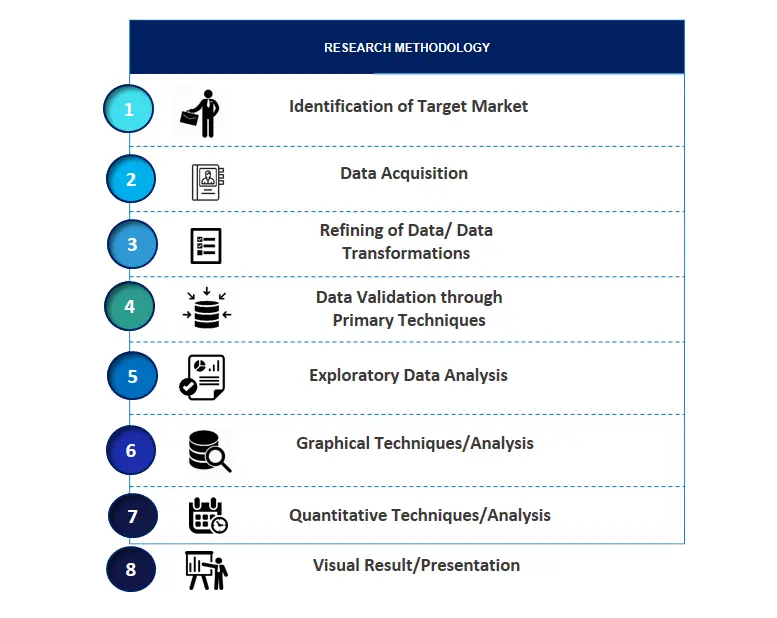
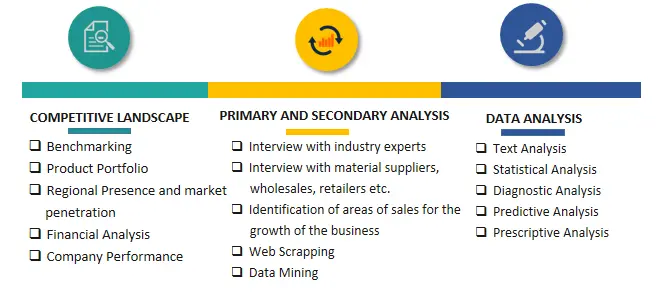
SPER Market Research’s methodology uses great emphasis on primary research to ensure that the market intelligence insights are up to date, reliable and accurate. Primary interviews are done with players involved in each phase of a supply chain to analyze the market forecasting. The secondary research method is used to help you fully understand how the future markets and the spending patterns look likes.
The report is based on in-depth qualitative and quantitative analysis of the Product Market. The quantitative analysis involves the application of various projection and sampling techniques. The qualitative analysis involves primary interviews, surveys, and vendor briefings. The data gathered as a result of these processes are validated through experts opinion. Our research methodology entails an ideal mixture of primary and secondary initiatives.
Frequently Asked Questions About This Report
PLACE AN ORDER
Year End Discount
Sample Report
Pre-Purchase Inquiry
NEED CUSTOMIZATION?
Request CustomizationCALL OR EMAIL US
100% Secure Payment