Global Smart Wheelchair Market Trends to 2034

Global Smart Wheelchair Market Growth, Size, Trends Analysis-By Control System, By Application, By Distribution Channel, By End Use – Regional Outlook, Competitive Strategies and Segment Forecast to 2034

Published: Jan-2026 Report ID: MEDE2601 Pages: 1 - 133 Formats*:     
Category : Medical Devices
According to SPER Market Research, the Global Smart Wheelchair Market is estimated to reach USD 423.02 million by 2034 with a CAGR 8.64%.

Introduction and Overview

The report includes an in-depth analysis of the Global Smart Wheelchair Market, including market size and trends, product mix, Applications, and supplier analysis.

The global Smart Wheelchair Market was valued at USD 184.7 million in 2024 and is expected to grow at a CAGR of around 8.64% from 2025 to 2034. The market is experiencing steady growth due to increasing deployment of advanced technologies such as IoT, sensors, and automated navigation in mobility devices, which enhance user autonomy and safety. Rising global aging populations, growing disability rates, and expanding home-based healthcare models are further boosting demand. Supportive government and NGO initiatives aimed at disability inclusion and accessible mobility aids are also accelerating adoption. These factors together are driving investment and innovation in smart wheelchair solutions worldwide.

By Control System:
The joystick-controlled segment led the smart wheelchair market, as it offers ease of use, reliability, and precise maneuverability for users with limited mobility. Joystick systems are widely accepted due to their intuitive design and adaptability to different user needs. They can also be easily integrated with advanced features such as sensors, obstacle detection, and connectivity systems. Compared to voice- or gesture-based controls, joystick control remains more affordable and practical, making it the preferred choice across home healthcare, hospitals, and rehabilitation settings, thereby maintaining its dominant market position.

By Application:
The mobility assistance segment has the highest market share, as smart wheelchairs are primarily designed to enhance independent movement for elderly and disabled individuals. Advanced features such as automated navigation, obstacle avoidance, and stability control significantly improve daily mobility in both indoor and outdoor environments. Increasing prevalence of mobility impairments due to aging, injuries, and chronic conditions is driving demand for smart wheelchairs focused on mobility support. The ability of these devices to improve quality of life and reduce caregiver dependency further strengthens the dominance of this application segment.

By Distribution Channel:
The medical equipment suppliers and specialty stores segment dominates the market, as these channels provide professional guidance, customization options, and after-sales support essential for smart wheelchair adoption. Customers often prefer specialized distributors that offer product demonstrations, fitting services, and maintenance support. Hospitals and rehabilitation centers also rely on established medical device suppliers for procurement. The growing emphasis on personalized mobility solutions and regulatory compliance reinforces the dominance of specialized distribution channels over general retail and online platforms.

By End Use:
The home healthcare segment dominates the smart wheelchair market, driven by the increasing shift toward home-based care and independent living. Smart wheelchairs enable users to move safely and comfortably within home environments while minimizing dependence on caregivers. Rising healthcare costs, aging populations, and advancements in remote monitoring technologies are accelerating adoption in home settings. Supportive government policies and insurance programs promoting home healthcare solutions further contribute to the strong dominance of this end-use segment globally.

Regional Insights:
The smart wheelchair market is analyzed across major regions including North America, Europe, Asia Pacific, Latin America, and the Middle East & Africa. North America, led by the U.S. and Canada, holds a significant share due to advanced healthcare infrastructure, high adoption of assistive technologies, and favorable reimbursement policies. Europe follows with strong demand across Germany, the UK, France, Spain, Italy, and the Netherlands, supported by aging populations and government-backed disability programs. Asia Pacific is witnessing rapid growth in China, Japan, India, Australia, and South Korea, driven by rising disability rates and healthcare investments. Latin America and the Middle East & Africa are emerging markets, supported by improving healthcare access and assistive technology initiatives.

Market Competitive Landscape:
The Smart Wheelchair Market is highly consolidated. Some of the market key players are Airwheel, INVACARE, KARMA, LUCI, ottobock, permobil, QUANTUM, SCEWO, WHILL, YAMAHA

Recent Developments:

  • In October 2024, Yamaha Motor launched the JWG- 1, its rearmost electric power unit for wheelchairs, marking the first full redesign in 10 times. The new model is set to debut in Japan before expanding encyclopedically, reflecting Yamaha’s commitment to enhancing mobility results. Yamaha’s strategic drive into the electric wheelchair member underscores its focus on ergonomic design, effectiveness, and global request expansion.

Scope of the report:

Report MetricDetails
Market size available for years2021-2034
Base year considered2024
Forecast period2025-2034
Segments coveredBy Control System, By Distribution Channel, By Application, By End Use
Regions coveredNorth America, Latin America, Asia-Pacific,Europe, and Middle East & Africa
Companies CoveredAirwheel, INVACARE, KARMA, LUCI, ottobock, permobil, QUANTUM, SCEWO, WHILL, YAMAHA

1. Introduction
1.1. Scope of the report
1.2. Market segment analysis 

2. Research Methodology
2.1. Research data source
2.1.1. Secondary Data
2.1.2. Primary Data
2.1.3. SPER’s internal database
2.1.4. Premium insight from KOL’s
2.2. Market size estimation
2.2.1. Top-down and Bottom-up approach
2.3. Data triangulation

3. Executive Summary

4. Market Dynamics
4.1. Driver, Restraint, Opportunity and Challenges analysis
4.1.1. Drivers
4.1.2. Restraints
4.1.3. Opportunities
4.1.4. Challenges

5. Market variable and outlook
5.1. SWOT Analysis
5.1.1. Strengths
5.1.2. Weaknesses
5.1.3. Opportunities
5.1.4. Threats
5.2. PESTEL Analysis
5.2.1. Political Landscape
5.2.2. Economic Landscape
5.2.3. Social Landscape
5.2.4. Technological Landscape
5.2.5. Environmental Landscape
5.2.6. Legal Landscape
5.3. PORTER’s Five Forces 
5.3.1. Bargaining power of suppliers
5.3.2. Bargaining power of buyers
5.3.3. Threat of Substitute
5.3.4. Threat of new entrant
5.3.5. Competitive rivalry
5.4. Heat Map Analysis

6. Competitive Landscape
6.1. Global Smart Wheelchair Market Manufacturing Base Distribution, Sales Area, Product Type 
6.2. Mergers & Acquisitions, Partnerships, Product Launch, and Collaboration in Global Smart Wheelchair Market

7. Global Smart Wheelchair Market, By Control System, (USD Million) 2021-2034 
7.1. Joystick control
7.2. Bluetooth connected
7.3. Touchscreen interface
7.4. Voice control
7.5. Other control systems

8. Global Smart Wheelchair Market, By Application, (USD Million) 2021-2034 
8.1. Mobility
8.2. Neurological conditions

9. Global Smart Wheelchair Market, By Distribution Channel, (USD Million) 2021-2034 
9.1. Brick and mortar
9.2. E-commerce

10. Global Smart Wheelchair Market, By End Use, (USD Million) 2021-2034 
10.1. Home care settings
10.2. Healthcare facilities

11. Global Smart Wheelchair Market, (USD Million) 2021-2034 
11.1. Global Smart Wheelchair Market Size and Market Share

12. Global Smart Wheelchair Market, By Region, 2021-2034 (USD Million)
12.1. Asia-Pacific
12.1.1. Australia
12.1.2. China
12.1.3. India
12.1.4. Japan
12.1.5. South Korea
12.1.6. Rest of Asia-Pacific
12.2. Europe
12.2.1. France
12.2.2. Germany
12.2.3. Italy
12.2.4. Spain
12.2.5. United Kingdom
12.2.6. Rest of Europe
12.3. Middle East and Africa
12.3.1. Kingdom of Saudi Arabia 
12.3.2. United Arab Emirates
12.3.3. Qatar
12.3.4. South Africa
12.3.5. Egypt
12.3.6. Morocco
12.3.7. Nigeria
12.3.8. Rest of Middle-East and Africa
12.4. North America
12.4.1. Canada
12.4.2. Mexico
12.4.3. United States
12.5. Latin America
12.5.1. Argentina
12.5.2. Brazil
12.5.3. Rest of Latin America 

13. Company Profile
13.1. Airwheel
13.1.1. Company details
13.1.2. Financial outlook
13.1.3. Product summary 
13.1.4. Recent developments
13.2. INVACARE
13.2.1. Company details
13.2.2. Financial outlook
13.2.3. Product summary 
13.2.4. Recent developments
13.3. KARMA
13.3.1. Company details
13.3.2. Financial outlook
13.3.3. Product summary 
13.3.4. Recent developments
13.4. LUCI
13.4.1. Company details
13.4.2. Financial outlook
13.4.3. Product summary 
13.4.4. Recent developments
13.5. ottobock
13.5.1. Company details
13.5.2. Financial outlook
13.5.3. Product summary 
13.5.4. Recent developments
13.6. permobil
13.6.1. Company details
13.6.2. Financial outlook
13.6.3. Product summary 
13.6.4. Recent developments
13.7. QUANTUM
13.7.1. Company details
13.7.2. Financial outlook
13.7.3. Product summary 
13.7.4. Recent developments
13.8. SCEWO
13.8.1. Company details
13.8.2. Financial outlook
13.8.3. Product summary 
13.8.4. Recent developments
13.9. WHIL
13.9.1. Company details
13.9.2. Financial outlook
13.9.3. Product summary 
13.9.4. Recent developments
13.10. YAMAHA
13.10.1. Company details
13.10.2. Financial outlook
13.10.3. Product summary 
13.10.4. Recent developments
13.11. Others

14. Conclusion
15. List of Abbreviations
16. Reference Links

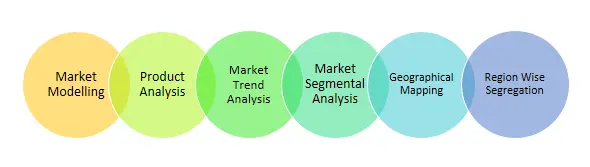
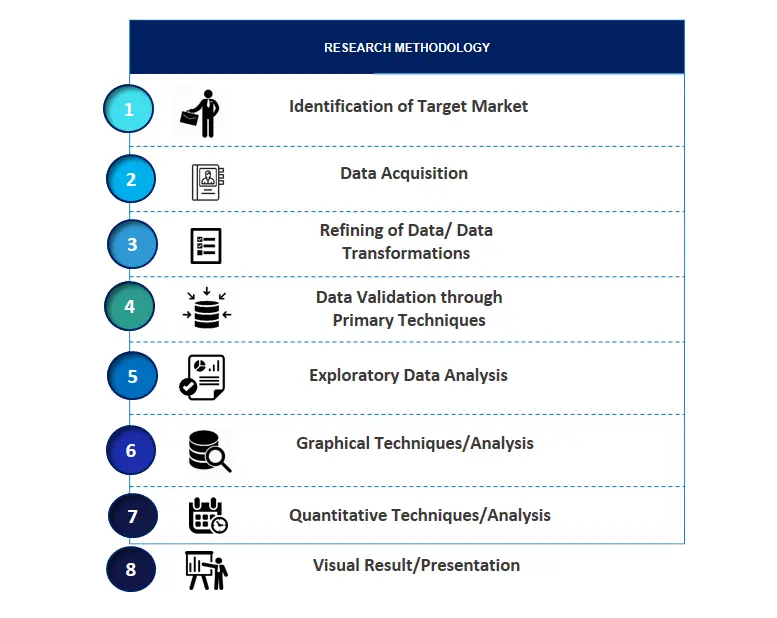
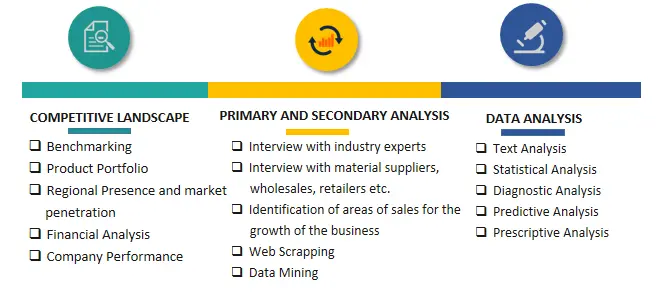
SPER Market Research’s methodology uses great emphasis on primary research to ensure that the market intelligence insights are up to date, reliable and accurate. Primary interviews are done with players involved in each phase of a supply chain to analyze the market forecasting. The secondary research method is used to help you fully understand how the future markets and the spending patterns look likes.

The report is based on in-depth qualitative and quantitative analysis of the Product Market. The quantitative analysis involves the application of various projection and sampling techniques. The qualitative analysis involves primary interviews, surveys, and vendor briefings.  The data gathered as a result of these processes are validated through experts opinion. Our research methodology entails an ideal mixture of primary and secondary initiatives.
SPER-Methodology-1

SPER-Methodology-2

SPER-Methodology-3


Frequently Asked Questions About This Report
PLACE AN ORDER
  • 15 % off
     
    $ 4250
  • 20 % off
             
    $ 5650
  • 25 % off
         
    $ 7450
Pre-Purchase Inquiry
SEND AN INQUIRY
NEED CUSTOMIZATION?
Request Customization
CALL OR EMAIL US
US:
India:
Email:
100% Secure Payment

SPER American Express
SPER VISA
SPER Master Card
SPER Mestro
SPER Paypal
SPER CCAvenues

Have a glance of the Report

  Download Free Sample

Looking for Customization?

 Customization Request

Have a Question?

 Reach Our Analysis Team

COVID-19 impact analysis?

 Request Analysis
Thought Leadership

Trusted by Industry Leaders

Our data-driven insights have influenced the strategy of 200+ reputed companies across the globe.

SPER-Astellas Pharma
SPER-Microsoft
SPER-EY
SPER-McKinsey
SPER-Bain
SPER-Max-Healthcare
SPER-DHL
SPER-IQVIA
SPER-Mitsubishi Logistics
SPER-PACCOR
SPER-Macmillan Education
SPER-Kankar IMRB
SPER-ITA
SPER-PWC
SPER-SAPTCA
SPER-Straumann
SPER-Danaher
SPER-AandM
SPER-MENARINI Silicon Biosystems
SPER-IPSOS
SPER-Heineken
HIPPA Compliant
GDPR Certified
ISO 27001
Peer Reviewed
Get Started Today

Your Competitive Advantage in
Pharmaceutical & Medical Technology
Markets

Join industry leaders leveraging AI-powered intelligence to make confident, data-driven decisions that accelerate breakthrough treatments and technologies to market.

No Credit Card Required
15-Minute Demo
Expert Guidance