Pharmaceutical Cold Chain Packaging Market Analysis 2034
Global Pharmaceutical Cold Chain Packaging Market Growth, Size, Trends Analysis- By Material, By Product, By Type, By End Use – Regional Outlook, Competitive Strategies and Segment Forecast to 2034
| Published: Feb-2026 | Report ID: PACK2646 | Pages: 1 - 120 | Formats*: |
| Category : Packaging | |||
- In September 2024, Tower cold chain and CRYOPDP has entered into a strategic cooperation to further enhance pharmaceutical force chain results. This intermingled company will aim to give guests with a wide range of advanced temperature-controlled results and services.
- In April 2024, CSafe has introduced their three cold chain technology, which will be used inMulti-use Dewars, designed to serve cell and gene remedy request. These cyrogenic and applicable dewards can maintain coolest temperature range of upto-150 °C. This technology uses the liquid nitrogen vapor units and also includes a figure in TracSafe RLT tracking device.
- In June 2024, Overhaul has launched their cold chain quality results for pharmaceutical & high value food & libation request. This innovative software result delivers unequaled threat and quality operation for time and temperature-sensitive weight, icing optimal conditions throughout the force chain for the medicinal, healthcare, and high- value food and libation sectors.
| Report Metric | Details |
|---|---|
| Market size available for years | 2021-2034 |
| Base year considered | 2024 |
| Forecast period | 2025-2034 |
| Segments covered | By Material, By Product, By Type, By End Use |
| Regions covered | North America, Latin America, Asia-Pacific, Europe, and Middle East & Africa |
| Companies Covered | Chill-Pak, Cold Chain Technologies, CoolPac, Cryopak, CSafe, Envirotainer, Haier Biomedical, Insulated Products Corporation, Intelsius, Nordic Cold Chain Solutions, Sealed Air, Smurfit Kappa, Sofrigam Group, Sonoco ThermoSafe, Tessol, Va-Q-Tec Thermal Solutions, Vericool. |
- Global Pharmaceutical Cold Chain Packaging Market Size (FY’2021–FY’2034)
- Overview of Global Pharmaceutical Cold Chain Packaging Market
- Segmentation of Global Pharmaceutical Cold Chain Packaging Market by Material (Plastics, Metal, Paper)
- Segmentation of Global Pharmaceutical Cold Chain Packaging Market by Product (Insulated boxes, Containers, Coolants, Pallets, Others)
- Segmentation of Global Pharmaceutical Cold Chain Packaging Market by Type (Active, Passive)
- Segmentation of Global Pharmaceutical Cold Chain Packaging Market by End Use (Biopharmaceutical companies, Clinical research organizations, Hospitals, Research institutes, Logistics and distribution companies, Others)
- Statistical Snap of Global Pharmaceutical Cold Chain Packaging Market
- Expansion Analysis of Global Pharmaceutical Cold Chain Packaging Market
- Problems and Obstacles in Global Pharmaceutical Cold Chain Packaging Market
- Competitive Landscape in the Global Pharmaceutical Cold Chain Packaging Market
- Details on Current Investment in Global Pharmaceutical Cold Chain Packaging Market
- Competitive Analysis of Global Pharmaceutical Cold Chain Packaging Market
- Prominent Players in the Global Pharmaceutical Cold Chain Packaging Market
- SWOT Analysis of Global Pharmaceutical Cold Chain Packaging Market
- Global Pharmaceutical Cold Chain Packaging Market Future Outlook and Projections (FY’2025–FY’2034)
- Recommendations from Analyst
1.1. Scope of the report1.2. Market segment analysis
2.1. Research data source
2.1.1. Secondary Data2.1.2. Primary Data2.1.3. SPER’s internal database2.1.4. Premium insight from KOL’s
2.2. Market size estimation
2.2.1. Top-down and Bottom-up approach
2.3. Data triangulation
4.1. Driver, Restraint, Opportunity and Challenges analysis
4.1.1. Drivers4.1.2. Restraints4.1.3. Opportunities4.1.4. Challenges
5.1. SWOT Analysis
5.1.1. Strengths5.1.2. Weaknesses5.1.3. Opportunities5.1.4. Threats
5.2. PESTEL Analysis
5.2.1. Political Landscape5.2.2. Economic Landscape5.2.3. Social Landscape5.2.4. Technological Landscape5.2.5. Environmental Landscape5.2.6. Legal Landscape
5.3. PORTER’s Five Forces
5.3.1. Bargaining power of suppliers5.3.2. Bargaining power of buyers5.3.3. Threat of Substitute5.3.4. Threat of new entrant5.3.5. Competitive rivalry
5.4. Heat Map Analysis
6.1. Global Pharmaceutical Cold Chain Packaging Market Manufacturing Base Distribution, Sales Area, Product Type6.2. Mergers & Acquisitions, Partnerships, Product Launch, and Collaboration in Global Pharmaceutical Cold Chain Packaging Market
7.1. Plastics
7.1.1. Polyethylene (PE)7.1.2. Polypropylene (PP)7.1.3. Polyethylene Terephthalate (PET)7.1.4. Polyurethane (PU)7.1.5. Others
7.2. Metal7.3. Paper
8.1. Active8.2. Passive
9.1. Insulated box9.2. Containers9.3. Coolants9.4. Pallets9.5. Others
10.1. Biopharmaceutical companies10.2. Clinical research organizations10.3. Hospitals10.4. Research institutes10.5. Logistics and distribution companies10.6. Others
11.1. Global Pharmaceutical Cold Chain Packaging Market Size and Market Share
12.1. Asia-Pacific
12.1.1. Australia12.1.2. China12.1.3. India12.1.4. Japan12.1.5. South Korea12.1.6. Rest of Asia-Pacific
12.2. Europe
12.2.1. France12.2.2. Germany12.2.3. Italy12.2.4. Spain12.2.5. United Kingdom12.2.6. Rest of Europe
12.3. Middle East and Africa
12.3.1. Kingdom of Saudi Arabia12.3.2. United Arab Emirates12.3.3. Qatar12.3.4. South Africa12.3.5. Egypt12.3.6. Morocco12.3.7. Nigeria12.3.8. Rest of Middle-East and Africa
12.4. North America
12.4.1. Canada12.4.2. Mexico12.4.3. United States
12.5. Latin America
12.5.1. Argentina12.5.2. Brazil12.5.3. Rest of Latin America
13.1. Chill-Pak
13.1.1. Company details13.1.2. Financial outlook13.1.3. Product summary13.1.4. Recent developments
13.2. Cold Chain Technologies
13.2.1. Company details13.2.2. Financial outlook13.2.3. Product summary13.2.4. Recent developments
13.3. CoolPac
13.3.1. Company details13.3.2. Financial outlook13.3.3. Product summary13.3.4. Recent developments
13.4. Cryopak
13.4.1. Company details13.4.2. Financial outlook13.4.3. Product summary13.4.4. Recent developments
13.5. CSafe
13.5.1. Company details13.5.2. Financial outlook13.5.3. Product summary13.5.4. Recent developments
13.6. Envirotainer
13.6.1. Company details13.6.2. Financial outlook13.6.3. Product summary13.6.4. Recent developments
13.7. Haier Biomedical
13.7.1. Company details13.7.2. Financial outlook13.7.3. Product summary13.7.4. Recent developments
13.8. Insulated Products Corporation
13.8.1. Company details13.8.2. Financial outlook13.8.3. Product summary13.8.4. Recent developments
13.9. Intelsius
13.9.1. Company details13.9.2. Financial outlook13.9.3. Product summary13.9.4. Recent developments
13.10. Nordic Cold Chain Solutions
13.10.1. Company details13.10.2. Financial outlook13.10.3. Product summary13.10.4. Recent developments
13.11. Sealed Air
13.11.1. Company details13.11.2. Financial outlook13.11.3. Product summary13.11.4. Recent developments
13.12. Smurfit Kappa
13.12.1. Company details13.12.2. Financial outlook13.12.3. Product summary13.12.4. Recent developments
13.13. Sofrigam Group
13.13.1. Company details13.13.2. Financial outlook13.13.3. Product summary13.13.4. Recent developments
13.14. Sonoco ThermoSafe
13.14.1. Company details13.14.2. Financial outlook13.14.3. Product summary13.14.4. Recent developments
13.15. Tessol
13.15.1. Company details13.15.2. Financial outlook13.15.3. Product summary13.15.4. Recent developments
13.16. Va-Q-Tec Thermal Solutions
13.16.1. Company details13.16.2. Financial outlook13.16.3. Product summary13.16.4. Recent developments
13.17. Vericool
13.17.1. Company details13.17.2. Financial outlook13.17.3. Product summary13.17.4. Recent developments
13.18. Others
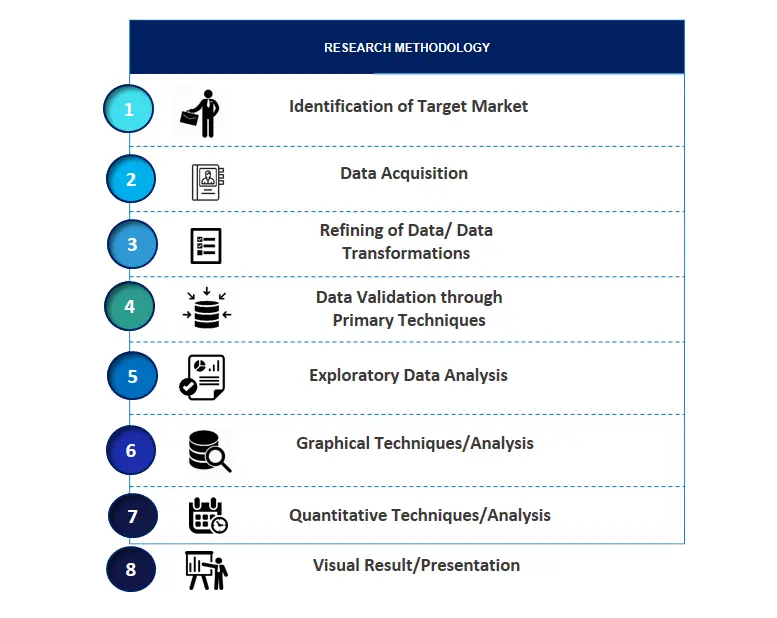
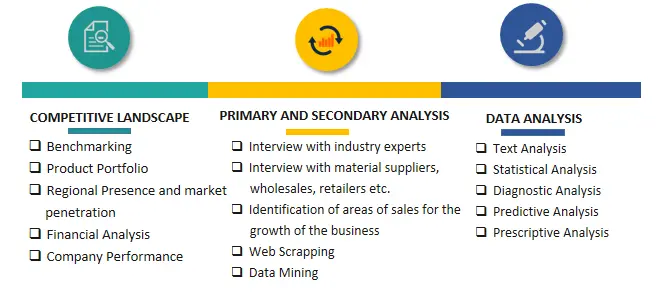
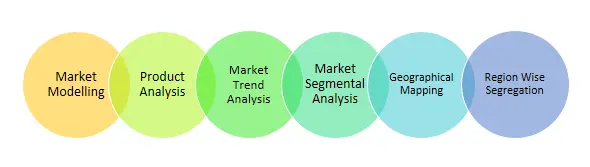
SPER Market Research’s methodology uses great emphasis on primary research to ensure that the market intelligence insights are up to date, reliable and accurate. Primary interviews are done with players involved in each phase of a supply chain to analyze the market forecasting. The secondary research method is used to help you fully understand how the future markets and the spending patterns look likes.
The report is based on in-depth qualitative and quantitative analysis of the Product Market. The quantitative analysis involves the application of various projection and sampling techniques. The qualitative analysis involves primary interviews, surveys, and vendor briefings. The data gathered as a result of these processes are validated through experts opinion. Our research methodology entails an ideal mixture of primary and secondary initiatives.
Frequently Asked Questions About This Report
PLACE AN ORDER
Year End Discount
Sample Report
Pre-Purchase Inquiry
NEED CUSTOMIZATION?
Request CustomizationCALL OR EMAIL US
100% Secure Payment