Targeted Protein Degradation Market Outlook

Global Targeted Protein Degradation Market Size -By Type, By Application, By End Use- Regional Outlook, Competitive Strategies and Segment Forecast to 2035

Published: Jul-2026 Report ID: HLCA2631 Pages: 1 - 250 Formats*:     
Category : Healthcare
According to SPER Market Research, the Global Targeted Protein Degradation Market is estimated to reach USD 1213.89 million by 2035 with a CAGR 21%.  

Introduction and Overview
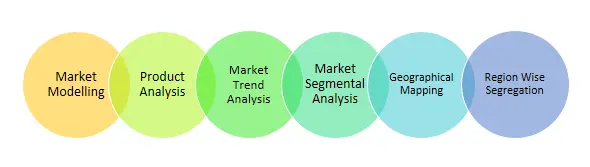
The report includes an in-depth analysis of the Global Targeted Protein Degradation Market, including market size and trends, product mix, Applications, and supplier analysis.

The global Targeted Protein Degradation Market was valued at USD 699.3 million in 2025 and is expected to reach USD 1213.89 million by 2035, registering a CAGR of 21% during the forecast period. The targeted protein degradation industry is experiencing significant growth due to the rising prevalence of chronic diseases, including cancer and neurodegenerative disorders, changing lifestyles, and increasing healthcare expenditure. The growing demand for innovative therapies and expanding research and development activities are creating new market opportunities. Supportive regulatory frameworks and streamlined approval processes by agencies such as the FDA and EMA are also accelerating therapy adoption. Furthermore, technological advancements, including PROTACs, molecular glues, and LYTACs, have enhanced the ability to selectively eliminate disease-causing proteins. Increasing recognition of TPD’s potential to target previously undruggable proteins is further driving market expansion.

By Type:
The PROTAC segment held the leading position in the market, driven by its innovative mechanism of recruiting E3 ligases to tag and degrade target proteins through the ubiquitin-proteasome system. Promising clinical outcomes of PROTAC candidates for prostate and breast cancer have attracted investor interest and supported the advancement of PROTAC-based therapies. Meanwhile, the molecular glues segment is expected to witness strong growth due to advantages such as lower molecular weight and improved cell permeability. Ongoing advances in molecular glue design are enabling potent degraders capable of targeting previously undruggable proteins, supporting future drug development.

By Application:
The therapy development segment accounted for the largest market share and is expected to expand rapidly, supported by increasing efforts to develop innovative treatments across oncology, neurology, infectious diseases, and cardiovascular conditions. Strong research activities, rising funding, and collaborations between pharmaceutical and biotechnology companies are further driving growth. Meanwhile, the drug discovery segment is projected to witness significant expansion due to the growing adoption of advanced TPD technologies, including epichaperome inhibitors, hydrophobic tags, and LYTACs. These approaches enable selective degradation of disease-causing proteins, offering precise and effective therapeutic solutions and supporting continued market growth.

By End Use:
Pharmaceutical and biotechnology companies represented the leading market segment, driven by the integration of targeted protein degradation strategies into research and development programs to address diverse therapeutic needs. Major pharmaceutical players are increasingly collaborating with specialized biotechnology firms to advance degrader-based therapies, combining extensive resources with innovative expertise. Meanwhile, hospitals and clinical laboratories are expected to experience strong growth due to the rising adoption of TPD technologies for diagnostic and therapeutic applications. These organizations increasingly use TPD-based assays for disease diagnosis, patient stratification, and treatment monitoring, supported by the growing development of companion diagnostics.

Regional Insights:
North America led the global targeted protein degradation market, supported by strong innovation, advanced healthcare infrastructure, leading pharmaceutical and biotechnology companies, and a favorable regulatory environment. In the U.S., streamlined FDA approval processes and rising cancer prevalence are driving demand for innovative TPD therapies capable of targeting previously undruggable proteins. Meanwhile, Europe is expected to experience rapid growth, fueled by collaborative research between academic institutions and biotechnology companies. The UK and Germany are emerging as key contributors to TPD innovation, with ongoing advancements aimed at expanding therapeutic applications and accelerating drug development.

Market Competitive Landscape:
The Global Targeted Protein Degradation Market is highly consolidated Some of the market key players are Bayer AG, Bio-Techne, BPS Bioscience, Inc., BroadPharm, LifeSensors Inc., MedChemExpress, Merck KGaA, Promega Corporation, and Thermo Fisher Scientific, Inc.

Recent Developments:
  • In April 2024, Novartis acquired VVD-101, a Phase 3-ready protein degrader targeting the androgen receptor for prostate cancer, from Vividion Therapeutics to advance innovative cancer treatments.
  • In May 2023, researchers at the Max Planck Institute of Biochemistry discovered a mechanism that enables the recycling of protein modules and supports the targeted degradation of unwanted proteins, helping maintain cellular protein balance.

Scope of the report:
Report Metric Details
Market size available for the years 2022-2035
Base year considered 2025
Forecast Period 2026-2035
Segments Covered By Type, By Application, By End Use
Regions Covered North America, Latin America, Asia-Pacific,
Europe, and Middle East & Africa
Companies Covered Bayer AG, Bio-Techne, BPS Bioscience, Inc., BroadPharm, LifeSensors Inc., MedChemExpress, Merck KGaA, Promega Corporation, and Thermo Fisher Scientific, Inc.

Key Topics Covered in the Report
  • Global Targeted Protein Degradation Market Size (FY’2022-FY’2035)
  • Overview of Global Targeted Protein Degradation Market
  • Segmentation of Global Targeted Protein Degradation Market by Type (PROTAC, Molecular Glues, LYTACs, Others)
  • Segmentation of Global Targeted Protein Degradation Market by Application (Drug, Discovery, Therapy Development)
  • Segmentation of Global Targeted Protein Degradation Market by End Use (Pharmaceutical & Biotechnology Companies, Academic & Research Institutes, Hospitals & Clinical Laboratories, Others)
  • Statistical Snap of Global Targeted Protein Degradation Market
  • Expansion Analysis of Global Targeted Protein Degradation Market
  • Problems and Obstacles in Global Targeted Protein Degradation Market 
  • Competitive Landscape in the Global Targeted Protein Degradation Market
  • Details on Current Investment in Global Targeted Protein Degradation Market
  • Competitive Analysis of Global Targeted Protein Degradation Market 
  • Prominent Players in the Global Targeted Protein Degradation Market
  • SWOT Analysis of Global Targeted Protein Degradation Market  
  • Global Targeted Protein Degradation Market Future Outlook and Projections (FY’2026-FY’2035) 
  • Recommendations from Analyst

1. Introduction
1.1 Scope of the report
1.2  Market segment analysis

2. Research Methodology 
2.1 Research data source
2.1.1 Secondary Data
2.1.2 Primary Data
2.1.3 SPER’s internal Database
2.1.4 Primary insight from KOL’s
2.2 Market size estimation
2.2.1 Top-down and Bottom-up approach
2.3 Data triangulation

3. Executive Summary

4. Market Dynamics
4.1 Driver, Restraint, Opportunity and Challenges analysis
4.1.1 Drivers
4.1.2 Restraints
4.1.3 Opportunities
4.1.4 Challenges

5. Market variable and outlook
5.1 SWOT Analysis
5.1.1 Strengths
5.1.2 Weaknesses
5.1.3 Opportunities
5.1.4 Threats
5.2 PESTEL Analysis
5.2.1 Political Landscape
5.2.2 Economic Landscape
5.2.3 Social Landscape
5.2.4 Technological Landscape
5.2.5 Environmental Landscape
5.2.6 Legal Landscape
5.3 PORTER’s Five Forces
5.4 Heat Map Analysis

6. Competitive Landscape
6.1. Global Targeted Protein Degradation Market Manufacturing Base Distribution, Sales Area, Product Type
6.2 Mergers & Acquisitions, Partnerships, Product Launch, and Collaboration in Global Targeted Protein Degradation Market

7. Global Targeted Protein Degradation Market, By Type, (USD Million) 2022-2035
7.1 PROTAC
7.2 Molecular Glues
7.3 LYTACs
7.4 Others

8. Global Targeted Protein Degradation Market, By Application, (USD Million) 2022-2035
8.1 Drug Discovery
8.2 Therapy Development
8.2.1 Cancer
8.2.2 Neurology
8.2.3 Infectious Diseases
8.2.4 Cardiovascular Diseases
8.2.5 Others

9. Global Targeted Protein Degradation Market, By End Use, (USD Million) 2022-2035
9.1 Pharmaceutical & Biotechnology Companies
9.2 Academic & Research Institutes
9.3 Hospitals & Clinical Laboratories
9.4 Others

10. Global Targeted Protein Degradation Market, (USD Million) 2022-2035   
10.1 Global Targeted Protein Degradation Market Size and Market Share

11.  Global Targeted Protein Degradation Market, By Region, (USD Million) 2022-2035 
11.1 Asia-Pacific
11.1.1 Australia
11.1.2 China
11.1.3 India
11.1.4 Japan
11.1.5 South Korea
11.1.6 Rest of Asia-Pacific
11.2 Europe
11.2.1 France
11.2.2 Germany 
11.2.3 Italy
11.2.4 Spain
11.2.5 United Kingdom
11.2.6 Rest of Europe
11.3 Middle East and Africa
11.3.1 Kingdom of Saudi Arabia
11.3.2 United Arab Emirates
11.3.3 Qatar
11.3.4 South Africa
11.3.5 Egypt
11.3.6 Morocco
11.3.7 Nigeria
11.3.8 Rest of Middle-East and Africa
11.4 North America
11.4.1 Canada 
11.4.2 Mexico
11.4.3 United States
11.5 Latin America
11.5.1 Argentina
11.5.2 Brazil
11.5.3 Rest of America

12. Company Profile
12.1 Bayer AG
12.1.1 Company details
12.1.2 Financial outlook
12.1.3 Product summary
12.1.4 Recent developments
12.2 Bio-Techne
12.2.1 Company details
12.2.2 Financial outlook
12.2.3 Product summary
12.2.4 Recent developments
12.3 BPS Bioscience, Inc.
12.3.1 Company details
12.3.2 Financial outlook
12.3.3 Product summary
12.3.4 Recent developments
12.4 BroadPharm
12.4.1 Company details
12.4.2 Financial outlook
12.4.3 Product summary
12.4.4 Recent developments
12.5 LifeSensors Inc.
12.5.1 Company details
12.5.2 Financial outlook
12.5.3 Product summary
12.5.4 Recent developments
12.6 MedChemExpress.
12.6.1 Company details
12.6.2 Financial outlook
12.6.3 Product summary
12.6.4 Recent developments
12.7 Merck KGaA
12.7.1 Company details
12.7.2 Financial outlook
12.7.3 Product summary
12.7.4 Recent developments
12.8 Promega Corporation
12.8.1 Company details
12.8.2 Financial outlook
12.8.3 Product summary
12.8.4 Recent developments
12.9 Thermo Fisher Scientific, Inc.
12.9.1  Company details
12.9.2  Financial outlook
12.9.3  Product summary
12.9.4  Recent developments
12.10 Others

13. Conclusion

14. List Of Abbreviations

15. Reference Links


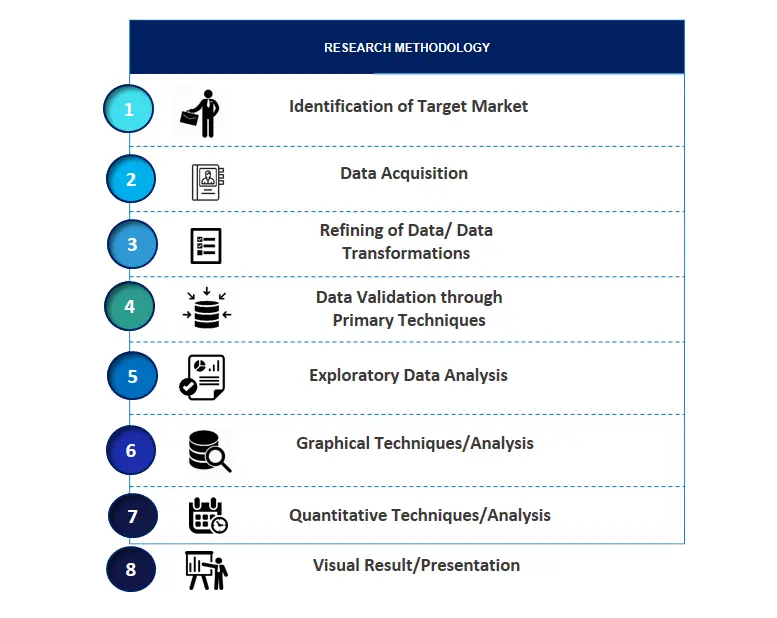
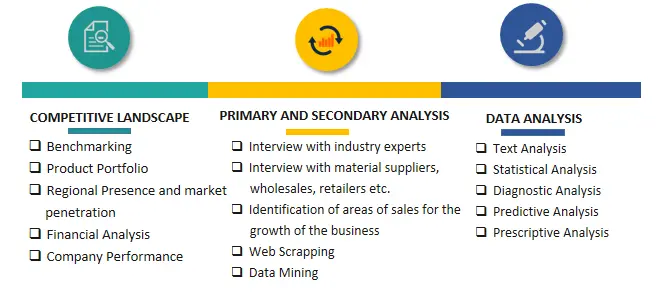
SPER Market Research’s methodology uses great emphasis on primary research to ensure that the market intelligence insights are up to date, reliable and accurate. Primary interviews are done with players involved in each phase of a supply chain to analyze the market forecasting. The secondary research method is used to help you fully understand how the future markets and the spending patterns look likes.

The report is based on in-depth qualitative and quantitative analysis of the Product Market. The quantitative analysis involves the application of various projection and sampling techniques. The qualitative analysis involves primary interviews, surveys, and vendor briefings.  The data gathered as a result of these processes are validated through experts opinion. Our research methodology entails an ideal mixture of primary and secondary initiatives.
SPER-Methodology-1

SPER-Methodology-2

SPER-Methodology-3


Frequently Asked Questions About This Report
PLACE AN ORDER
  • 15 % off
     
    $ 3250
  • 20 % off
             
    $ 5650
  • 25 % off
         
    $ 7450
Pre-Purchase Inquiry
SEND AN INQUIRY
NEED CUSTOMIZATION?
Request Customization
CALL OR EMAIL US
US:
India:
Email:
100% Secure Payment

SPER American Express
SPER VISA
SPER Master Card
SPER Mestro
SPER Paypal
SPER CCAvenues

Have a glance of the Report

  Download Free Sample

Looking for Customization?

 Customization Request

Have a Question?

 Reach Our Analysis Team

COVID-19 impact analysis?

 Request Analysis
Thought Leadership

Trusted by Industry Leaders

Our data-driven insights have influenced the strategy of 200+ reputed companies across the globe.

SPER-Astellas Pharma
SPER-Microsoft
SPER-EY
SPER-McKinsey
SPER-Bain
SPER-Max-Healthcare
SPER-DHL
SPER-IQVIA
SPER-Mitsubishi Logistics
SPER-PACCOR
SPER-Macmillan Education
SPER-Kankar IMRB
SPER-ITA
SPER-PWC
SPER-SAPTCA
SPER-Straumann
SPER-Danaher
SPER-AandM
SPER-MENARINI Silicon Biosystems
SPER-IPSOS
SPER-Heineken
HIPPA Compliant
GDPR Certified
ISO 27001
Peer Reviewed
Get Started Today

Your Competitive Advantage in
Pharmaceutical & Medical Technology
Markets

Join industry leaders leveraging AI-powered intelligence to make confident, data-driven decisions that accelerate breakthrough treatments and technologies to market.

No Credit Card Required
15-Minute Demo
Expert Guidance