Veterinary Orthopedics Market Outlook

Global Veterinary Orthopedics Market Size - By Application, By Product, Animal, By End Use - Regional Outlook, Competitive Strategies and Segment Forecast to 2035

Published: Jun-2026 Report ID: HLCA2627 Pages: 1 - 250 Formats*:     
Category : Healthcare
According to SPER Market Research, the Global Veterinary Orthopedics Market is estimated to reach USD 1506.53 million by 2035 with a CAGR 9.1%.  

Introduction and Overview

The report includes an in-depth analysis of the Global Veterinary Orthopedics Market, including market size and trends, product mix, Applications, and supplier analysis.

The global Veterinary Orthopedics Market was valued at USD 630.57 million in 2025 and is expected to reach USD 1506.53 million by 2035, registering a CAGR of 9.1% during the forecast period. The veterinary orthopedic implants market is driven by the rising prevalence of musculoskeletal disorders in pets, increasing pet insurance adoption, technological advancements, supportive initiatives, and growing pet ownership and spending. Obesity and poor nutrition remain key contributors to orthopedic conditions, placing excessive stress on joints and bones. Market participants are investing in advanced implants and devices of various sizes to improve treatment outcomes. Increasing awareness of pet health and higher veterinary expenditures have led to more orthopedic surgeries for conditions such as fractures, trauma, ligament tears, and joint disorders, supporting continued market growth worldwide.

By Application:
By application, TPLO held the largest share of the veterinary orthopedic implants market due to its widespread use in treating cranial cruciate ligament rupture in dogs, a leading cause of pain, lameness, and knee arthritis. Factors such as aging, obesity, genetics, poor physical condition, and breed predisposition contribute to this condition. The fastest-growing application category includes corrective osteotomies, tightrope procedures, and tibial tuberosity transposition. Growing cases of patellar luxation, particularly in dogs, are driving demand for these treatments. Surgical procedures commonly utilize specialized instruments and implants to improve mobility and orthopedic outcomes.

By Animal:
By animal type, dogs accounted for the largest share of the veterinary orthopedic implants market, driven by the high incidence of orthopedic injuries and musculoskeletal disorders, particularly among working and athletic dogs. Such conditions often require specialized orthopedic treatment and surgical intervention, supporting market growth. Meanwhile, the feline segment is projected to witness the fastest growth due to rising cat adoption, increasing awareness of feline health, higher prevalence of orthopedic disorders, obesity-related risks, and improved diagnostic capabilities. Cats’ popularity as relatively low-maintenance companion animals is further contributing to segment expansion.

By Product:
The implants segment held the largest share of the veterinary orthopedic implants market and is expected to retain its leading position throughout the forecast period. Growth is driven by increasing adoption of orthopedic surgeries, supported by improved access to pet insurance and rising awareness of advanced treatment options. Veterinary companies are expanding their implant portfolios to address the diverse needs of different animal species and orthopedic conditions. Advances in implant design and customization have enabled more personalized treatment approaches, improving surgical precision, enhancing recovery outcomes, reducing complications, and supporting the broader adoption of veterinary orthopedic procedures.

By End Use:
By end use, veterinary hospitals and clinics accounted for the largest share of the veterinary orthopedic implants market due to their high patient volumes, advanced infrastructure, and ability to perform complex orthopedic surgeries and post-operative care. The availability of diagnostic facilities and adherence to established safety and quality standards further support their dominance. Meanwhile, the other end-use segment, including veterinary academic institutions, research centers, and ambulatory care units, is expected to experience the fastest growth. Rising investments in research, advanced surgical techniques, innovative implants, and next-generation diagnostic technologies are driving expansion in this segment.

Regional Insights:
North America dominated the veterinary orthopedics market in 2024, supported by a growing pet population, rising pet healthcare spending, increasing prevalence of chronic and orthopedic conditions, and a higher volume of veterinary surgeries. The region also benefits from advanced healthcare infrastructure, favorable pet insurance coverage, and the strong presence of leading animal health companies. The U.S. remains the largest contributor due to widespread availability of veterinarians and increasing cases of osteoarthritis, obesity, injuries, and other chronic diseases in pets. Meanwhile, Europe is expected to witness strong growth, driven by expanding pet ownership, rising pet care expenditure, and increasing demand for orthopedic treatments, particularly in the UK.

Market Competitive Landscape:
The Global Veterinary Orthopedics Market is highly consolidated Some of the market key players are AmerisourceBergen Corporation, Arthrex, Inc. (Arthrex Vet Systems), B. Braun SE, DePuy Synthes (Johnson & Johnson), Fusion Implants, Integra LifeSciences, Movora (Vimian Group AB), Narang Medical Limited, Orthomed (UK) Ltd., and Veterinary Instrumentation.

Recent Developments:
  • In October 2024, veterinarians at Johnson Family Equine Hospital used a 3D-printed surgical guide to support the successful execution of a complex arthrodesis deformity procedure in a horse.
  • In June 2024, Viticus Group and Movora partnered to provide hands-on veterinary orthopedic training in Boston, with a focus on advanced fracture repair techniques and continuing education for veterinary professionals.

Scope of the report:
Report Metric Details
Market size available for the years 2022-2035
Base year considered 2025
Forecast Period 2026-2035
Segments Covered By Application, By Product, Animal, By End Use
Regions Covered North America, Latin America, Asia-Pacific,
Europe, and Middle East & Africa
Companies Covered AmerisourceBergen Corporation, Arthrex, Inc. (Arthrex Vet Systems), B. Braun SE, DePuy Synthes (Johnson & Johnson), Fusion Implants, Integra LifeSciences, Movora (Vimian Group AB), Narang Medical Limited, Orthomed (UK) Ltd., and Veterinary Instrumentation.

Key Topics Covered in the Report
  • Global Veterinary Orthopedics Market Size (FY’2022-FY’2035)
  • Overview of Global Veterinary Orthopedics Market
  • Segmentation of Global Veterinary Orthopedics Market by Application (TPLO, TTA, Joint Replacement, Trauma, Other Applications)
  • Segmentation of Global Veterinary Orthopedics Market by Product (Implants, Instruments)
  • Segmentation of Global Veterinary Orthopedics Market by Animal (Canine, Feline, Other Animals)
  • Segmentation of Global Veterinary Orthopedics Market by End Use (Veterinary Hospitals & Clinics, Other End-use)
  • Statistical Snap of Global Veterinary Orthopedics Market
  • Expansion Analysis of Global Veterinary Orthopedics Market
  • Problems and Obstacles in Global Veterinary Orthopedics Market 
  • Competitive Landscape in the Global Veterinary Orthopedics Market
  • Details on Current Investment in Global Veterinary Orthopedics Market
  • Competitive Analysis of Global Veterinary Orthopedics Market 
  • Prominent Players in the Global Veterinary Orthopedics Market
  • SWOT Analysis of Global Veterinary Orthopedics Market  
  • Global Veterinary Orthopedics Market Future Outlook and Projections (FY’2026-FY’2035) 
  • Recommendations from Analyst

1. Introduction
1.1 Scope of the report
1.2  Market segment analysis

2. Research Methodology 
2.1 Research data source
2.1.1 Secondary Data
2.1.2 Primary Data
2.1.3 SPER’s internal Database
2.1.4 Primary insight from KOL’s
2.2 Market size estimation
2.2.1 Top-down and Bottom-up approach
2.3 Data triangulation

3. Executive Summary

4. Market Dynamics
4.1 Driver, Restraint, Opportunity and Challenges analysis
4.1.1 Drivers
4.1.2 Restraints
4.1.3 Opportunities
4.1.4 Challenges

5. Market variable and outlook
5.1 SWOT Analysis
5.1.1 Strengths
5.1.2 Weaknesses
5.1.3 Opportunities
5.1.4 Threats
5.2 PESTEL Analysis
5.2.1 Political Landscape
5.2.2 Economic Landscape
5.2.3 Social Landscape
5.2.4 Technological Landscape
5.2.5 Environmental Landscape
5.2.6 Legal Landscape
5.3 PORTER’s Five Forces
5.4 Heat Map Analysis

6. Competitive Landscape
6.1. Global Veterinary Orthopedics Market Manufacturing Base Distribution, Sales Area, Product Type
6.2 Mergers & Acquisitions, Partnerships, Product Launch, and Collaboration in Global Veterinary Orthopedics Market

7. Global Veterinary Orthopedics Market, By Application, (USD Million) 2022-2035
7.1 TPLO
7.2 TTA
7.3 Joint Replacement
7.4 Trauma
7.5 Other Applications

8. Global Veterinary Orthopedics Market, By Product, (USD Million) 2022-2035
8.1 Implants
8.1.1 Plates
8.1.2 Other Implants
8.2 Instruments

9. Global Veterinary Orthopedics Market, By Animal, (USD Million) 2022-2035
9.1 Canine
9.2 Feline
9.3 Other Animals

10. Global Veterinary Orthopedics Market, By End Use, (USD Million) 2022-2035
10.1 Veterinary Hospitals & Clinics
10.2 Other End-use

11. Global Veterinary Orthopedics Market, (USD Million) 2022-2035   
11.1 Global Veterinary Orthopedics Market Size and Market Share

12.  Global Veterinary Orthopedics Market, By Region, (USD Million) 2022-2035 
12.1 Asia-Pacific
12.1.1 Australia
12.1.2 China
12.1.3 India
12.1.4 Japan
12.1.5 South Korea
12.1.6 Rest of Asia-Pacific
12.2 Europe
12.2.1 France
12.2.2 Germany 
12.2.3 Italy
12.2.4 Spain
12.2.5 United Kingdom
12.2.6 Rest of Europe
12.3 Middle East and Africa
12.3.1 Kingdom of Saudi Arabia
12.3.2 United Arab Emirates
12.3.3 Qatar
12.3.4 South Africa
12.3.5 Egypt
12.3.6 Morocco
12.3.7 Nigeria
12.3.8 Rest of Middle-East and Africa
12.4 North America
12.4.1 Canada 
12.4.2 Mexico
12.4.3 United States
12.5 Latin America
12.5.1 Argentina
12.5.2 Brazil
12.5.3 Rest of America

13. Company Profile
13.1 AmerisourceBergen Corporation.
13.1.1 Company details
13.1.2 Financial outlook
13.1.3 Product summary
13.1.4 Recent developments
13.2 Arthrex, Inc. (Arthrex Vet Systems)
13.2.1 Company details
13.2.2 Financial outlook
13.2.3 Product summary
13.2.4 Recent developments
13.3 B. Braun SE
13.3.1 Company details
13.3.2 Financial outlook
13.3.3 Product summary
13.3.4 Recent developments
13.4 DePuy Synthes (Johnson & Johnson)
13.4.1 Company details
13.4.2 Financial outlook
13.4.3 Product summary
13.4.4 Recent developments
13.5 Fusion Implants
13.5.1 Company details
13.5.2 Financial outlook
13.5.3 Product summary
13.5.4 Recent developments
13.6 Integra LifeSciences
13.6.1 Company details
13.6.2 Financial outlook
13.6.3 Product summary
13.6.4 Recent developments
13.7 Movora (Vimian Group AB)
13.7.1 Company details
13.7.2 Financial outlook
13.7.3 Product summary
13.7.4 Recent developments
13.8 Narang Medical Limited
13.8.1 Company details
13.8.2 Financial outlook
13.8.3 Product summary
13.8.4 Recent developments
13.9 Orthomed (UK) Ltd.
13.9.1  Company details
13.9.2  Financial outlook
13.9.3  Product summary
13.9.4  Recent developments
13.10 Veterinary Instrumentation
13.10.1   Company details
13.10.2   Financial outlook
13.10.3   Product summary
13.10.4   Recent developments
13.11 Others

14. Conclusion

15. List Of Abbreviations

16. Reference Links


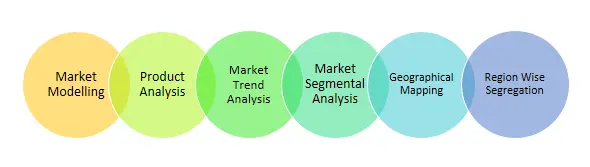
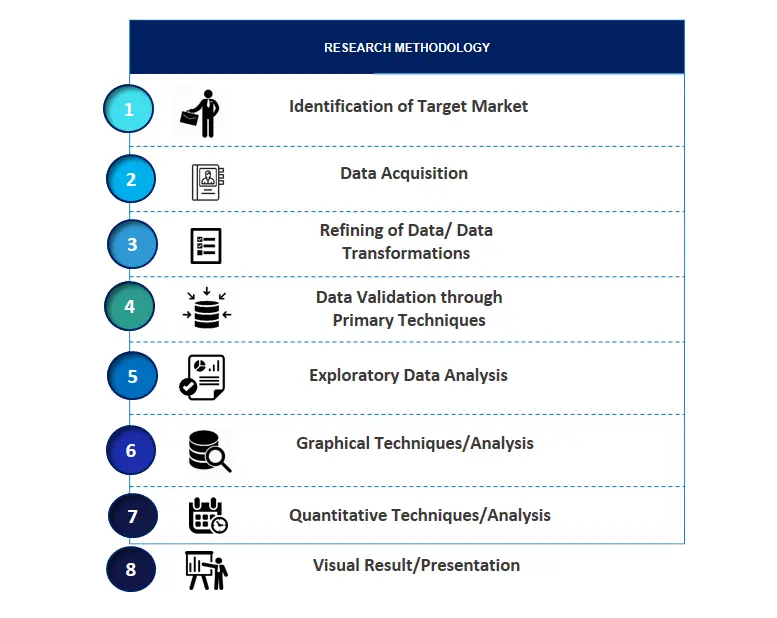
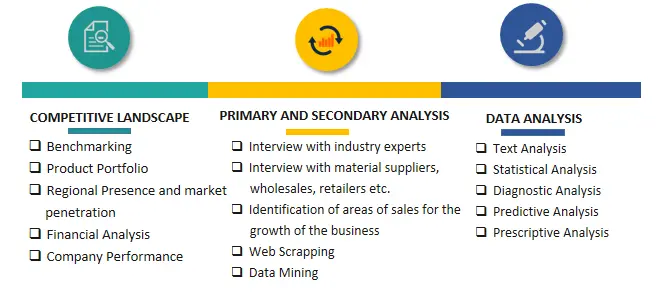
SPER Market Research’s methodology uses great emphasis on primary research to ensure that the market intelligence insights are up to date, reliable and accurate. Primary interviews are done with players involved in each phase of a supply chain to analyze the market forecasting. The secondary research method is used to help you fully understand how the future markets and the spending patterns look likes.

The report is based on in-depth qualitative and quantitative analysis of the Product Market. The quantitative analysis involves the application of various projection and sampling techniques. The qualitative analysis involves primary interviews, surveys, and vendor briefings.  The data gathered as a result of these processes are validated through experts opinion. Our research methodology entails an ideal mixture of primary and secondary initiatives.
SPER-Methodology-1

SPER-Methodology-2

SPER-Methodology-3


Frequently Asked Questions About This Report
PLACE AN ORDER
  • 15 % off
     
    $ 3250
  • 20 % off
             
    $ 4250
  • 25 % off
         
    $ 6250
Pre-Purchase Inquiry
SEND AN INQUIRY
NEED CUSTOMIZATION?
Request Customization
CALL OR EMAIL US
US:
India:
Email:
100% Secure Payment

SPER American Express
SPER VISA
SPER Master Card
SPER Mestro
SPER Paypal
SPER CCAvenues

Have a glance of the Report

  Download Free Sample

Looking for Customization?

 Customization Request

Have a Question?

 Reach Our Analysis Team

COVID-19 impact analysis?

 Request Analysis
Thought Leadership

Trusted by Industry Leaders

Our data-driven insights have influenced the strategy of 200+ reputed companies across the globe.

SPER-Astellas Pharma
SPER-Microsoft
SPER-EY
SPER-McKinsey
SPER-Bain
SPER-Max-Healthcare
SPER-DHL
SPER-IQVIA
SPER-Mitsubishi Logistics
SPER-PACCOR
SPER-Macmillan Education
SPER-Kankar IMRB
SPER-ITA
SPER-PWC
SPER-SAPTCA
SPER-Straumann
SPER-Danaher
SPER-AandM
SPER-MENARINI Silicon Biosystems
SPER-IPSOS
SPER-Heineken
HIPPA Compliant
GDPR Certified
ISO 27001
Peer Reviewed
Get Started Today

Your Competitive Advantage in
Pharmaceutical & Medical Technology
Markets

Join industry leaders leveraging AI-powered intelligence to make confident, data-driven decisions that accelerate breakthrough treatments and technologies to market.

No Credit Card Required
15-Minute Demo
Expert Guidance