According to SPER Market Research, the Global Solid-State Electrolytes Market is estimated to reach USD 63.51 million by 2034 with a CAGR of 10.36%.
Introduction and Overview
The report includes an in-depth analysis of the Global Solid-State Electrolytes Market, including market size and trends, product mix, Applications, and supplier analysis.
The global Solid-State Electrolytes market was valued at USD 23.7 million in 2024, and it is expected to rise at a 10.36% CAGR from 2025 to 2034. Solid-state electrolytes are advanced materials used in solid-state batteries, serving as a substitute for the liquid or gel electrolytes found in traditional lithium-ion batteries. By using solid electrolytes, batteries become safer by removing fire hazards and can achieve greater energy density, quicker charging, and improved durability.
By Material Insights
Inorganic solid electrolytes represent the leading segment in the solid-state electrolyte market due to their superior performance and safety advantages. They offer higher ionic conductivity, stronger thermal and mechanical stability, and excellent compatibility with high-energy lithium metal anodes, making them ideal for demanding applications such as electric vehicles and large-scale energy storage. Their non-flammable nature greatly reduces safety risks associated with traditional liquid electrolytes, encouraging wider adoption across the industry. In addition, these materials integrate well with existing manufacturing processes, enabling smoother scalability and faster implementation in commercial battery systems, which further strengthens their dominance in the market.
By Form Insights
In 2024, Bulk or powder solid-state electrolytes form the dominant segment in the market, largely due to they are easy to process and work well with a wide range of electrode materials, making them suitable for high-capacity battery applications. Their form allows active materials to be incorporated more efficiently, improving structural densification and supporting large-scale production needed for automotive and stationary energy storage systems. Powder-based electrolytes such as lithium thiophosphate and garnet-type compounds are widely used in next-generation battery prototypes due to their excellent ionic conductivity, strong mechanical properties, and high stability, which further strengthens the preference for this form in advanced battery technologies.
By Application Insights
Electric vehicles represent the leading application for solid-state electrolytes, due by the rising demand for longer driving ranges, reduced charging time, and safer, high-energy-density battery systems. As global focus intensifies on cleaner mobility and stricter emission targets, automakers are prioritizing advanced battery technologies that can outperform traditional lithium-ion systems. Although liquid-based lithium batteries remain widely used due to their lower leakage and reduced flammability risks, the push for next-generation EV performance is accelerating interest and investment in solid-state solutions. Major automotive companies are actively developing solid-state battery platforms, supported by strong global growth in EV adoption, reinforcing the dominance of the electric vehicle segment within the solid-state electrolytes market.
Regional Insights
The United States is the dominant region in the solid-state electrolytes market, primarily because of strong government support, large-scale funding, and aggressive investments in next-generation battery technologies. Federal programs such as the U.S. Department of Energy’s battery grants and incentives from the Inflation Reduction Act have accelerated innovation, commercialization, and domestic supply-chain development. Major automakers like Ford and General Motors are significantly increasing their R&D spending on solid-state and hybrid electrolyte batteries, reinforcing the country’s leadership. In addition, the rapid rise in EV adoption, strong defence sector demand, and growing consumer preference for safer, faster-charging, long-range electric vehicles further strengthen the U.S. position as the leading market for solid-state electrolytes.
Market Competitive Landscape
The solid-state electrolytes market features a highly competitive landscape driven by rapid innovation and rising demand from electric vehicles and advanced energy storage. Key players include established materials manufacturers, battery innovators, and emerging startups developing sulphide, oxide, polymer, and composite electrolyte technologies. Companies are competing to achieve higher ionic conductivity, improved safety, and compatibility with lithium metal anodes. Strategic partnerships between battery developers and automotive OEMs are accelerating pilot production and commercialization efforts. Patent activity is increasing as firms secure proprietary chemistries and manufacturing methods. Overall, long-term supply agreements, R&D collaborations, and investment in scalable production define the competitive dynamics of the market.
Recent Developments:
• In May 2025, Ampcera Inc. reached a significant commercial milestone by beginning worldwide distribution of its nano-sulphide solid electrolyte powders to solid-state battery producers, strengthening its presence in the global battery supply chain.
• In January 2024, ProLogium Technology launched its 106Ah silicon-anode battery and became the first company globally to achieve Giga-scale production of solid-state lithium ceramic batteries, representing a major breakthrough in the industrial advancement of battery technology.
• In July 2024, Research on solid-state lithium metal batteries advanced significantly as researchers at the Hong Kong University of Science and Technology developed innovative iCOF/PIL polymers with outstanding ionic conductivity and enhanced lithium-ion transport.
• In June 2024, TDK Corporation expanded its CeraCharge product line and announced that it had achieved a solid-state energy density of 1,000 Wh/L, a substantial increase, enabling applications in wearables and compact coin-sized batteries.
• In October 2023, Idemitsu Kosan and Toyota announced their plan to commercialize all-solid-state batteries for electric vehicles by 2027–2028, confirming their collaboration with a focus on developing scalable production techniques for solid electrolytes.
Scope of the report:
Report Metric Details
Market size available for the years 2021-2034
Base year considered 2024
Forecast Period 2025-2034
Segments Covered By Material, By Form, By Application
Regions Covered North America, Latin America, Asia-Pacific, Europe, and Middle East & Africa
Companies Covered NEI Corporation, Toshima Manufacturing Co. Ltd., Ampcera Corp, Cymbet Corporation, Empower Materials, Brightvolt, Inc, Ohara lnc., StmicroElectronics N.V., TOYOTA MOTOR CORPORATION, lonic Materials Inc.
Key Topics Covered in the Report
• Global Solid-State Electrolytes Market Size (FY’2021-FY’2034)
• Overview of Global Solid-State Electrolytes Market
• Segmentation of Global Solid-State Electrolytes Market by Material (Inorganic solid electrolytes, Polymer-based solid electrolytes, Composite solid electrolytes, Polymer-ceramic composites, Hybrid solid electrolytes)
• Segmentation of Global Solid-State Electrolytes Market by Form (Bulk/powder, thin films, Sheets/membranes, Others)
• Segmentation of Global Solid-State Electrolytes Market by Application (Electric vehicles, Consumer electronics, Energy storage systems, medical devices, Aerospace and defence)
• Statistical Snap of Global Solid-State Electrolytes Market
• Expansion Analysis of Global Solid-State Electrolytes Market
• Problems and Obstacles in Global Solid-State Electrolytes Market
• Competitive Landscape in the Global Solid-State Electrolytes Market
• Details on Current Investment in Global Solid-State Electrolytes Market
• Competitive Analysis of Global Solid-State Electrolytes Market
• Prominent Players in the Global Solid-State Electrolytes Market
• SWOT Analysis of Global Solid-State Electrolytes Market
• Global Solid-State Electrolytes Market Future Outlook and Projections (FY’2025-FY’2034)
• Recommendations from Analyst
Global Solid-State Electrolytes Market Size- By Material, By Form, By Application - Regional Outlook, Competitive Strategies and Segment Forecast to 2034
1. Introduction
1.1. Scope of the report
1.2. Market segment analysis
2. Research Methodology
2.1. Research data source
2.1.1. Secondary Data
2.1.2. Primary Data
2.1.3. SPER’s internal database
2.1.4. Premium insight from KOL’s
2.2. Market size estimation
2.2.1. Top-down and Bottom-up approach
2.3. Data triangulation
3. Executive Summary
4. Market Dynamics
4.1. Driver, Restraint, Opportunity and Challenges analysis
4.1.1. Drivers
4.1.2. Restraints
4.1.3. Opportunities
4.1.4. Challenges
5. Market variable and outlook
5.1. SWOT Analysis
5.1.1. Strengths
5.1.2. Weaknesses
5.1.3. Opportunities
5.1.4. Threats
5.2. PESTEL Analysis
5.2.1. Political Landscape
5.2.2. Economic Landscape
5.2.3. Social Landscape
5.2.4. Technological Landscape
5.2.5. Environmental Landscape
5.2.6. Legal Landscape
5.3. PORTER’s Five Forces
5.3.1. Bargaining power of suppliers
5.3.2. Bargaining power of buyers
5.3.3. Threat of Substitute
5.3.4. Threat of new entrant
5.3.5. Competitive rivalry
5.4. Heat Map Analysis
6. Competitive Landscape
6.1. Global Solid-State Electrolytes Market Manufacturing Base Distribution, Sales Area, Product Type
6.2. Mergers & Acquisitions, Partnerships, Product Launch, and Collaboration in Global Solid-State Electrolytes Market
7. Global Solid-State Electrolytes Market, By Material (USD Million) 2021-2034
7.1. Inorganic solid electrolytes
7.1.1. Oxide-based electrolytes
7.1.1. LISICON-type
7.1.1. NASICON- type
7.1.1. Perovskite- type
7.1.1. Garnet- type (LLZO)
7.1.1. Others
7.1.2. Sulfide- based electrolytes
7.1.3. Thio-LISICON
7.1.4. Argyrodite- type
7.1.5. Li2S-P2S5 glass-ceramics
7.1.6. Others
7.1.7. Halide-based electrolytes
7.1.8. Others
7.2. Polymer-based solid electrolytes
7.2.1. Polyethylene oxide (PEO)-based
7.2.2. Polyvinylidene fluoride (PVDF)- based
7.2.3. Polycarbonate- based
7.2.4. Others
7.3. Composite solid electrolytes
7.4. Polymer-ceramic composites
7.4.1. Polymer-inorganic salt composites
7.4.2. Ceramic-ceramic composites
7.4.3. Others
7.5. Hybrid solid electrolytes
8. Global Solid-State Electrolytes Market, By Form (USD Million) 2021-2034
8.1. Bulk/powder
8.2. Thin films
8.3. Sheets/membranes
8.4. Others
9. Global Solid-State Electrolytes Market, By Application (USD Million) 2021-2034
9.1. Electric vehicles
9.1.1. Passenger vehicles
9.1.2. Commercial vehicles
9.1.3. Two-wheelers
9.2. Consumer electronics
9.2.1. Smartphones and tablets
9.2.2. Laptops and computers
9.2.3. Wearable devices
9.2.4. Others
9.3. Energy storage systems
9.3.1. Residential
9.3.2. Commercial
9.3.3. Utility-Scale
9.4. Medical devices
9.4.1. Implantable devices
9.4.2. Portable medical equipment
9.4.3. Others
9.5. Aerospace and defence
9.6. Others
10. Global Solid-State Electrolytes Market, (USD Million) 2021-2034
10.1. Global Solid-State Electrolytes Market Size and Market Share
11. Global Solid-State Electrolytes Market, By Region, (USD Million) 2021-2034
11.1. Asia-Pacific
11.1.1. Australia
11.1.2. China
11.1.3. India
11.1.4. Japan
11.1.5. South Korea
11.1.6. Rest of Asia-Pacific
11.2. Europe
11.2.1. France
11.2.2. Germany
11.2.3. Italy
11.2.4. Spain
11.2.5. United Kingdom
11.2.6. Rest of Europe
11.3. Middle East and Africa
11.3.1. Kingdom of Saudi Arabia
11.3.2. United Arab Emirates
11.3.3. Qatar
11.3.4. South Africa
11.3.5. Egypt
11.3.6. Morocco
11.3.7. Nigeria
11.3.8. Rest of Middle-East and Africa
11.4. North America
11.4.1. Canada
11.4.2. Mexico
11.4.3. United States
11.5. Latin America
11.5.1. Argentina
11.5.2. Brazil
11.5.3. Rest of Latin America
12. Company Profile
12.1. Ampcera Corp
12.1.1. Company details
12.1.2. Financial outlook
12.1.3. Product summary
12.1.4. Recent developments
12.2. Brightvolt, Inc
12.2.1. Company details
12.2.2. Financial outlook
12.2.3. Product summary
12.2.4. Recent developments
12.3. Cymbet Corporation
12.3.1. Company details
12.3.2. Financial outlook
12.3.3. Product summary
12.3.4. Recent developments
12.4. Empower Materials
12.4.1. Company details
12.4.2. Financial outlook
12.4.3. Product summary
12.4.4. Recent developments
12.5. Ionic Materials Inc
12.5.1. Company details
12.5.2. Financial outlook
12.5.3. Product summary
12.5.4. Recent developments
12.6. NEI Corporation
12.6.1. Company details
12.6.2. Financial outlook
12.6.3. Product summary
12.6.4. Recent developments
12.7. Ohara Inc.
12.7.1. Company details
12.7.2. Financial outlook
12.7.3. Product summary
12.7.4. Recent developments
12.8. STMicroelectronics N.V.
12.8.1. Company details
12.8.2. Financial outlook
12.8.3. Product summary
12.8.4. Recent developments
12.9. TOYOTA MOTOR CORPORATION
12.9.1. Company details
12.9.2. Financial outlook
12.9.3. Product summary
12.9.4. Recent developments
12.10. Toshima Manufacturing Co. Ltd.
12.10.1. Company details
12.10.2. Financial outlook
12.10.3. Product summary
12.10.4. Recent developments
12.11. Others
13. Conclusion
14. List of Abbreviations
15. Reference Links
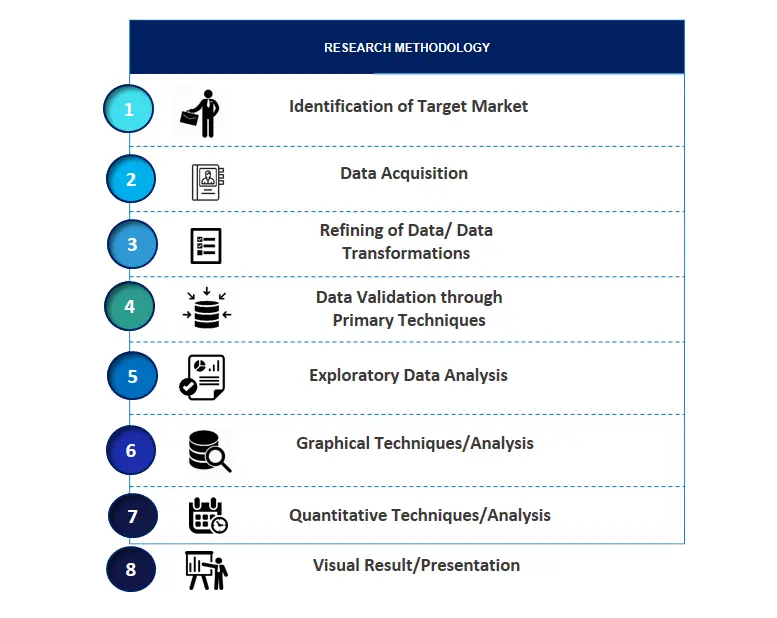
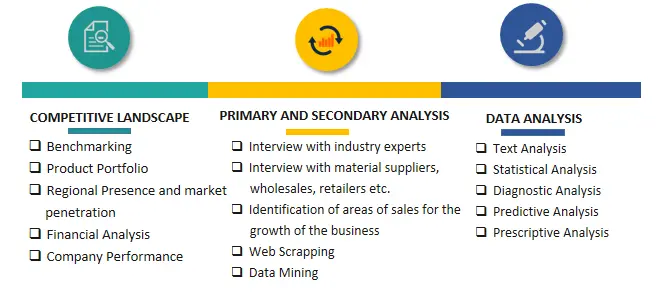
SPER Market Research’s methodology uses great emphasis on primary research to ensure that the market intelligence insights are up to date, reliable and accurate. Primary interviews are done with players involved in each phase of a supply chain to analyze the market forecasting. The secondary research method is used to help you fully understand how the future markets and the spending patterns look likes.
The report is based on in-depth qualitative and quantitative analysis of the Product Market. The quantitative analysis involves the application of various projection and sampling techniques. The qualitative analysis involves primary interviews, surveys, and vendor briefings. The data gathered as a result of these processes are validated through experts opinion. Our research methodology entails an ideal mixture of primary and secondary initiatives.