According to SPER Market Research, the Global Superplasticizers Market is estimated to reach USD 16.27 billion by 2034 with a CAGR of 8.05%.
Introduction and Overview
The report includes an in-depth analysis of the Global Superplasticizers Market, including market size and trends, product mix, Applications, and supplier analysis.
The Global Superplasticizers Market was valued at USD 7.5 billion in 2024, and it is expected to rise at a 8.05% CAGR from 2025 to 2034. The Global Superplasticizers Market is expanding steadily, driven by several key factors. Growing infrastructure development across emerging and developed economies continues to boost the demand for advanced construction materials. At the same time, the increasing need for high-performance concrete offering enhanced strength, durability, and workability has accelerated the adoption of superplasticizers in large-scale projects. Additionally, the rising focus on sustainable and eco-friendly construction practices is encouraging the use of admixtures that reduce water usage and improve overall material efficiency. Together, these drivers are shaping market growth and supporting innovations that meet modern construction and environmental standards.
By Product Type Insights
Polycarboxylate ether (PCE)–based superplasticizers hold a significant share of the market due to their advanced water-reduction abilities, superior dispersibility, and excellent flow properties. Their rising use in high-performance, self-compacting, and high-strength concrete makes them ideal for major infrastructure and high-rise construction projects where precise control of concrete quality is crucial. In contrast, SNF and SMF superplasticizers remain common in traditional concrete because they are more affordable and provide good water reduction, but they offer limited improvement in durability. They continue to be used in cost-sensitive, low- to mid-rise construction, although PCE-based solutions are increasingly replacing them due to better performance.
By Form Insights
Liquid superplasticizers dominate the market because they are easy to handle, mix quickly, and offer excellent dispersion in concrete mixtures. They are especially preferred in large construction projects and ready-mix concrete applications where accurate dosing and consistent performance are essential. Powder superplasticizers, on the other hand, are mainly used in dry-mix formulations and in regions where transportation or storage conditions are challenging. Their longer shelf life and convenient handling make them suitable for packaged mixes and precast concrete products. The “Others†category such as granules and pastes serves niche applications in high-performance, self-compacting, and ultra-high-strength concrete, where strict control of rheology and water reduction is required.
By Application Insights
The superplasticizers market is segmented by application into ready-mix concrete, precast concrete, high-performance concrete, self-consolidating concrete, shotcrete, and others. Ready-mix concrete holds the largest share due to its extensive use across residential, commercial, and infrastructure projects. Superplasticizers play a crucial role in this segment by ensuring consistent quality, faster construction, and overall cost efficiency. Growing adoption of high-performance concrete (HPC) and self-consolidating concrete (SCC) is also boosting the demand for advanced superplasticizers that offer superior flowability, strength, and durability. These modern concrete types are essential for high-rise structures, complex designs, and critical infrastructure like bridges and tunnels.
By End Use Insights
The superplasticizers market is categorized by end-use into residential, commercial, infrastructure, industrial, and other construction sectors. Residential construction leads the market, driven by rapid urbanization, population growth, and rising affordable housing projects. The need for quicker construction cycles, stronger concrete mixes, and lower labor costs further boosts superplasticizer usage in this segment. Commercial construction and infrastructure development also create strong demand, as both require advanced concrete for high-rise buildings, bridges, tunnels, and transport networks. Industrial construction adds to market growth, with warehouses, logistics hubs, and manufacturing plants depending on durable, high-strength concrete capable of withstanding continuous, heavy-duty operations.
Regional Insights
North America remains a key market for superplasticizers due to its well-established construction industry, strong technological adoption, and emphasis on high-quality building materials. Ongoing infrastructure repair, modernization efforts, and maintenance activities continue to fuel the need for high-performance concrete additives across the region. At the same time, growing interest in sustainable construction and green building certifications is driving demand for innovative, low-emission superplasticizers. This trend is further supported by significant public investment in smart cities, commercial developments, and large-scale infrastructure projects. In particular, funding under the U.S. Bipartisan Infrastructure Law is accelerating upgrades and expansions, reinforcing the region’s reliance on advanced concrete solutions.
Market Competitive Landscape
The superplasticizers market is led by a few dominant players that stay ahead through continuous innovation, strategic collaborations, and wide product portfolios. These companies prioritize R&D to develop advanced solutions for high-performance, self-consolidating, and sustainable concrete applications. Their strong global distribution and technical support systems help them maintain long-term partnerships with major construction and infrastructure developers. A growing focus on sustainability and digitalization through low-carbon additives, green chemistry, BIM, and IoT-based construction tools further strengthens their competitive edge. This combination of innovation, global presence, and technological adoption positions them as preferred partners for large-scale infrastructure projects.
Recent Developments:
â— In May 2025, BASF SE unveiled a new generation of MasterGlenium superplasticizers designed to reduce water usage and improve concrete flow in high-performance applications. This product line emphasizes sustainable construction by lowering carbon output and boosting long-term durability.
◠In April 2025, Sika AG began operations at its newly established manufacturing facility in Vietnam, aimed at expanding production capacity in the Asia-Pacific region. The plant will focus on producing superplasticizers and other concrete admixtures to meet the region’s rapidly growing construction demand.
◠In December 2024, Mapei S.p.A. acquired a construction chemicals company in South America to strengthen its regional foothold. The acquisition enhances Mapei’s portfolio of concrete additives, including advanced superplasticizers, while expanding its distribution reach.
Scope of the report:
Report Metric Details
Market size available for the years 2021-2034
Base year considered 2024
Forecast Period 2025-2034
Segments Covered By Product Type, By Form, By Application, By End Use
Regions Covered North America, Latin America, Asia-Pacific, Europe, Middle East & Africa
Companies Covered Arkema, BASF, Kao Corporation, Mapei S.p.A, Sika
Key Topics Covered in the Report
◠Global Superplasticizers Market Size (FY’2021-FY’2034)
â— Overview of Global Superplasticizers Market
â— Segmentation of Global Superplasticizers Market By Product Type (Polycarboxylate ether (PCE) based, Sulfonated naphthalene formaldehyde (SNF) based, Sulfonated melamine formaldehyde (SMF) based, Lignosulfonate based, Modified lignosulfonates, Others)
â— Segmentation of Global Superplasticizers Market By Form (Liquid, Powder, Others)
â— Segmentation of Global Superplasticizers Market By Application, (Ready-mix concrete, Precast concrete, High-performance concrete, Self-consolidating concrete, Shotcrete, Others)
â— Segmentation of Global Superplasticizers Market By End Use (Residential construction, Commercial construction, Infrastructure development, Industrial construction, Others)
â— Statistical Snap of Global Superplasticizers Market
â— Expansion Analysis of Global Superplasticizers Market
â— Problems and Obstacles in Global Superplasticizers Market
â— Competitive Landscape in the Global Superplasticizers Market
â— Details on Current Investment in Global Superplasticizers Market
â— Competitive Analysis of Global Superplasticizers Market
â— Prominent Players in the Global Superplasticizers Market
â— SWOT Analysis of Global Superplasticizers Market
◠Global Superplasticizers Market Future Outlook and Projections (FY’2025-FY’2034)
â— Recommendations from Analyst
Global Superplasticizers Market- By Product Type, By Form, By Application, By End Use - Regional Outlook, Competitive Strategies and Segment Forecast to 2034
1. Introduction
1.1. Scope of the report
1.2. Market segment analysis
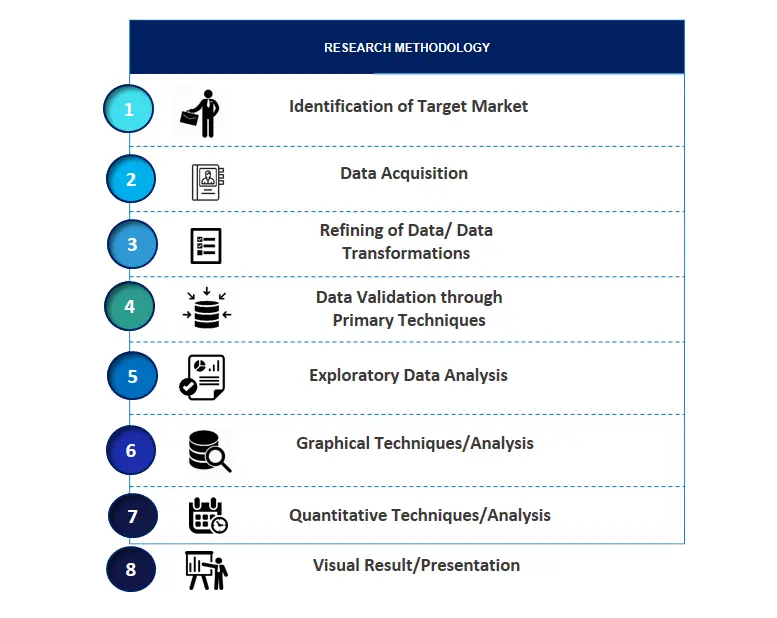
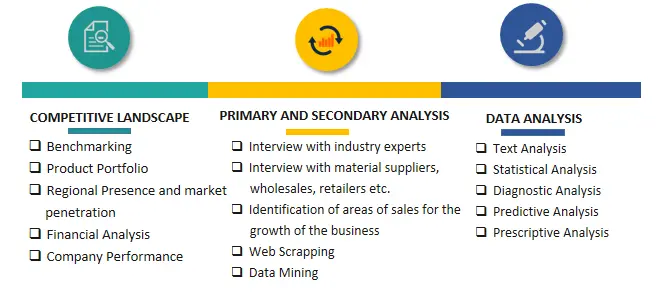
2. Research Methodology
2.1. Research data source
2.1.1. Secondary Data
2.1.2. Primary Data
2.1.3. SPER’s internal database
2.1.4. Premium insight from KOL’s
2.2. Market size estimation
2.2.1. Top-down and Bottom-up approach
2.3. Data triangulation
3. Executive Summary
4. Market Dynamics
4.1. Driver, Restraint, Opportunity and Challenges analysis
4.1.1. Drivers
4.1.2. Restraints
4.1.3. Opportunities
4.1.4. Challenges
5. Market variable and outlook
5.1. SWOT Analysis
5.1.1. Strengths
5.1.2. Weaknesses
5.1.3. Opportunities
5.1.4. Threats
5.2. PESTEL Analysis
5.2.1. Political Landscape
5.2.2. Economic Landscape
5.2.3. Social Landscape
5.2.4. Technological Landscape
5.2.5. Environmental Landscape
5.2.6. Legal Landscape
5.3. PORTER’s Five Forces
5.3.1. Bargaining power of suppliers
5.3.2. Bargaining power of buyers
5.3.3. Threat of Substitute
5.3.4. Threat of new entrant
5.3.5. Competitive rivalry
5.4. Heat Map Analysis
6. Competitive Landscape
6.1. Global Superplasticizers Market Manufacturing Base Distribution, Sales Area, Product Type
6.2. Mergers & Acquisitions, Partnerships, Product Launch, and Collaboration in Global Superplasticizers Market
7. Global Superplasticizers Market, By Product Type (USD Million) 2021-2034
7.1. Polycarboxylate ether (PCE) based
7.2. Sulfonated naphthalene formaldehyde (SNF) based
7.3. Sulfonated melamine formaldehyde (SMF) based
7.4. Lignosulfonate based
7.5. Modified lignosulfonates
7.6. Others
8. Global Superplasticizers Market, By Form (USD Million) 2021-2034
8.1. Liquid
8.2. Powder
8.3. Others
9. Global Superplasticizers Market, By Application (USD Million) 2021-2034
9.1. Ready-mix concrete
9.2. Precast concrete
9.3. High-performance concrete
9.4. Self-consolidating concrete
9.5. Shotcrete
9.6. Others
10. Global Superplasticizers Market, By End Use (USD Million) 2021-2034
10.1. Residential construction
10.2. Commercial construction
10.3. Infrastructure development
10.4. Industrial construction
10.5. Others
11. Global Superplasticizers Market, (USD Million) 2021-2034
11.1. Global Superplasticizers Market Size and Market Share
12. Global Superplasticizers Market, By Region, (USD Million) 2021-2034
12.1. Asia-Pacific
12.1.1. Australia
12.1.2. China
12.1.3. India
12.1.4. Japan
12.1.5. South Korea
12.1.6. Rest of Asia-Pacific
12.2. Europe
12.2.1. France
12.2.2. Germany
12.2.3. Italy
12.2.4. Spain
12.2.5. United Kingdom
12.2.6. Rest of Europe
12.3. Middle East and Africa
12.3.1. Kingdom of Saudi Arabia
12.3.2. United Arab Emirates
12.3.3. Qatar
12.3.4. South Africa
12.3.5. Egypt
12.3.6. Morocco
12.3.7. Nigeria
12.3.8. Rest of Middle-East and Africa
12.4. North America
12.4.1. Canada
12.4.2. Mexico
12.4.3. United States
12.5. Latin America
12.5.1. Argentina
12.5.2. Brazil
12.5.3. Rest of Latin America
13. Company Profile
13.1. Arkema
13.1.1. Company details
13.1.2. Financial outlook
13.1.3. Product summary
13.1.4. Recent developments
13.2. BASF
13.2.1. Company details
13.2.2. Financial outlook
13.2.3. Product summary
13.2.4. Recent developments
13.3. Kao Corporation
13.3.1. Company details
13.3.2. Financial outlook
13.3.3. Product summary
13.3.4. Recent developments
13.4. Mapei S.p.A
13.4.1. Company details
13.4.2. Financial outlook
13.4.3. Product summary
13.4.4. Recent developments
13.5. Sika
13.5.1. Company details
13.5.2. Financial outlook
13.5.3. Product summary
13.5.4. Recent developments
13.6. Others
14. Conclusion
15. List of Abbreviations
16. Reference Links