Global Neo and Challenger Bank Market Growth, Size, Trends Analysis- By Licensing Model, By Business Model, By Services Offered, By End Use – Regional Outlook, Competitive Strategies and Segment Forecast to 2034

Published: Jan-2026 Report ID: IACT2603 Pages: 1 - 192 Formats*:     
Category : Information & Communications Technology
According to SPER Market Research, the Global Neo and Challenger Bank Market is estimated to reach USD 744.88 billion by 2034 with a CAGR 26.75%.

Introduction and Overview
The report includes an in-depth analysis of the Global Neo and Challenger Bank Market, including market size and trends, product mix, Applications, and supplier analysis.

The global Neo and Challenger Bank Market was valued at USD 69.6 billion in 2024 and is expected to grow at a CAGR of over 26.75% from 2025 to 2034. The growth of neo and challenger banks is being driven by the adoption of modern technology and automation, enabling faster, more efficient, and personalized services. By leveraging AI, machine learning, and cloud infrastructure, these banks streamline customer onboarding, enable real-time fraud detection, and provide instant insights into spending behavior. Automation also lowers operational costs, allowing features such as instant loan approvals, real-time transactions, and zero-fee accounts. Additionally, digital convenience plays a key role, as users can access banking services anytime through mobile apps without visiting branches, appealing strongly to tech-savvy consumers seeking speed, flexibility, and ease of use.

By Business models:
Based on business models, the neo and challenger bank market is divided into digital-only banks and hybrid banks, with digital-only banks dominating the landscape. Their lack of physical branches and large on-site staff significantly reduces operational expenses, enabling them to offer low-cost or fee-free services and attract customers more efficiently. These banks rely on advanced mobile platforms that provide real-time alerts, budgeting features, and spending insights, driving higher customer engagement and satisfaction. Industry developments indicate growing interest in expanding digital-only banking into new regions. Supported by cloud infrastructure, open banking APIs, and strategic partnerships, digital-only banks can scale rapidly, enhance profitability, and remain highly attractive to investors.

By End Use:
Based on end use, the neo and challenger bank market is categorized into individual and business users, with individuals accounting for the larger share. Consumers increasingly prefer fast, mobile-based banking solutions, and neo banks meet this demand through intuitive apps, instant transfers, and real-time account notifications. These features align well with digitally connected lifestyles, driving higher adoption. Additionally, digital banks improve financial inclusion by enabling easy account access with minimal documentation, especially in emerging regions. Cost-conscious younger users are further attracted by low- or no-fee services, including free withdrawals, no minimum balance requirements, and affordable cross-border transactions.

By Services:
Based on services, the neo and challenger bank market includes payments and transfers, savings accounts, loans, investments, insurance, currency exchange, and other offerings, with savings accounts holding a leading position. Savings accounts are typically the first product used to attract new customers and establish long-term banking relationships. Digital banks benefit from offering simple, no-fee savings options that support rapid customer acquisition. Their lower operating costs allow them to offer more competitive interest rates. Combined with features such as real-time balance updates, automated savings, and round-up tools, these accounts strongly appeal to younger, digitally driven users.

By licensing models:
Based on licensing models, the neo and challenger bank market is divided into fully licensed banks and partnership-based models, with fully licensed banks holding a leading position. These banks operate independently, managing deposits, lending, and regulatory compliance without relying on third parties, which allows broader service offerings and stronger margins. Full licensing also provides greater flexibility to innovate and customize products for customers. Moreover, regulatory approval strengthens credibility, as customers perceive fully licensed banks as stable and secure. Direct supervision by authorities builds trust, encouraging higher adoption, increased deposits, and long-term customer retention.


Regional Insights:
North America leads the global neo and challenger bank market, with the U.S. driving regional growth. High smartphone and internet penetration, especially among younger consumers, has created strong demand for digital-first financial services. The rapid rise in neobank account adoption reflects this shift toward mobile banking. Many U.S.-based neo banks rely on banking-as-a-service partnerships with licensed institutions, enabling faster market entry and innovation without full charters. These banks also focus on gig workers, low-income users, and underbanked populations by offering faster payments, simple accounts, and financial education. Additionally, dissatisfaction with traditional banks’ fees and outdated digital experiences continues to push consumers toward low-cost, mobile-centric alternatives.

Market Competitive Landscape:
The Neo and Challenger Bank Market is highly consolidated. Some of the market key players are Aldermore Bank, Ally Bank, Atom Bank, Bunq, Capital One 360, Chime, Dave, Douugh, Judo Bank, and Juno Finance.

Recent Developments:
  • In May 2025, UK-based neobank Revolut announced a significant expansion into France, signaling broader European growth ambitions. The move is expected to represent the largest foreign investment in France’s financial sector in more than a decade.
  • In April 2025, Kraken partnered with Bunq to launch Bunq Crypto, allowing users to trade and hold hundreds of cryptocurrencies directly within the bunq app.

Scope of the report:
Report MetricDetails
Market size available for years2021-2034
Base year considered2024
Forecast period2026-2035
Segments coveredBy Licensing Model, By Business Model, By Services Offered, By End Use
Regions coveredNorth America, Latin America, Asia-Pacific, Europe, and Middle East & Africa
Companies CoveredAldermore Bank, Ally Bank, Atom Bank, Bunq, Capital One 360, Chime, Dave, Douugh, Judo Bank, and Juno Finance.

 Key Topics Covered in the Report
  • Global Neo and Challenger Bank Market Size (FY’2021-FY’2034)
  • Overview of Global Neo and Challenger Bank Market
  • Segmentation of Global Neo and Challenger Bank Market by Licensing Model (Water Collectors, Air Collectors, Concentrators)
  • Segmentation of Global Neo and Challenger Bank Market by Business Model (Residential, Commercial)
  • Segmentation of Global Neo and Challenger Bank Market by Services Offered (Residential, Commercial)
  • Segmentation of Global Neo and Challenger Bank Market by End Use (Residential, Commercial)
  • Statistical Snap of Global Neo and Challenger Bank Market
  • Expansion Analysis of Global Neo and Challenger Bank Market
  • Problems and Obstacles in Global Neo and Challenger Bank Market
  • Competitive Landscape in the Global Neo and Challenger Bank Market
  • Details on Current Investment in Global Neo and Challenger Bank Market
  • Competitive Analysis of Global Neo and Challenger Bank Market
  • Prominent Players in the Global Neo and Challenger Bank Market
  • SWOT Analysis of Global Neo and Challenger Bank Market
  • Global Neo and Challenger Bank Market Future Outlook and Projections
  • (FY’2025-FY’2034)
  • Recommendations from Analyst

1. Introduction
1.1. Scope of the report
1.2. Market segment analysis 

2. Research Methodology
2.1. Research data source
2.1.1. Secondary Data
2.1.2. Primary Data
2.1.3. SPER’s internal database
2.1.4. Premium insight from KOL’s
2.2. Market size estimation
2.2.1. Top-down and Bottom-up approach
2.3. Data triangulation

3. Executive Summary

4. Market Dynamics
4.1. Driver, Restraint, Opportunity and Challenges analysis
4.1.1. Drivers
4.1.2. Restraints
4.1.3. Opportunities
4.1.4. Challenges

5. Market variable and outlook
5.1. SWOT Analysis
5.1.1. Strengths
5.1.2. Weaknesses
5.1.3. Opportunities
5.1.4. Threats
5.2. PESTEL Analysis
5.2.1. Political Landscape
5.2.2. Economic Landscape
5.2.3. Social Landscape
5.2.4. Technological Landscape
5.2.5. Environmental Landscape
5.2.6. Legal Landscape
5.3. PORTER’s Five Forces 
5.3.1. Bargaining power of suppliers
5.3.2. Bargaining power of buyers
5.3.3. Threat of Substitute
5.3.4. Threat of new entrant
5.3.5. Competitive rivalry
5.4. Heat Map Analysis

6. Competitive Landscape
6.1. Global Neo and Challenger Bank Market Manufacturing Base Distribution, Sales Area, Product Type 
6.2. Mergers & Acquisitions, Partnerships, Product Launch, and Collaboration in Global Neo and Challenger Bank Market

7. Global Neo and Challenger Bank Market, By Licensing Model, (USD Million) 2021-2034 
7.1. Water collectors
7.1.1. Covered
7.1.2. Uncovered
7.1.3. Evacuated tube 
7.2. Air collectors
7.3. Concentrators

8. Global Neo and Challenger Bank Market, By Business Model, (USD Million) 2021-2034 
8.1. Residential
8.2. Commercial

9. Global Neo and Challenger Bank Market, By Services Offered, (USD Million) 2021-2034 
9.1. Residential
9.2. Commercial

10. Global Neo and Challenger Bank Market, By End Use, (USD Million) 2021-2034 
10.1. Residential
10.2. Commercial

11. Global Neo and Challenger Bank Market, (USD Million) 2021-2034 
11.1. Global Neo and Challenger Bank Market Size and Market Share

12. Global Neo and Challenger Bank Market, By Region, 2021-2034 (USD Million)
12.1. Asia-Pacific
12.1.1. Australia
12.1.2. China
12.1.3. India
12.1.4. Japan
12.1.5. South Korea
12.1.6. Rest of Asia-Pacific
12.2. Europe
12.2.1. France
12.2.2. Germany
12.2.3. Italy
12.2.4. Spain
12.2.5. United Kingdom
12.2.6. Rest of Europe
12.3. Middle East and Africa
12.3.1. Kingdom of Saudi Arabia 
12.3.2. United Arab Emirates
12.3.3. Qatar
12.3.4. South Africa
12.3.5. Egypt
12.3.6. Morocco
12.3.7. Nigeria
12.3.8. Rest of Middle-East and Africa
12.4. North America
12.4.1. Canada
12.4.2. Mexico
12.4.3. United States
12.5. Latin America
12.5.1. Argentina
12.5.2. Brazil
12.5.3. Rest of Latin America 

13. Company Profile
13.1. Aldermore Bank
13.1.1. Company details
13.1.2. Financial outlook
13.1.3. Product summary 
13.1.4. Recent developments
13.2. Ally Bank
13.2.1. Company details
13.2.2. Financial outlook
13.2.3. Product summary 
13.2.4. Recent developments
13.3. Atom Bank
13.3.1. Company details
13.3.2. Financial outlook
13.3.3. Product summary 
13.3.4. Recent developments
13.4. Bunq
13.4.1. Company details
13.4.2. Financial outlook
13.4.3. Product summary 
13.4.4. Recent developments
13.5. Capital One 360
13.5.1. Company details
13.5.2. Financial outlook
13.5.3. Product summary 
13.5.4. Recent developments
13.6. Chime
13.6.1. Company details
13.6.2. Financial outlook
13.6.3. Product summary 
13.6.4. Recent developments
13.7. Dave
13.7.1. Company details
13.7.2. Financial outlook
13.7.3. Product summary 
13.7.4. Recent developments
13.8. Douugh
13.8.1. Company details
13.8.2. Financial outlook
13.8.3. Product summary 
13.8.4. Recent developments
13.9. Judo Bank
13.9.1. Company details
13.9.2. Financial outlook
13.9.3. Product summary 
13.9.4. Recent developments
13.10. Juno Finance
13.10.1. Company details
13.10.2. Financial outlook
13.10.3. Product summary 
13.10.4. Recent developments
13.11. Others

14. Conclusion

15. List of Abbreviations

16. Reference Links

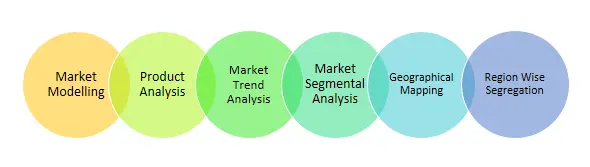
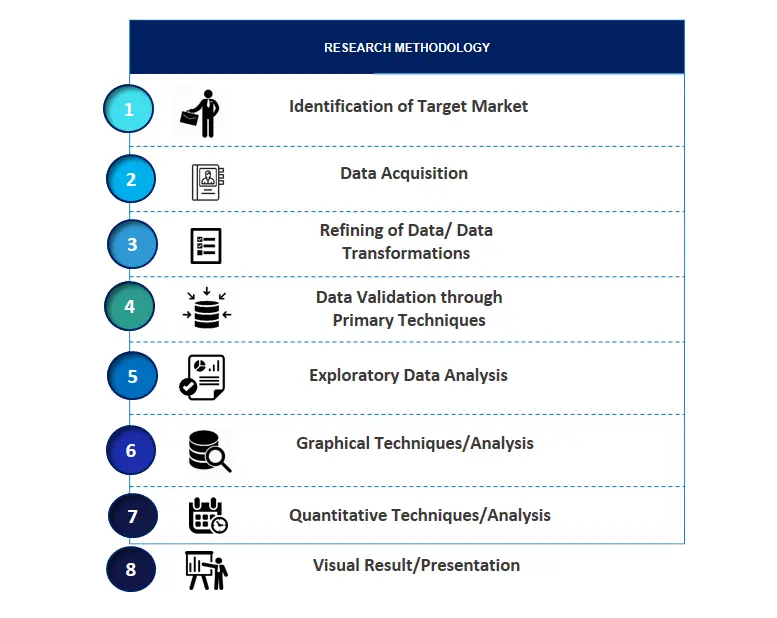
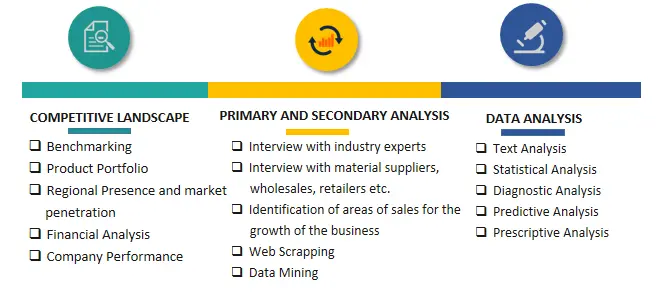
SPER Market Research’s methodology uses great emphasis on primary research to ensure that the market intelligence insights are up to date, reliable and accurate. Primary interviews are done with players involved in each phase of a supply chain to analyze the market forecasting. The secondary research method is used to help you fully understand how the future markets and the spending patterns look likes.

The report is based on in-depth qualitative and quantitative analysis of the Product Market. The quantitative analysis involves the application of various projection and sampling techniques. The qualitative analysis involves primary interviews, surveys, and vendor briefings.  The data gathered as a result of these processes are validated through experts opinion. Our research methodology entails an ideal mixture of primary and secondary initiatives.
SPER-Methodology-1

SPER-Methodology-2

SPER-Methodology-3


Frequently Asked Questions About This Report
PLACE AN ORDER
  • 15 % off
     
    $ 4250
  • 20 % off
             
    $ 5650
  • 25 % off
         
    $ 7450
Pre-Purchase Inquiry
SEND AN INQUIRY
NEED CUSTOMIZATION?
Request Customization
CALL OR EMAIL US
US:
India:
Email:
100% Secure Payment

SPER American Express
SPER VISA
SPER Master Card
SPER Mestro
SPER Paypal
SPER CCAvenues

Have a glance of the Report

  Download Free Sample

Looking for Customization?

 Customization Request

Have a Question?

 Reach Our Analysis Team

COVID-19 impact analysis?

 Request Analysis
Thought Leadership

Trusted by Industry Leaders

Our data-driven insights have influenced the strategy of 200+ reputed companies across the globe.

SPER-Astellas Pharma
SPER-Microsoft
SPER-EY
SPER-McKinsey
SPER-Bain
SPER-Max-Healthcare
SPER-DHL
SPER-IQVIA
SPER-Mitsubishi Logistics
SPER-PACCOR
SPER-Macmillan Education
SPER-Kankar IMRB
SPER-ITA
SPER-PWC
SPER-SAPTCA
SPER-Straumann
SPER-Danaher
SPER-AandM
SPER-MENARINI Silicon Biosystems
SPER-IPSOS
SPER-Heineken
HIPPA Compliant
GDPR Certified
ISO 27001
Peer Reviewed
Get Started Today

Your Competitive Advantage in
Pharmaceutical & Medical Technology
Markets

Join industry leaders leveraging AI-powered intelligence to make confident, data-driven decisions that accelerate breakthrough treatments and technologies to market.

No Credit Card Required
15-Minute Demo
Expert Guidance