Global Meal Kit Delivery Services Market Size - By Product Type, By Form, By End Use - Regional Outlook, Competitive Strategies and Segment Forecast to 2035

Published: Jun-2026 Report ID: FOOD2609 Pages: 1 - 250 Formats*:     
Category : Food & Beverages
According to SPER Market Research, the Global Meal Kit Delivery Services Market is estimated to reach USD 92 billion by 2035 with a CAGR 8.85%.  

Introduction and Overview
The report includes an in-depth analysis of the Global Meal Kit Delivery Services Market, including market size and trends, product mix, Applications, and supplier analysis.

The global Meal Kit Delivery Services Market was valued at USD 39.4 billion in 2025 and is expected to reach USD 92 billion by 2035, registering a CAGR of 8.85% during the forecast period. The industry continues to expand as consumers seek convenient, nutritious, and time-efficient meal solutions that fit busy lifestyles. Meal kits provide pre-portioned ingredients, reducing preparation time and food waste while supporting healthier eating habits. Rising disposable incomes and increasing interest in specialized diets, such as vegan, keto, and gluten-free options, further drive demand. Additionally, the widespread adoption of digital platforms, subscription services, smartphones, and internet access has made meal kit ordering more accessible and personalized.

By Meal:
The non-vegetarian meal kit delivery services segment led the industry in 2025, supported by strong consumer demand for protein-rich meals featuring chicken, seafood, and red meat. Interest in gourmet recipes, international cuisines, and reliable cold-chain logistics that maintain product freshness further supports segment growth. Meanwhile, the vegan segment is expected to witness significant expansion, driven by the increasing adoption of plant-based and flexitarian diets. Growing awareness of the health and environmental benefits of reducing meat consumption is encouraging demand for nutritious and flavorful vegetarian meal kit options.

By Offering:
The cook & eat meal kit delivery services segment accounted for a significant share in 2025, driven by demand for fresh, pre-portioned ingredients and easy-to-follow recipes that simplify home cooking. Growing health awareness, interest in trying new cuisines, and preference for preservative-free meals continue to support demand. These kits are particularly popular among busy professionals and families seeking nutritious, restaurant-quality meals at home. Meanwhile, the heat & eat segment is expected to experience strong growth, fueled by rising demand for convenient, ready-to-eat meal options that require minimal preparation and save valuable time.

By Service:
The single meal kit delivery services segment held a significant position in 2025, supported by its affordability, flexibility, and appeal to consumers seeking convenient meal options without long-term commitments. It is particularly popular among first-time users and occasional buyers exploring different meal choices. Meanwhile, the multiple meal kit delivery services segment is expected to witness strong growth, driven by increasing demand for convenient subscription-based solutions. These services support better meal planning, cost efficiency, and reduced food waste while offering personalized meal selections. Advancements in digital platforms and AI-driven customization are further enhancing customer engagement.

By Service:
Online platforms accounted for a major share of meal kit delivery service sales in 2025, supported by the rapid growth of e-commerce, digital payments, and mobile-based ordering. Consumers favor online channels for their convenience, extensive product choices, personalized recommendations, subscription benefits, and real-time delivery tracking. Increasing internet access, smartphone usage, and stronger logistics networks have further boosted adoption. Meanwhile, the offline segment is expected to grow steadily due to the expanding availability of meal kits in retail stores. Many consumers value in-person purchases to assess product freshness, quality, and portion sizes before making a purchase.

Regional Insights:
North America led the meal kit delivery services industry in 2025, supported by strong consumer awareness, high purchasing power, and increasing demand for convenient, healthy, and time-saving meal solutions. The region benefits from advanced e-commerce networks, widespread subscription adoption, and growing interest in personalized dietary options, including keto, vegan, and low-carb meals. Busy lifestyles and rising health consciousness continue to drive demand. The U.S. is expected to witness steady growth due to strong digital infrastructure and ongoing product innovations. Meanwhile, Europe is projected to expand significantly, driven by demand for nutritious meals, sustainable packaging, plant-based diets, and locally sourced ingredients.

Market Competitive Landscape:
The Global Meal Kit Delivery Services Market is highly consolidated Some of the market key players are Blue Apron, LLC, Chem-Trend L.P., Cresset Chemical Company, Croda International Plc, Daikin Industries Ltd., DOW, Grignard Company LLC, Henkel Corporation, LORD Corporation, Marbocote Ltd., Michelman, REXCO, Shin-Etsu Chemical Co. Ltd., and Wacker Chemie AG.

Recent Developments:
  • In August 2025, LT Foods introduced the DAAWAT Thai Green Curry Rice Kit, a cook-and-eat meal solution featuring jasmine rice, coconut milk, and a blend of spices. The product is made without artificial colors or preservatives, offering a convenient and flavorful meal option.
  • In July 2025, Xoom Foods launched a heat-and-eat meal subscription service across the U.S., offering fully cooked, restaurant-quality meals designed to meet the growing demand for convenient and nutritious dining options.

Scope of the report:
Report Metric Details
Market size available for the years 2022-2035
Base year considered 2025
Forecast Period 2026-2035
Segments Covered By Meal, By Offering, By Service, By Platform
Regions Covered North America, Latin America, Asia-Pacific,
Europe, and Middle East & Africa
Companies Covered Blue Apron, LLC, Chem-Trend L.P., Cresset Chemical Company, Croda International Plc, Daikin Industries Ltd., DOW, Grignard Company LLC, Henkel Corporation, LORD Corporation, Marbocote Ltd., Michelman, REXCO, Shin-Etsu Chemical Co. Ltd., and Wacker Chemie AG.

Key Topics Covered in the Report
  • Global Meal Kit Delivery Services Market Size (FY’2022-FY’2035)
  • Overview of Global Meal Kit Delivery Services Market
  • Segmentation of Global Meal Kit Delivery Services Market by Meal (Vegan, Vegetarian, Non-Vegetarian)
  • Segmentation of Global Meal Kit Delivery Services Market by Offering (Heat & Eat, Cook & Eat)
  • Segmentation of Global Meal Kit Delivery Services Market by Service (Single, Multiple)
  • Segmentation of Global Meal Kit Delivery Services Market by Platform (Online, Offline)
  • Statistical Snap of Global Meal Kit Delivery Services Market
  • Expansion Analysis of Global Meal Kit Delivery Services Market
  • Problems and Obstacles in Global Meal Kit Delivery Services Market 
  • Competitive Landscape in the Global Meal Kit Delivery Services Market
  • Details on Current Investment in Global Meal Kit Delivery Services Market
  • Competitive Analysis of Global Meal Kit Delivery Services Market 
  • Prominent Players in the Global Meal Kit Delivery Services Market
  • SWOT Analysis of Global Meal Kit Delivery Services Market  
  • Global Meal Kit Delivery Services Market Future Outlook and Projections (FY’2026-FY’2035) 
  • Recommendations from Analyst

1. Introduction
1.1 Scope of the report
1.2  Market segment analysis

2. Research Methodology 
2.1 Research data source
2.1.1 Secondary Data
2.1.2 Primary Data
2.1.3 SPER’s internal Database
2.1.4 Primary insight from KOL’s
2.2 Market size estimation
2.2.1 Top-down and Bottom-up approach
2.3 Data triangulation

3. Executive Summary

4. Market Dynamics
4.1 Driver, Restraint, Opportunity and Challenges analysis
4.1.1 Drivers
4.1.2 Restraints
4.1.3 Opportunities
4.1.4 Challenges

5. Market variable and outlook
5.1 SWOT Analysis
5.1.1 Strengths
5.1.2 Weaknesses
5.1.3 Opportunities
5.1.4 Threats
5.2 PESTEL Analysis
5.2.1 Political Landscape
5.2.2 Economic Landscape
5.2.3 Social Landscape
5.2.4 Technological Landscape
5.2.5 Environmental Landscape
5.2.6 Legal Landscape
5.3 PORTER’s Five Forces
5.4 Heat Map Analysis

6. Competitive Landscape
6.1. Global Meal Kit Delivery Services Market Manufacturing Base Distribution, Sales Area, Product Type
6.2 Mergers & Acquisitions, Partnerships, Product Launch, and Collaboration in Global Meal Kit Delivery Services Market

7. Global Meal Kit Delivery Services Market, By Meal, (USD Million) 2022-2035
7.1 Vegan
7.2 Vegetarian
7.3 Non-Vegetarian

8. Global Meal Kit Delivery Services Market, By Offering, (USD Million) 2022-2035
8.1 Heat & Eat
8.2 Cook & Eat

9. Global Meal Kit Delivery Services Market, By Service, (USD Million) 2022-2035
9.1 Single
9.2 Multiple

10. Global Meal Kit Delivery Services Market, By Platform, (USD Million) 2022-2035
10.1 Online
10.2 Offline

11. Global Meal Kit Delivery Services Market, (USD Million) 2022-2035   
11.1 Global Meal Kit Delivery Services Market Size and Market Share

12.  Global Meal Kit Delivery Services Market, By Region, (USD Million) 2022-2035 
12.1 Asia-Pacific
12.1.1 Australia
12.1.2 China
12.1.3 India
12.1.4 Japan
12.1.5 South Korea
12.1.6 Rest of Asia-Pacific
12.2 Europe
12.2.1 France
12.2.2 Germany 
12.2.3 Italy
12.2.4 Spain
12.2.5 United Kingdom
12.2.6 Rest of Europe
12.3 Middle East and Africa
12.3.1 Kingdom of Saudi Arabia
12.3.2 United Arab Emirates
12.3.3 Qatar
12.3.4 South Africa
12.3.5 Egypt
12.3.6 Morocco
12.3.7 Nigeria
12.3.8 Rest of Middle-East and Africa
12.4 North America
12.4.1 Canada 
12.4.2 Mexico
12.4.3 United States
12.5 Latin America
12.5.1 Argentina
12.5.2 Brazil
12.5.3 Rest of America

13. Company Profile
13.1 Blue Apron, LLC
13.1.1 Company details
13.1.2 Financial outlook
13.1.3 Product summary
13.1.4 Recent developments
13.2 Chem-Trend L.P.
13.2.1 Company details
13.2.2 Financial outlook
13.2.3 Product summary
13.2.4 Recent developments
13.3 Cresset Chemical Company
13.3.1 Company details
13.3.2 Financial outlook
13.3.3 Product summary
13.3.4 Recent developments
13.4 Croda International Plc
13.4.1 Company details
13.4.2 Financial outlook
13.4.3 Product summary
13.4.4 Recent developments
13.5 Daikin Industries Ltd.
13.5.1 Company details
13.5.2 Financial outlook
13.5.3 Product summary
13.5.4 Recent developments
13.6 DOW
13.6.1 Company details
13.6.2 Financial outlook
13.6.3 Product summary
13.6.4 Recent developments
13.7 Grignard Company LLC
13.7.1 Company details
13.7.2 Financial outlook
13.7.3 Product summary
13.7.4 Recent developments
13.8 Henkel Corporation
13.8.1 Company details
13.8.2 Financial outlook
13.8.3 Product summary
13.8.4 Recent developments
13.9 LORD Corporation
13.9.1  Company details
13.9.2  Financial outlook
13.9.3  Product summary
13.9.4  Recent developments
13.10 Marbocote Ltd.
13.10.1   Company details
13.10.2   Financial outlook
13.10.3   Product summary
13.10.4   Recent developments
13.11 Michelman
13.11.1   Company details
13.11.2   Financial outlook
13.11.3   Product summary
13.11.4   Recent developments
13.12 REXCO
13.12.1   Company details
13.12.2   Financial outlook
13.12.3   Product summary
13.12.4   Recent developments
13.13 Shin-Etsu Chemical Co. Ltd.
13.13.1   Company details
13.13.2   Financial outlook
13.13.3   Product summary
13.13.4   Recent developments
13.14 Wacker Chemie AG
13.14.1   Company details
13.14.2   Financial outlook
13.14.3   Product summary
13.14.4   Recent developments
13.15 Others

14. Conclusion

15. List Of Abbreviations

16. Reference Links


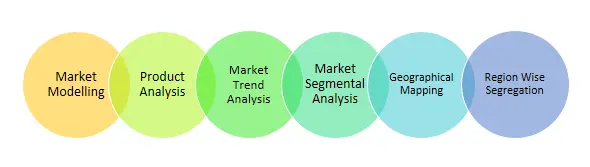
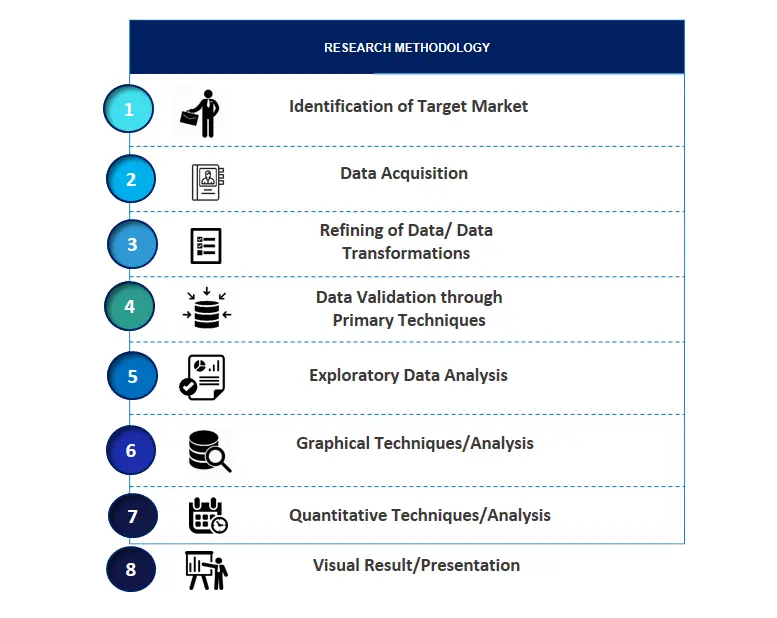
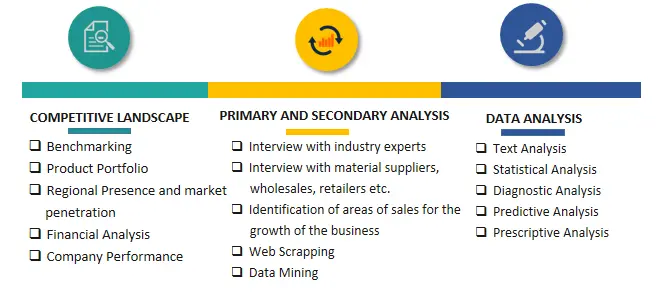
SPER Market Research’s methodology uses great emphasis on primary research to ensure that the market intelligence insights are up to date, reliable and accurate. Primary interviews are done with players involved in each phase of a supply chain to analyze the market forecasting. The secondary research method is used to help you fully understand how the future markets and the spending patterns look likes.

The report is based on in-depth qualitative and quantitative analysis of the Product Market. The quantitative analysis involves the application of various projection and sampling techniques. The qualitative analysis involves primary interviews, surveys, and vendor briefings.  The data gathered as a result of these processes are validated through experts opinion. Our research methodology entails an ideal mixture of primary and secondary initiatives.
SPER-Methodology-1

SPER-Methodology-2

SPER-Methodology-3


Frequently Asked Questions About This Report
PLACE AN ORDER
  • 15 % off
     
    $ 3250
  • 20 % off
             
    $ 4250
  • 25 % off
         
    $ 6250
Pre-Purchase Inquiry
SEND AN INQUIRY
NEED CUSTOMIZATION?
Request Customization
CALL OR EMAIL US
US:
India:
Email:
100% Secure Payment

SPER American Express
SPER VISA
SPER Master Card
SPER Mestro
SPER Paypal
SPER CCAvenues

Have a glance of the Report

  Download Free Sample

Looking for Customization?

 Customization Request

Have a Question?

 Reach Our Analysis Team

COVID-19 impact analysis?

 Request Analysis
Thought Leadership

Trusted by Industry Leaders

Our data-driven insights have influenced the strategy of 200+ reputed companies across the globe.

SPER-Astellas Pharma
SPER-Microsoft
SPER-EY
SPER-McKinsey
SPER-Bain
SPER-Max-Healthcare
SPER-DHL
SPER-IQVIA
SPER-Mitsubishi Logistics
SPER-PACCOR
SPER-Macmillan Education
SPER-Kankar IMRB
SPER-ITA
SPER-PWC
SPER-SAPTCA
SPER-Straumann
SPER-Danaher
SPER-AandM
SPER-MENARINI Silicon Biosystems
SPER-IPSOS
SPER-Heineken
HIPPA Compliant
GDPR Certified
ISO 27001
Peer Reviewed
Get Started Today

Your Competitive Advantage in
Pharmaceutical & Medical Technology
Markets

Join industry leaders leveraging AI-powered intelligence to make confident, data-driven decisions that accelerate breakthrough treatments and technologies to market.

No Credit Card Required
15-Minute Demo
Expert Guidance