Global Synthetic Biology Market Outlook

Global Synthetic Biology Market Size - By Product, By Technology, By Application, By End Use - Regional Outlook, Competitive Strategies and Segment Forecast to 2035

Published: Jul-2026 Report ID: FOOD2610 Pages: 1 - 250 Formats*:     
Category : Food & Beverages
According to SPER Market Research, the Global Synthetic Biology Market is estimated to reach USD 98.5 billion by 2035 with a CAGR 17.95%.

Introduction and Overview  
The report includes an in-depth analysis of the Global Synthetic Biology Market, including market size and trends, product mix, Applications, and supplier analysis.

The global Synthetic Biology Market was valued at USD 18.9 billion in 2025 and is expected to reach USD 875.42 billion by 2035, registering a CAGR of 17.95% during the forecast period. Emerging applications of synthetic biology, including multiplexed diagnostics, cellular recording, and therapeutic genome editing, are expected to drive strong demand for synthetic products. Advances in genetic engineering, particularly CRISPR-Cas systems, zinc finger nucleases, and TALENs, have improved the precision, speed, and efficiency of DNA modification. Meanwhile, declining costs of DNA sequencing, synthesis, and assembly have expanded accessibility and accelerated innovation. Automation, standardized biological components, and modular genetic circuits have shortened development timelines, enhanced reproducibility, and enabled faster design-build-test-learn cycles, supporting the transition of synthetic biology from research-focused applications to scalable commercial solutions.

By Product:
Enzymes remain a leading segment due to their critical role in DNA manipulation, protein engineering, and metabolic pathway development. Their broad applications across pharmaceuticals, agriculture, and biofuels continue to drive demand for efficient biocatalysts. Advances in enzyme engineering and production have improved performance while lowering costs. Meanwhile, cloning technology kits are gaining momentum by simplifying gene insertion, amplification, and modification. Growing interest in personalized medicine, synthetic organisms, and bioengineering is increasing adoption. As researchers seek faster and more reliable cloning methods, demand for these kits is expected to rise significantly.

By Application:
The healthcare sector dominated the synthetic biology market, supported by advancements in gene editing, personalized medicine, biopharmaceuticals, and innovative therapies for chronic, genetic, and rare diseases. Growing R&D investments, strategic partnerships, and adoption of cell and gene therapies, engineered biologics, and synthetic vaccines further strengthened its position. Meanwhile, non-healthcare applications are expanding across agriculture, energy, and materials. Synthetic biology is enabling biofuels, sustainable bioplastics, and improved crops, increasing demand for environmentally friendly solutions. Rising sustainability goals and resource efficiency are expected to accelerate investments across diverse industries.

By Technology:
PCR remains a dominant technology due to its critical role in detecting and analyzing specific gene sequences. Real-time PCR assays provide high sensitivity and specificity, supporting applications across genomics, DNA cloning, and forensic research. Meanwhile, genome editing technology is expected to witness strong growth, driven by its ability to develop organisms and products with targeted characteristics. These capabilities are transforming healthcare, agriculture, and biotechnology by enabling precise genetic modifications. As gene-editing technologies continue to advance, their applications are expected to expand, creating new opportunities for research, product development, and innovation.

By End Use:
The biotechnology and pharmaceutical companies segment held a leading position in the market, supported by its significant contribution to medical innovation and therapeutic development. These companies leverage synthetic biology to create advanced solutions, including gene therapies, monoclonal antibodies, and personalized medicines for complex and rare diseases. Strong research and development investments have accelerated the discovery of innovative biologics, improved drug delivery systems, and enhanced treatment effectiveness. Additionally, strategic partnerships and collaborations have enabled faster commercialization of synthetic biology research, strengthening the segment’s market position and supporting overall industry growth.

Regional Insights:
North America leads the synthetic biology market, supported by strong public and private investments, advanced research infrastructure, and growing demand for sustainable solutions in healthcare, agriculture, and energy. The U.S. benefits from major industry players, leading universities, research institutions, and supportive regulations that encourage innovation while addressing safety concerns. Meanwhile, Europe is witnessing notable growth due to EU funding, sustainability initiatives, and environmental regulations. Strong academic networks, strategic partnerships, and collaboration among startups, industry, and research institutions further promote innovation and support the expansion of synthetic biology applications across the region.

Market Competitive Landscape:
The Global Synthetic Biology Market is highly consolidated Some of the market key players are Bota Biosciences Inc., Codexis, Inc., Creative Biogene, Creative Enzymes, Enbiotix, Inc., Eurofins Scientific, Illumina, Inc., Merck KGaA (Sigma-Aldrich Co. LLC), New England Biolabs, Novozymes, Pareto Bio, Inc., and Scarab Genomics, LLC.

Recent Developments:
  • In September 2025, Maravai LifeSciences acquired Officinae Bio’s DNA and RNA business in Italy, combining AI-driven mRNA design with advanced manufacturing capabilities to accelerate nucleic acid therapeutic development.
  • In September 2025, Elegen launched ENFINIA IVT Ready DNA in the U.S., offering faster production of high-fidelity DNA templates to accelerate mRNA therapeutic development and reduce plasmid-related bottlenecks.

Scope of the report:
Report Metric Details
Market size available for the years 2022-2035
Base year considered 2025
Forecast Period 2026-2035
Segments Covered By Product, By Technology, By Application, By End Use-
Regions Covered North America, Latin America, Asia-Pacific,
Europe, and Middle East & Africa
Companies Covered Bota Biosciences Inc., Codexis, Inc., Creative Biogene, Creative Enzymes, Enbiotix, Inc., Eurofins Scientific, Illumina, Inc., Merck KGaA (Sigma-Aldrich Co. LLC), New England Biolabs, Novozymes, Pareto Bio, Inc., and Scarab Genomics, LLC.

Key Topics Covered in the Report
  • Global Synthetic Biology Market Size (FY’2022-FY’2035)
  • Overview of Global Synthetic Biology Market
  • Segmentation of Global Synthetic Biology Market by Product (Oligonucleotide/Oligo Pools and Synthetic DNA, Enzymes, Cloning Technologies Kits, Xeno-Nucleic Acids, Chassis Organism)
  • Segmentation of Global Synthetic Biology Market by Application (Healthcare, Non-Healthcare)
  • Segmentation of Global Synthetic Biology Market by Technology (NGS Technology, PCR Technology, Genome Editing Technology, Bioprocessing Technology, Other Technologies)
  • Segmentation of Global Synthetic Biology Market by End Use (Biotechnology and Pharmaceutical companies, Academic and Research Institutes, Others)
  • Statistical Snap of Global Synthetic Biology Market
  • Expansion Analysis of Global Synthetic Biology Market
  • Problems and Obstacles in Global Synthetic Biology Market 
  • Competitive Landscape in the Global Synthetic Biology Market
  • Details on Current Investment in Global Synthetic Biology Market
  • Competitive Analysis of Global Synthetic Biology Market 
  • Prominent Players in the Global Synthetic Biology Market
  • SWOT Analysis of Global Synthetic Biology Market  
  • Global Synthetic Biology Market Future Outlook and Projections (FY’2026-FY’2035) 
  • Recommendations from Analyst


1. Introduction
1.1 Scope of the report
1.2  Market segment analysis

2. Research Methodology 
2.1 Research data source
2.1.1 Secondary Data
2.1.2 Primary Data
2.1.3 SPER’s internal Database
2.1.4 Primary insight from KOL’s
2.2 Market size estimation
2.2.1 Top-down and Bottom-up approach
2.3 Data triangulation

3. Executive Summary

4. Market Dynamics
4.1 Driver, Restraint, Opportunity and Challenges analysis
4.1.1 Drivers
4.1.2 Restraints
4.1.3 Opportunities
4.1.4 Challenges

5. Market variable and outlook
5.1 SWOT Analysis
5.1.1 Strengths
5.1.2 Weaknesses
5.1.3 Opportunities
5.1.4 Threats
5.2 PESTEL Analysis
5.2.1 Political Landscape
5.2.2 Economic Landscape
5.2.3 Social Landscape
5.2.4 Technological Landscape
5.2.5 Environmental Landscape
5.2.6 Legal Landscape
5.3 PORTER’s Five Forces
5.4 Heat Map Analysis

6. Competitive Landscape
6.1. Global Synthetic Biology Market Manufacturing Base Distribution, Sales Area, Product Type
6.2 Mergers & Acquisitions, Partnerships, Product Launch, and Collaboration in Global Synthetic Biology Market

7. Global Synthetic Biology Market, By Product, (USD Million) 2022-2035
7.1 Oligonucleotide/Oligo Pools and Synthetic DNA
7.2 Enzymes
7.3 Cloning Technologies Kits
7.4 Xeno-Nucleic Acids
7.5 Chassis Organism

8. Global Synthetic Biology Market, By Application, (USD Million) 2022-2035
8.1 Healthcare
8.1.1 Clinical
8.1.2 Non-Clinical
8.2 Non-healthcare
8.2.1 Biotech Crops
8.2.2 Specialty Chemicals
8.2.3 Bio-fuels
8.2.4 Others

9. Global Synthetic Biology Market, By Technology, (USD Million) 2022-2035
9.1 NGS Technology
9.2 PCR Technology
9.3 Genome Editing Technology
9.4 Bioprocessing Technology
9.5 Other Technologies

10. Global Synthetic Biology Market, By End Use, (USD Million) 2022-2035
10.1 Biotechnology and Pharmaceutical companies
10.2 Academic and Research Institutes
10.3 Others

11. Global Synthetic Biology Market, (USD Million) 2022-2035   
11.1 Global Synthetic Biology Market Size and Market Share

12.  Global Synthetic Biology Market, By Region, (USD Million) 2022-2035 
12.1 Asia-Pacific
12.1.1 Australia
12.1.2 China
12.1.3 India
12.1.4 Japan
12.1.5 South Korea
12.1.6 Rest of Asia-Pacific
12.2 Europe
12.2.1 France
12.2.2 Germany 
12.2.3 Italy
12.2.4 Spain
12.2.5 United Kingdom
12.2.6 Rest of Europe
12.3 Middle East and Africa
12.3.1 Kingdom of Saudi Arabia
12.3.2 United Arab Emirates
12.3.3 Qatar
12.3.4 South Africa
12.3.5 Egypt
12.3.6 Morocco
12.3.7 Nigeria
12.3.8 Rest of Middle-East and Africa
12.4 North America
12.4.1 Canada 
12.4.2 Mexico
12.4.3 United States
12.5 Latin America
12.5.1 Argentina
12.5.2 Brazil
12.5.3 Rest of America

13. Company Profile
13.1 Bota Biosciences Inc.
13.1.1 Company details
13.1.2 Financial outlook
13.1.3 Product summary
13.1.4 Recent developments
13.2 Codexis, Inc.
13.2.1 Company details
13.2.2 Financial outlook
13.2.3 Product summary
13.2.4 Recent developments
13.3 Creative Biogene.
13.3.1 Company details
13.3.2 Financial outlook
13.3.3 Product summary
13.3.4 Recent developments
13.4 Creative Enzymes.
13.4.1 Company details
13.4.2 Financial outlook
13.4.3 Product summary
13.4.4 Recent developments
13.5 Enbiotix, Inc.
13.5.1 Company details
13.5.2 Financial outlook
13.5.3 Product summary
13.5.4 Recent developments
13.6 Eurofins Scientific
13.6.1 Company details
13.6.2 Financial outlook
13.6.3 Product summary
13.6.4 Recent developments
13.7 Illumina, Inc.
13.7.1 Company details
13.7.2 Financial outlook
13.7.3 Product summary
13.7.4 Recent developments
13.8 Merck Kgaa (Sigma-Aldrich Co. Llc)
13.8.1 Company details
13.8.2 Financial outlook
13.8.3 Product summary
13.8.4 Recent developments
13.9 New England Biolabs
13.9.1  Company details
13.9.2  Financial outlook
13.9.3  Product summary
13.9.4  Recent developments
13.10 Novozymes
13.10.1   Company details
13.10.2   Financial outlook
13.10.3   Product summary
13.10.4   Recent developments
13.11 Pareto Bio, Inc.
13.11.1   Company details
13.11.2   Financial outlook
13.11.3   Product summary
13.11.4   Recent developments
13.12 Scarab Genomics, Llc
13.12.1   Company details
13.12.2   Financial outlook
13.12.3   Product summary
13.12.4   Recent developments
13.13 Others

14. Conclusion

15. List Of Abbreviations

16. Reference Links


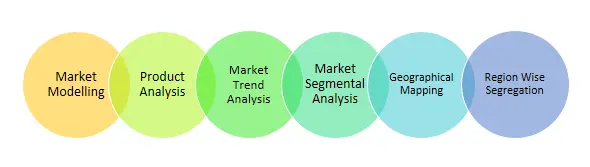
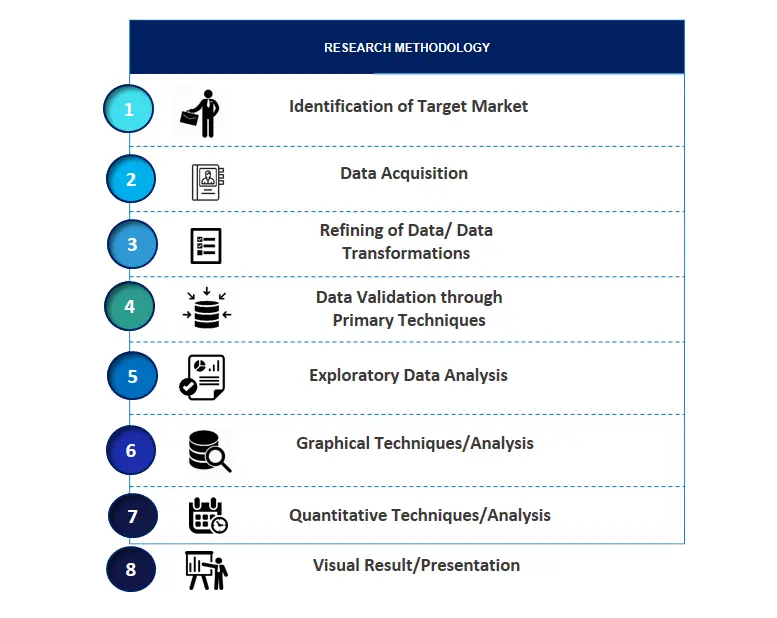
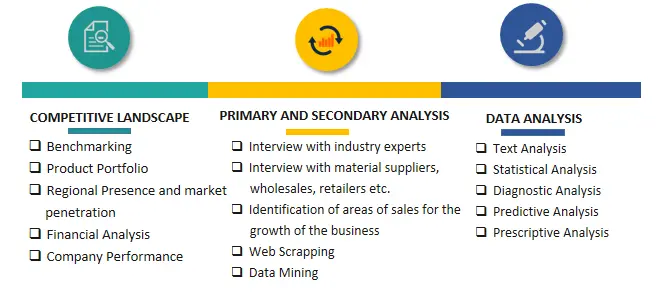
SPER Market Research’s methodology uses great emphasis on primary research to ensure that the market intelligence insights are up to date, reliable and accurate. Primary interviews are done with players involved in each phase of a supply chain to analyze the market forecasting. The secondary research method is used to help you fully understand how the future markets and the spending patterns look likes.

The report is based on in-depth qualitative and quantitative analysis of the Product Market. The quantitative analysis involves the application of various projection and sampling techniques. The qualitative analysis involves primary interviews, surveys, and vendor briefings.  The data gathered as a result of these processes are validated through experts opinion. Our research methodology entails an ideal mixture of primary and secondary initiatives.
SPER-Methodology-1

SPER-Methodology-2

SPER-Methodology-3


Frequently Asked Questions About This Report
PLACE AN ORDER
  • 15 % off
     
    $ 3250
  • 20 % off
             
    $ 5650
  • 25 % off
         
    $ 7450
Pre-Purchase Inquiry
SEND AN INQUIRY
NEED CUSTOMIZATION?
Request Customization
CALL OR EMAIL US
US:
India:
Email:
100% Secure Payment

SPER American Express
SPER VISA
SPER Master Card
SPER Mestro
SPER Paypal
SPER CCAvenues

Have a glance of the Report

  Download Free Sample

Looking for Customization?

 Customization Request

Have a Question?

 Reach Our Analysis Team

COVID-19 impact analysis?

 Request Analysis
Thought Leadership

Trusted by Industry Leaders

Our data-driven insights have influenced the strategy of 200+ reputed companies across the globe.

SPER-Astellas Pharma
SPER-Microsoft
SPER-EY
SPER-McKinsey
SPER-Bain
SPER-Max-Healthcare
SPER-DHL
SPER-IQVIA
SPER-Mitsubishi Logistics
SPER-PACCOR
SPER-Macmillan Education
SPER-Kankar IMRB
SPER-ITA
SPER-PWC
SPER-SAPTCA
SPER-Straumann
SPER-Danaher
SPER-AandM
SPER-MENARINI Silicon Biosystems
SPER-IPSOS
SPER-Heineken
HIPPA Compliant
GDPR Certified
ISO 27001
Peer Reviewed
Get Started Today

Your Competitive Advantage in
Pharmaceutical & Medical Technology
Markets

Join industry leaders leveraging AI-powered intelligence to make confident, data-driven decisions that accelerate breakthrough treatments and technologies to market.

No Credit Card Required
15-Minute Demo
Expert Guidance