
Vehicle Solar Panel Growth
Global Vehicle-Integrated Solar Panels Market Growth, Size, Trends Analysis- By Vehicle, By Solar Panel, By Installation Method, By Application – Regional Outlook, Competitive Strategies and Segment Forecast to 2035
| Published: Apr-2026 | Report ID: AMIN2637 | Pages: 1 - 250 | Formats*: |
| Category : Automotive & Transportation | |||
- In April 2025, Edison Future blazoned plans to integrate solar panels into its forthcoming EF1- T electric volley truck. The design includes photovoltaic cells on the roof, bed cover, and dashboard, potentially adding 25 to 35 long hauls of range per day under optimal conditions. The EF1- T is set to launch on three trims, with the top- league model offering a 450- afar range and 816 power. Edison Future’s approach aims to enhance the driving range and reduce reliance on charging structure, aligning with the growing demand for sustainable and tone- sufficient electric vehicles.
- In March 2025, Dutch solar electric vehicle incipiency Lightyear blazoned a strategic pivot to concentrate on the development of its further affordable model, the Lightyear 2. This decision came after halting product of its original model, the Lightyear 0, in January 2023 due to fiscal challenges. Lightyear 0 was notable for its intertwined solar panels and a WLTP range of 388 long hauls. With new investments and a renewed focus, Lightyear aims to make solar- powered vehicles more accessible to a broader request.
| Report Metric | Details |
|---|---|
| Market size available for years | 2022-2035 |
| Base year considered | 2025 |
| Forecast period | 2026-2035 |
| Segments covered | By Deck, By Fuel, By Application |
| Regions covered | By Vehicle, By Solar Panel, By Installation Method, By Application |
| Companies Covered | Aptera Motors, BYD, Ford Motor, General Motors, Lightyear, Nissan Motor, Planet Solar, Sono Motors, Toyota Motor, and Volkswagen. |
- Global Vehicle-Integrated Solar Panels Market Size (FY’2022–FY’2035)
- Overview of Global Vehicle-Integrated Solar Panels Market
- Segmentation of Global Vehicle-Integrated Solar Panels Market by Vehicle (Passenger cars Commercial vehicles, Electric vehicles (EVs), Specialty vehicles.
- Segmentation of Global Vehicle-Integrated Solar Panels Market by Solar Panel (Monocrystalline solar panels, Polycrystalline solar panels, Thin-film solar panels, Flexible solar panels)
- Segmentation of Global Vehicle-Integrated Solar Panels Market by Installation Method (Roof mounted, Hood mounted, Integrated body panels, Removable panels)
- Segmentation of Global Vehicle-Integrated Solar Panels Market by Application (Power generation, Battery charging, Auxiliary power supply, Heating systems)
- Statistical Snap of Global Vehicle-Integrated Solar Panels Market
- Expansion Analysis of Global Vehicle-Integrated Solar Panels Market
- Problems and Obstacles in Global Vehicle-Integrated Solar Panels Market
- Competitive Landscape in the Global Vehicle-Integrated Solar Panels Market
- Details on Current Investment in Global Vehicle-Integrated Solar Panels Market
- Competitive Analysis of Global Vehicle-Integrated Solar Panels Market
- Prominent Players in the Global Vehicle-Integrated Solar Panels Market
- SWOT Analysis of Global Vehicle-Integrated Solar Panels Market
- Global Vehicle-Integrated Solar Panels Market Future Outlook and Projections (FY’2026–FY’2035)
- Recommendations from Analyst
1.1. Scope of the report
1.2. Market segment analysis
2.1. Research data source
2.1.1. Secondary Data2.1.2. Primary Data2.1.3. SPER’s internal database2.1.4. Premium insight from KOL’s
2.2. Market size estimation
2.2.1. Top-down and Bottom-up approach
2.3. Data triangulation
4.1. Driver, Restraint, Opportunity and Challenges analysis
4.1.1. Drivers4.1.2. Restraints4.1.3. Opportunities4.1.4. Challenges
5.1. SWOT Analysis
5.1.1. Strengths5.1.2. Weaknesses5.1.3. Opportunities5.1.4. Threats
5.2. PESTEL Analysis
5.2.1. Political Landscape5.2.2. Economic Landscape5.2.3. Social Landscape5.2.4. Technological Landscape5.2.5. Environmental Landscape5.2.6. Legal Landscape
5.3. PORTER’s Five Forces
5.3.1. Bargaining power of suppliers5.3.2. Bargaining power of buyers5.3.3. Threat of Substitute5.3.4. Threat of new entrant5.3.5. Competitive rivalry
5.4. Heat Map Analysis
6.1. Global Vehicle-Integrated Solar Panels Market Manufacturing Base Distribution, Sales Area, Product Type6.2. Mergers & Acquisitions, Partnerships, Product Launch, and Collaboration in Global Vehicle-Integrated Solar Panels Market
7.1. Passenger cars
7.1.1. Hatchbacks7.1.2. Sedans7.1.3. SUV
7.2. Commercial vehicles
7.2.1. Light commercial vehicles7.2.2. Medium commercial vehicles7.2.3. Heavy commercial vehicles
7.3. Electric vehicles (EVs)7.4. Specialty Vehicles
7.4.1. Recreational vehicles (RVs)7.4.2. Golf carts7.4.3. Military or emergency vehicles
8.1. Monocrystalline solar panels8.2. Polycrystalline solar panels8.3. Thin-film solar panels8.4. Flexible solar panels
9.1. Roof mounted9.2. Hood mounted9.3. Integrated body panels9.4. Removable panels
10.1. Power generation10.2. Battery charging10.3. Auxiliary power supply10.4. Heating systems
11.1. Global Vehicle-Integrated Solar Panels Market Size and Market Share
12.1. Asia-Pacific
12.1.1. Australia12.1.2. China12.1.3. India12.1.4. Japan12.1.5. South Korea12.1.6. Rest of Asia-Pacific
12.2. Europe
12.2.1. France12.2.2. Germany12.2.3. Italy12.2.4. Spain12.2.5. United Kingdom12.2.6. Rest of Europe
12.3. Middle East and Africa
12.3.1. Kingdom of Saudi Arabia12.3.2. United Arab Emirates12.3.3. Qatar12.3.4. South Africa12.3.5. Egypt12.3.6. Morocco12.3.7. Nigeria12.3.8. Rest of Middle-East and Africa
12.4. North America
12.4.1. Canada12.4.2. Mexico12.4.3. United States
12.5. Latin America
12.5.1. Argentina12.5.2. Brazil12.5.3. Rest of Latin America
13.1. Aptera Motors
13.1.1. Company details13.1.2. Financial outlook13.1.3. Product summary13.1.4. Recent developments
13.2. BYD
13.2.1. Company details13.2.2. Financial outlook13.2.3. Product summary13.2.4. Recent developments
13.3. Ford Motor
13.3.1. Company details13.3.2. Financial outlook13.3.3. Product summary13.3.4. Recent developments
13.4. General Motors
13.4.1. Company details13.4.2. Financial outlook13.4.3. Product summary13.4.4. Recent developments
13.5. Lightyear
13.5.1. Company details13.5.2. Financial outlook13.5.3. Product summary13.5.4. Recent developments
13.6. Nissan Motor
13.6.1. Company details13.6.2. Financial outlook13.6.3. Product summary13.6.4. Recent developments
13.7. Planet Solar
13.7.1. Company details13.7.2. Financial outlook13.7.3. Product summary13.7.4. Recent developments
13.8. Sono Motors
13.8.1. Company details13.8.2. Financial outlook13.8.3. Product summary13.8.4. Recent developments
13.9. Toyota Motor
13.9.1. Company details13.9.2. Financial outlook13.9.3. Product summary13.9.4. Recent developments
13.10. Volkswagen
13.10.1. Company details13.10.2. Financial outlook13.10.3. Product summary13.10.4. Recent developments
13.11. Others
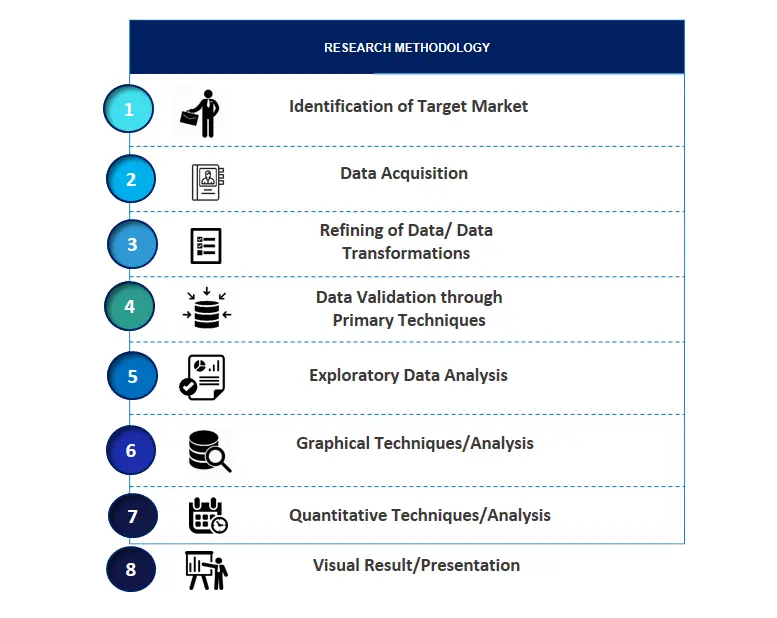
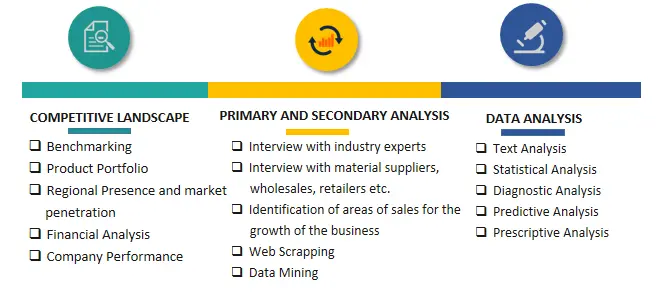
SPER Market Research’s methodology uses great emphasis on primary research to ensure that the market intelligence insights are up to date, reliable and accurate. Primary interviews are done with players involved in each phase of a supply chain to analyze the market forecasting. The secondary research method is used to help you fully understand how the future markets and the spending patterns look likes.
The report is based on in-depth qualitative and quantitative analysis of the Product Market. The quantitative analysis involves the application of various projection and sampling techniques. The qualitative analysis involves primary interviews, surveys, and vendor briefings. The data gathered as a result of these processes are validated through experts opinion. Our research methodology entails an ideal mixture of primary and secondary initiatives.
Frequently Asked Questions About This Report
PLACE AN ORDER
Year End Discount
Sample Report
Pre-Purchase Inquiry
NEED CUSTOMIZATION?
Request CustomizationCALL OR EMAIL US
100% Secure Payment